
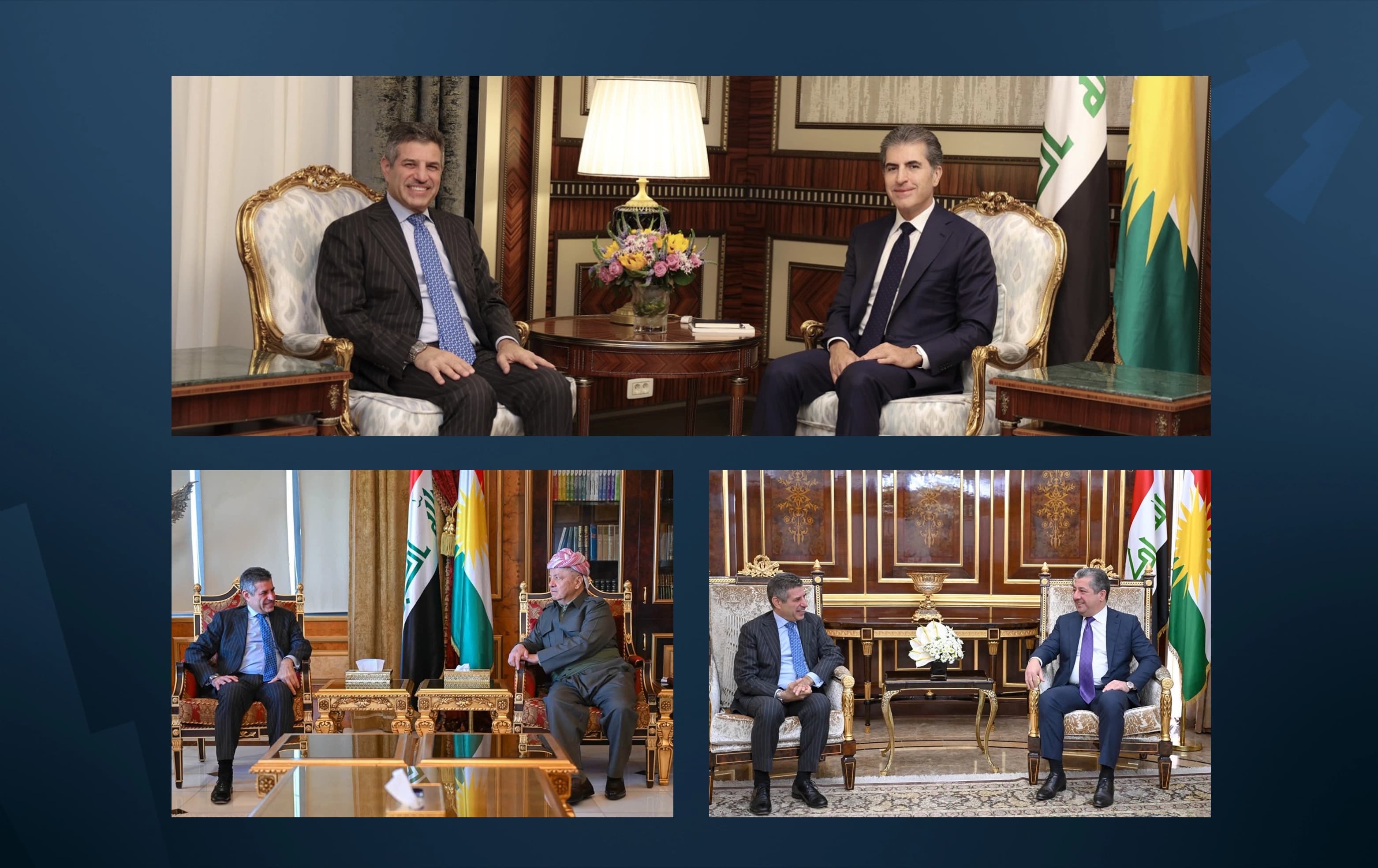

ERBIL, Kurdistan Region - US Chargé d'Affaires in Iraq Steven Fagin visited the Kurdish capital Erbil on Monday, meeting with Kurdish leaders to discuss a range of issues, including the delay in forming the Kurdistan Region's tenth cabinet, Erbil-Baghdad ties and the Iraqi federal government’s efforts to bring armed groups and their weapons under state control.
Kurdistan Region President Nechirvan Barzani discussed with Fagin ties between Erbil, Baghdad, and Washington, including prospects for “expanding cooperation across various sectors,” along with “the internal situation in Iraq, Erbil-Baghdad relations, and the importance of resolving outstanding issues through dialogue,” the presidency said in a statement.
Talks also covered "support for the Federal Government of Iraq, the importance of ensuring that arms remain under state control, the internal situation and the importance of unity and mutual understanding in the Kurdistan Region, as well as the latest regional developments,” the statement added.
Fagin was also cited as expressing his "appreciation for the role of the Kurdistan Region in Iraq and the broader region," stressing "the importance of stability and strengthening US relations with Iraq and the Kurdistan Region across all areas."
The senior American diplomat also met with leader of the Kurdistan Democratic Party (KDP), President Masoud Barzani, in Pirmam, where he reaffirmed US support for Iraq and the Kurdistan Region in preserving "security, stability, and the economy," according to a statement from the Kurdish leader’s office.
Washington "supports an Iraq where militia forces outside official government authority are not armed, thereby paving the way for political and economic stability," Fagin was quoted as saying, adding that Erbil and Baghdad can play "a constructive role" in repelling security threats.
For his part, the KDP leader pledged Erbil's "full support" for Baghdad's efforts on "any matter pertaining to stability, the Iraqi Constitution, and countering terrorism," while also voicing backing for the Iraqi prime minister's anti-corruption drive.
"Peace is always better than war, negotiation is better than conflict, and mutual understanding is better than friction and tension," the preeminent Kurdish leader added, asserting that the Kurdistan Region "acts as part of the solution" and has never been party to the region's "ongoing conflicts."
In his inaugural address to parliament in mid-May, Iraqi Prime Minister Ali al-Zaidi pledged to pursue security reforms, including "confining weapons under state control." In June, he ordered the formation of a committee to oversee the disengagement of political parties and armed factions from the Popular Mobilization Forces (PMF).
Established in 2014 following a religious decree by Grand Ayatollah Ali al-Sistani, Iraq's highest Shiite religious authority, the PMF began as an umbrella organization of roughly 70 predominantly Shiite armed groups with 250,000 members formed to counter the Islamic State (ISIS) insurgency.
Though state-funded, the PMF comprises factions aligned with the Iran-led ‘Axis of Resistance,’ including Kata'ib Hezbollah, Harakat Hezbollah al-Nujaba, and Kata'ib Sayyid al-Shuhada.
While some groups have expressed willingness to comply with Zaidi's push, the three Iran-aligned factions have cited the continued presence of foreign forces - including those from the US-led Global Coalition to Defeat ISIS - as pretext for non-compliance.
Importantly, Iraq has set a September 30 deadline for the withdrawal of US and Coalition forces from the country - the same date set for the completion of the armed groups' disarmament process.
Fagin also met with Kurdistan Region Prime Minister Masrour Barzani on Monday, where the two discussed "the longstanding friendship, strategic partnership, and close relations between the Kurdistan Region and the United States, as well as the latest political, security, and economic developments in Iraq and the wider region," the Kurdish Premier said in a statement.
"We strongly condemned the attacks targeting the Kurdistan Region and reaffirmed the importance of safeguarding its security, peace, and stability," he added, underscoring "the importance of increasing oil production in the Kurdistan Region and strengthening cooperation and coordination between the KRG and the federal government of Iraq."
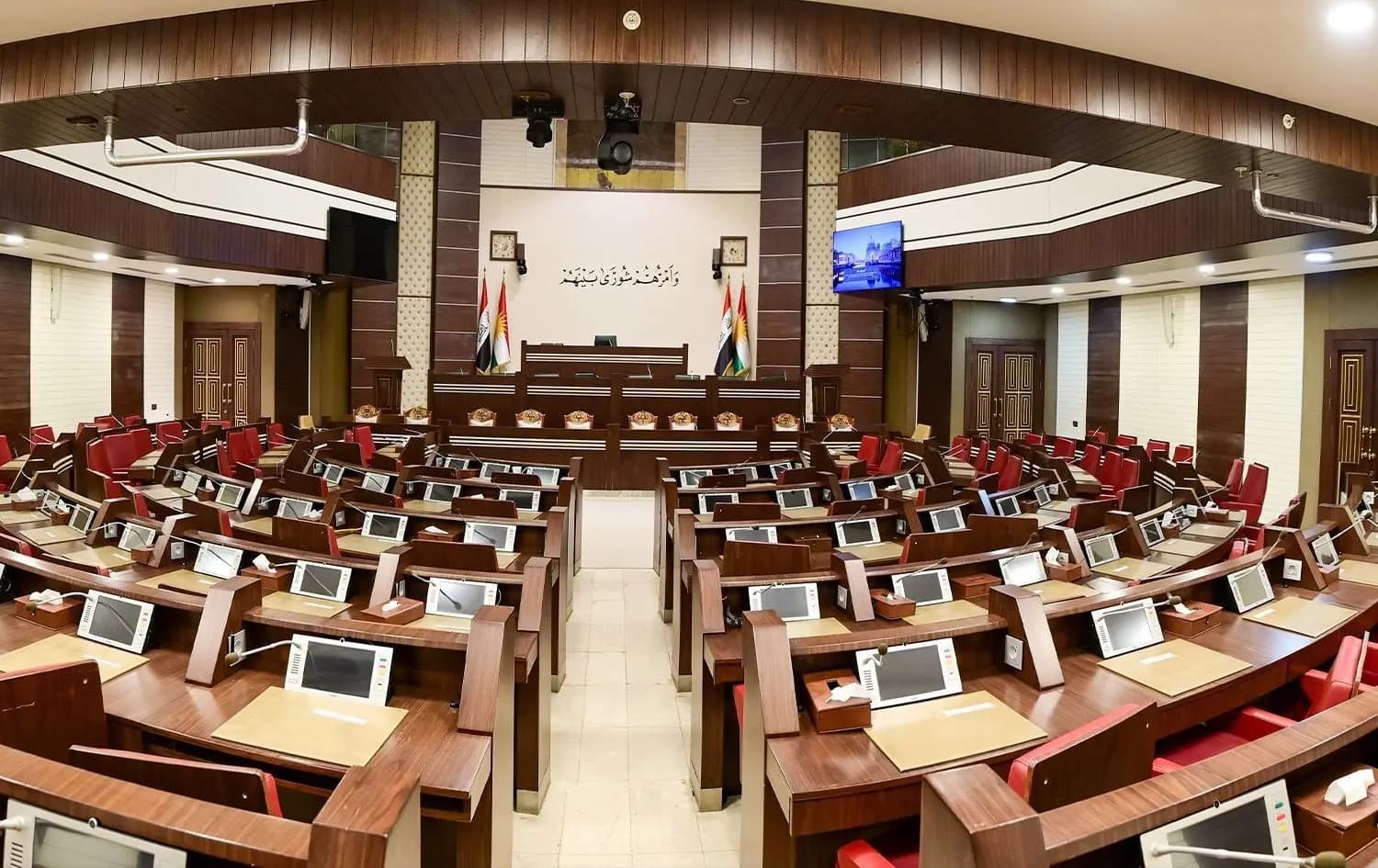
"We further emphasized the importance of reactivating the Kurdistan Parliament and the formation of the new KRG cabinet," the Premier concluded.
The Kurdistan Region held parliamentary elections in October 2024, with the ruling KDP winning 39 seats and the rival Patriotic Union of Kurdistan (PUK) securing 23 seats in the 100-seat legislature.
With no party achieving absolute majority, the two sides have engaged in government formation talks that have since stalled due to disagreements over governance structures and key posts.

.jpg&w=3840&q=75)