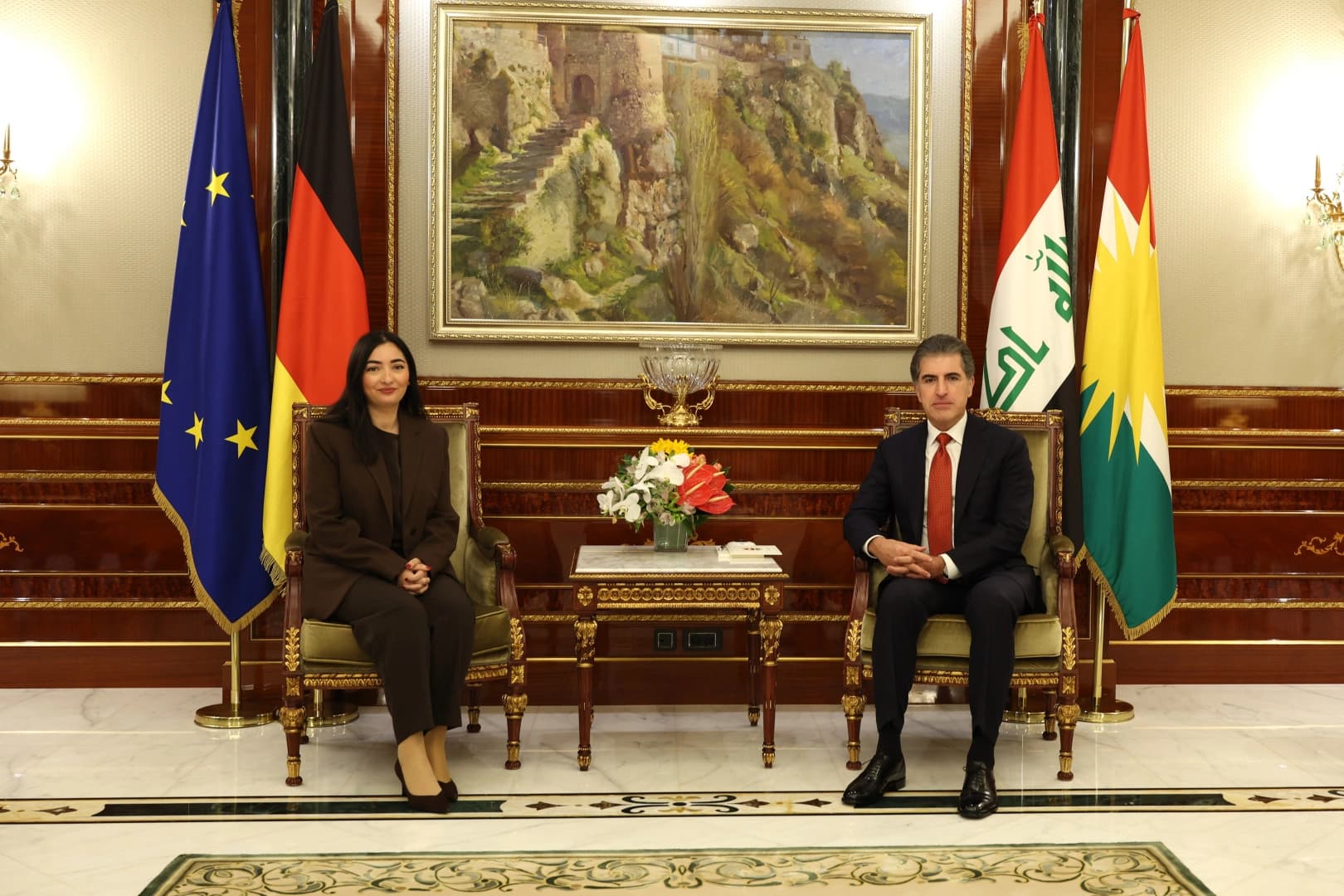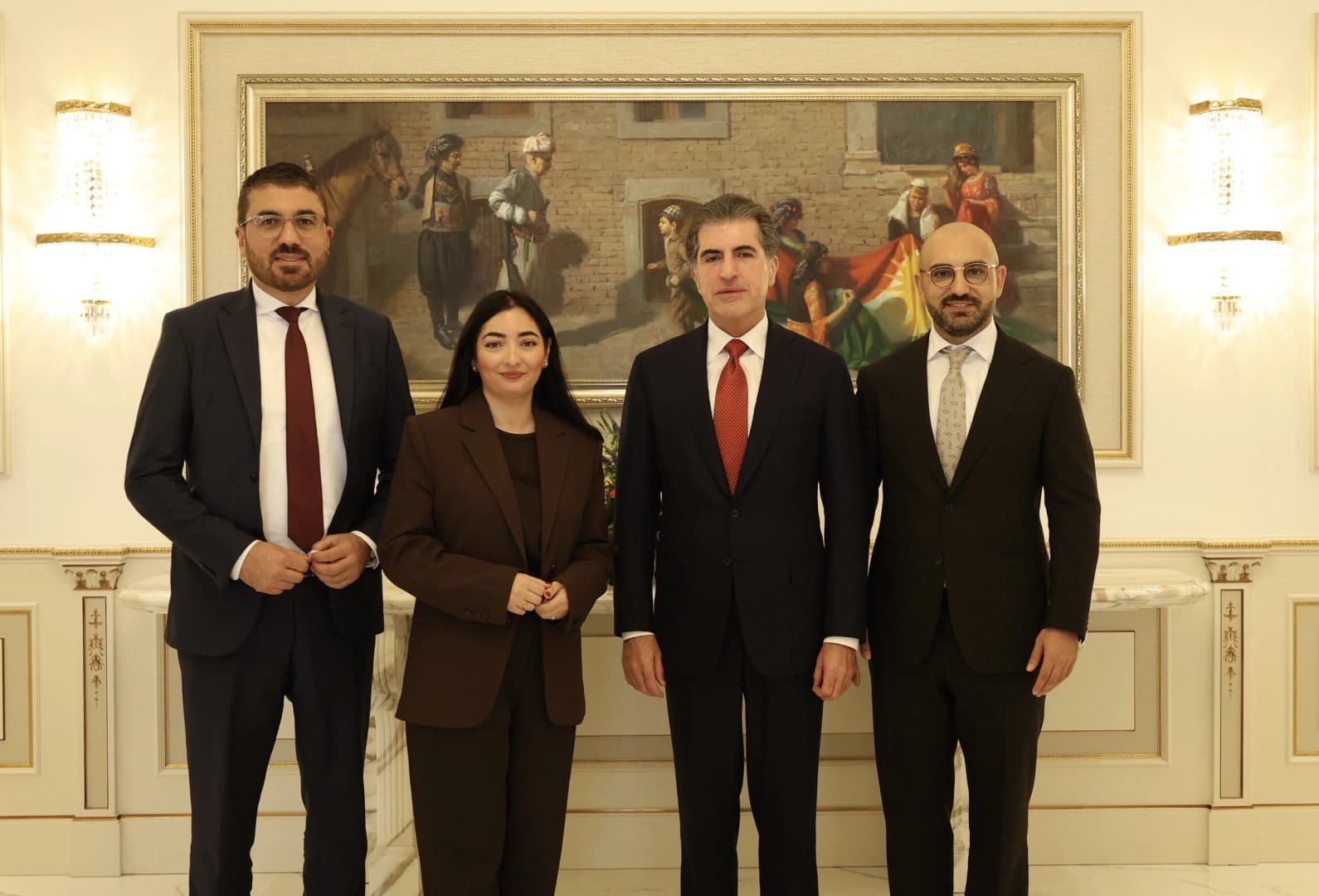

ERBIL, Kurdistan Region - Germany will maintain and strengthen its cooperation with Iraq and the Kurdistan Region despite withdrawing its troops, German officials said Tuesday in Erbil, pledging continued support for reconstruction, water projects, investment and regional stability.
“Just because our soldiers have withdrawn does not mean our strong partnership will weaken. On the contrary, we stand behind Iraq and support Kurdistan,” German lawmaker Kasim Tahir Salih told Rudaw’s Alla Shalli on Tuesday during a visit accompanying a delegation led by Development Minister Reem Alabali-Radovan.
Alabali-Radovan said the withdrawal of German troops at Baghdad's request would not change Berlin's commitment to Iraq. Germany has supported reconstruction in areas devastated by the Islamic State (ISIS), including Mosul and Sinjar, and wants to expand economic cooperation, she said.
The visit comes nearly two months after Germany ended its military deployment in Iraq at the end of September. Berlin had been a key contributor to the US-led coalition against ISIS, providing military assistance and training to Kurdish Peshmerga forces. Germany is now seeking to strengthen its development and economic partnerships amid continued regional tensions and political instability in the Kurdistan Region.
Serdar Yüksel, a German Social Democratic Party (SPD) lawmaker accompanying the delegation, said the visit was also intended to demonstrate solidarity with the Kurdistan Region.
“We want to reaffirm our support for the Regional Government and the people of Kurdistan,” Yüksel said, adding that Germany wanted to take its cooperation with the Region to a new level.
He also called on Kurdish political parties to overcome their differences and form a stable government, warning that internal divisions risk weakening the Region's position.
“Now is not the time for personal rivalry but rather a matter of the destiny and future of Kurdistan,” he said, urging the Kurdistan Democratic Party (KDP) and Patriotic Union of Kurdistan (PUK) to cooperate.
The KDP and PUK have struggled to agree on forming the Kurdistan Region's tenth cabinet following the October 2024 parliamentary elections, with disagreements over power-sharing and key government positions prolonging the political deadlock.
Yüksel said discussions with Kurdistan Region President Nechirvan Barzani and Prime Minister Masrour Barzani also addressed regional stability and the possibility of diplomatic efforts to ease tensions involving Iran.
He said the delegation had encouraged President Barzani to use his international relations to help find a peaceful solution.
On relations between Erbil and Baghdad, Yüksel said the delegation had stressed the importance of respecting Iraq's federal system and the Kurdistan Region's constitutional rights, including its budget allocation.
Salih, a member of Germany's Green Party parliamentary faction, said discussions with Iraqi Prime Minister Ali al-Zaidi had covered water security, climate change, oil, migration and coordination between Erbil and Baghdad.
“A strong Iraq means having a strong Kurdistan Region,” he said, adding that Germany wanted its companies to invest in cities including Erbil, Zakho, Baghdad, Mosul and Basra.
Salih said Germany's Federal Ministry for Economic Cooperation and Development had allocated more than 30 million euros for development assistance, with projects also supported through German development institutions GIZ and KfW.
He said Germany's contribution extended beyond financial assistance to include scientific knowledge, technology and expertise to help Iraq rebuild.
Alabali-Radovan said Germany hoped Baghdad and Erbil would coordinate their efforts, but stressed that relations between the two governments were an internal Iraqi matter on which Berlin remained neutral.
During Tuesday's meetings, Kurdistan Region President Nechirvan Barzani and Prime Minister Masrour Barzani discussed expanding economic cooperation, investment and Germany's continued support for the Region, according to statements from their offices.
The German delegation also discussed the Kurdistan Region's political situation, relations with Baghdad and the need to restore the functioning of the Kurdistan parliament.
Salih, who was born in Zakho, ended his interview with an appeal to Kurdish leaders to overcome their political differences.
“When I look at the situation now, especially the political situation, my heart genuinely aches,” he said. “My plea to all Kurdish politicians is: Please unite, become friends and partners with each other again, and speak with a single strong voice.”