
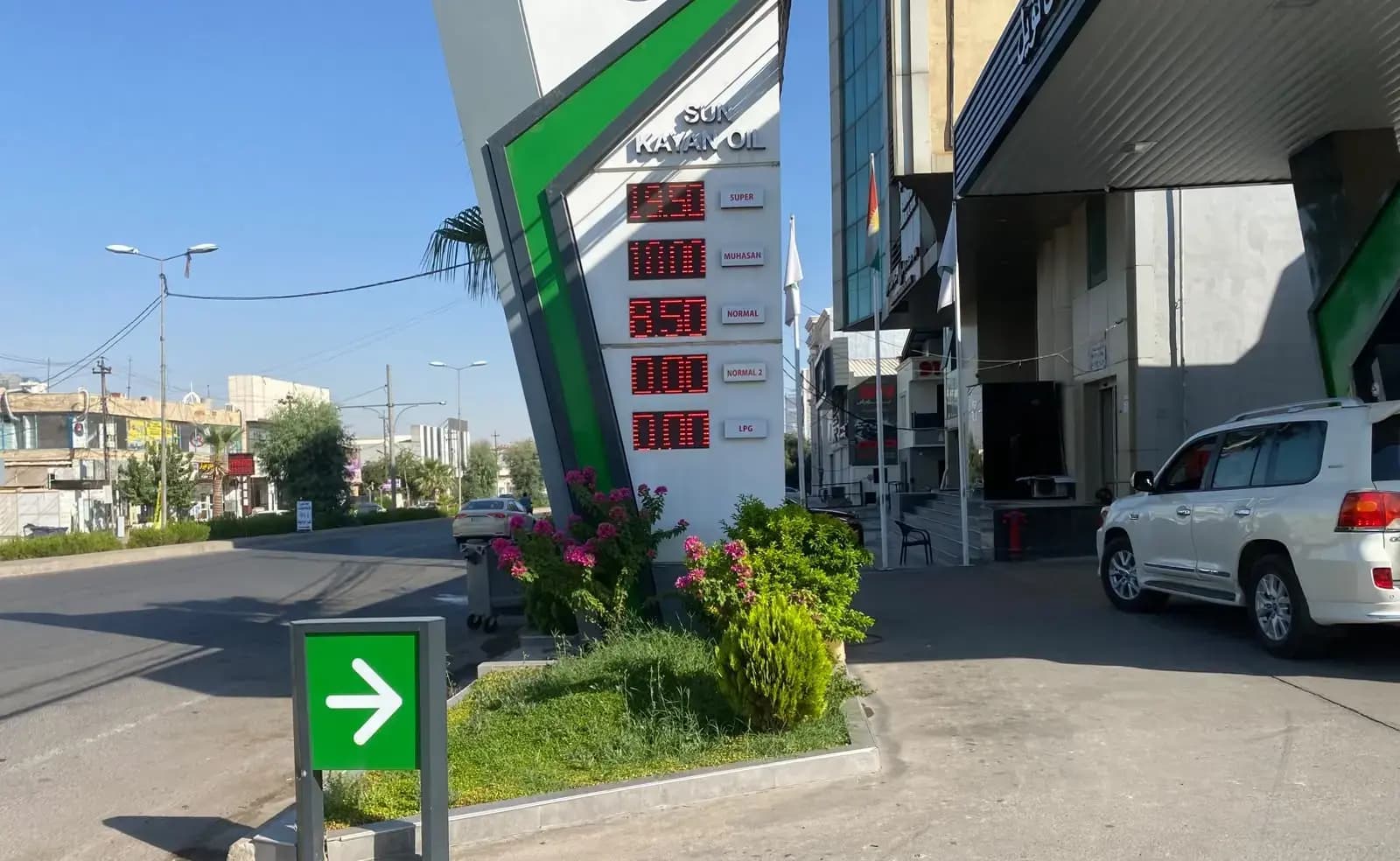

ERBIL, Kurdistan Region - The Iraqi parliament has formed a committee to probe the shortages and soaring prices of gasoline in the Kurdistan Region, an Iraqi lawmaker said late Saturday.
“The [Iraqi] oil ministry has shown an understanding regarding the new situation and agreed to increase the share as a suitable solution to overcome the crisis,” Danar Abduljabbar told Rudaw’s Shko Omar in Baghdad, referring to the recent increase of prices and shortages of gasoline in the Kurdistan Region.
Under a 2025 agreement between Erbil and Baghdad, the former retains 50,000 barrels per day (bpd) of crude while the rest is delivered to the federal State Organization for Marketing of Oil (SOMO) for sale. The Kurdistan Regional Government (KRG) uses its share for domestic consumption. However, as local demand outstrips supply, the KRG has requested a larger share from the federal government to address the worsening crisis.
Basim Mohammed Khudair, Iraq’s Minister of Oil, said earlier on Saturday they have previously asked the KRG to renounce its share to Baghdad and in return it will provide the domestic needs in the Kurdistan Region.
“They held a different view, preferring to take on that responsibility themselves and supply these products on their own in exchange for receiving the 50,000 barrels,” he said, noting they can “amend this agreement again through negotiations.”
The domestic fuel crisis has been severely compounded by repeated Iranian drone and missile strikes targeting oil facilities and infrastructure across the Kurdistan Region. The security escalation forced foreign energy operators to halt or curtail field operations, while disrupting essential chemical additive imports required by local refineries.
According to figures from SOMO, regional instability and targeted strikes have caused the Kurdistan Region’s daily crude oil production to plunge from approximately 230,000 bpd to just 20,000 bpd. This dramatic drop in raw crude output has choked local refineries, drastically cutting the volume of refined petroleum products available for public distribution.
The supply deficit has driven commercial gasoline prices to record highs across the Region. On Saturday, prices in Erbil and Duhok reached up to an unprecedented 2,150–2,750 Iraqi dinars (around $1.41–$1.80) per liter for Premium, 1,950–2,300 dinars ($1.28–$1.51) for Improved, and 1,575 dinars ($1.03) for Regular grades at private commercial stations. Subsidized fuel remained capped at 750 dinars ($0.49) per liter at government stations, resulting in massive queues. Prices in Sulaimani and Halabja provinces have remained slightly lower.
In late July, the KRG imposed fuel price caps to stabilize the market following a sharp rise in prices. Authorities capped Regular-grade gasoline at 850 dinars ($0.56) per liter before extending limits to 1,000 dinars ($0.66) for Improved fuel and 1,200 dinars ($0.79) for Super-grade gasoline.
Nevertheless, the move backfired, facing elevated wholesale and operational costs, many filling station owners chose to shut down rather than operate at a loss, pushing market prices higher. In response, the KRG began distributing subsidized gasoline through an electronic card system at a single gas station in Erbil as part of a pilot program aimed at easing long queues. However, the initiative has yet to be implemented across the Region's gas stations.
.png&w=3840&q=75)