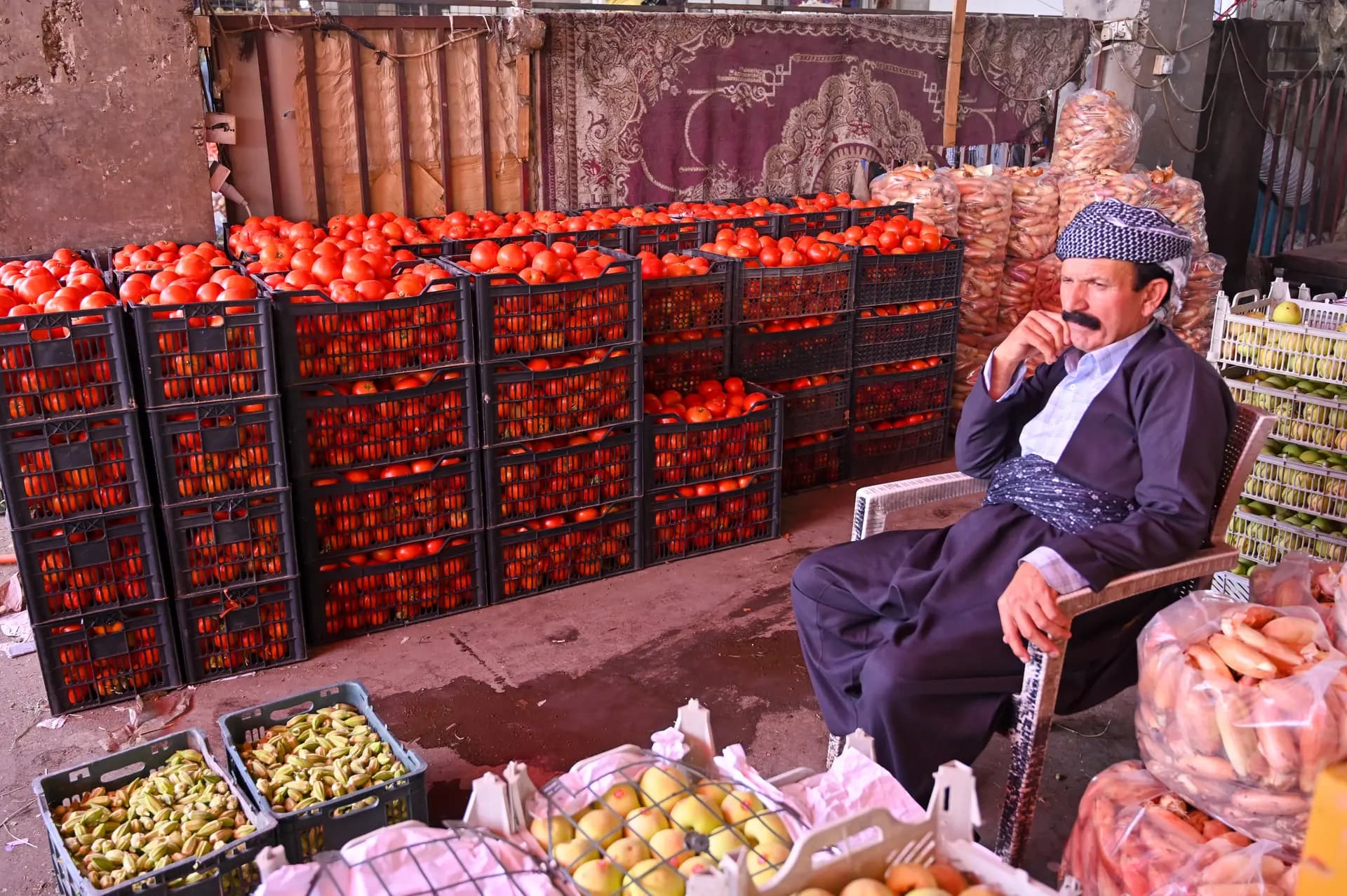

ERBIL, Kurdistan Region - Farmers across the Kurdistan Region are facing difficulties in the market despite a productive harvest season due to export restrictions, disputes over the origin of some crops, and an oversupply of local products, officials from the Kurdistan Region's agriculture sector told Rudaw on Thursday.
Rajab Haji Aziz, head of Erbil's wholesale market council, told Rudaw's Payman Mohammed that shipments of onions from the Kurdistan Region are being blocked at the Kirkuk-Erbil checkpoint on their way to central and southern Iraq.
Local agricultural products, including onions, tomatoes, potatoes, cucumbers, eggplants, and zucchini, have reached markets in large quantities in recent weeks. However, traders say demand has failed to keep up with supply.
According to Aziz, Iraqi authorities claim that the onions are imported from Iran rather than grown locally. Aziz has rejected the allegation, insisting that all onions currently being sold are produced within the Kurdistan Region.
The restrictions come despite a unified agricultural calendar agreed upon by Baghdad and Erbil to coordinate agricultural trade and protect seasonal local produce.
The agreement, linked to the Automated System for Customs Data (ASYCUDA), sets rules for the movement of agricultural goods between the Kurdistan Region and federal Iraq. However, Kurdistan Region officials say Iraqi authorities are not fully implementing the deal.
The Kurdistan Region's Ministry of Agriculture and Water Resources confirmed the restrictions. "The Kurdistan Region is committed to the unified agricultural calendar, but Iraq is acting contrary to the agreement," ministry spokesperson Qaraman Qadir Mawlood told Rudaw.
The unified agricultural calendar aligns customs and agricultural trade policies between the federal government and the Kurdistan Region, setting specific periods during which locally grown crops are protected from competition by imported products. The calendar is also linked to the UN-backed Automated System for Customs Data (ASYCUDA), adopted by both governments to improve transparency and coordination at border crossings.
Members of the high-level technical committee between the Kurdistan Region and Baghdad are in talks to resolve the issue, but no solution has yet been reached.
The lack of export opportunities has affected markets across the region. Traders in Sulaimani and Duhok reported similar challenges, saying local produce is abundant while markets in central and southern Iraq are largely closed to Kurdish products due to wide availability there.
Prices for several locally grown products have fallen significantly, raising concerns among farmers about reduced profits during one of the region's most productive harvest periods.
.jpg&w=3840&q=75)
.png&w=3840&q=75)