ERBIL, Kurdistan Region - Kurdistan Region Prime Minister Masrour Barzani on Wednesday said that allocating a fixed 120 billion Iraqi dinars (around $92 million) as Baghdad’s monthly share of the Region’s revenues is no longer viable in light of the economic consequences of the regional escalation. He added that Erbil is submitting an official request to transfer half of its local revenues to the central government instead.
The financial revenues of the Kurdistan Region and Iraq “have declined in light of reduced oil exports caused by regional conflicts and instability,” the Kurdish premier told reporters on the sidelines of a local event in Erbil.
He added that, under a previous agreement with the federal government, the 120 billion dinars (around $92 million) figure was set. However, in recent months, “due to attacks on our oil fields, we were unable to export oil, which caused our overall revenues to plummet,” Prime Minister Barzani said.
In light of the drop in the Kurdistan Region’s overall revenue, Erbil is now requesting that “exactly half of its monthly revenues” be sent to Baghdad, he noted, further explaining that as the Region’s revenue grows, “our contribution to providing revenue for the federal government will naturally increase as well.”
The US and Israel launched a large-scale aerial campaign against Iran in late February, striking thousands of targets across the country during six weeks of hostilities. In response, Tehran carried out thousands of drone and missile strikes across the Middle East, targeting alleged US assets - particularly in Gulf Arab states - while also launching retaliatory attacks against Israel.
The Iranian response also involved factions aligned with the Iran-led ‘Axis of Resistance,’ including armed groups in Iraq that claimed numerous attacks on alleged US targets in Iraq and Kurdistan.
The warring sides agreed to a Pakistan-mediated ceasefire on April 8, halting hostilities to create space for diplomatic negotiations. While the first round of talks concluded without a final agreement on April 11, a second round has yet to take place.
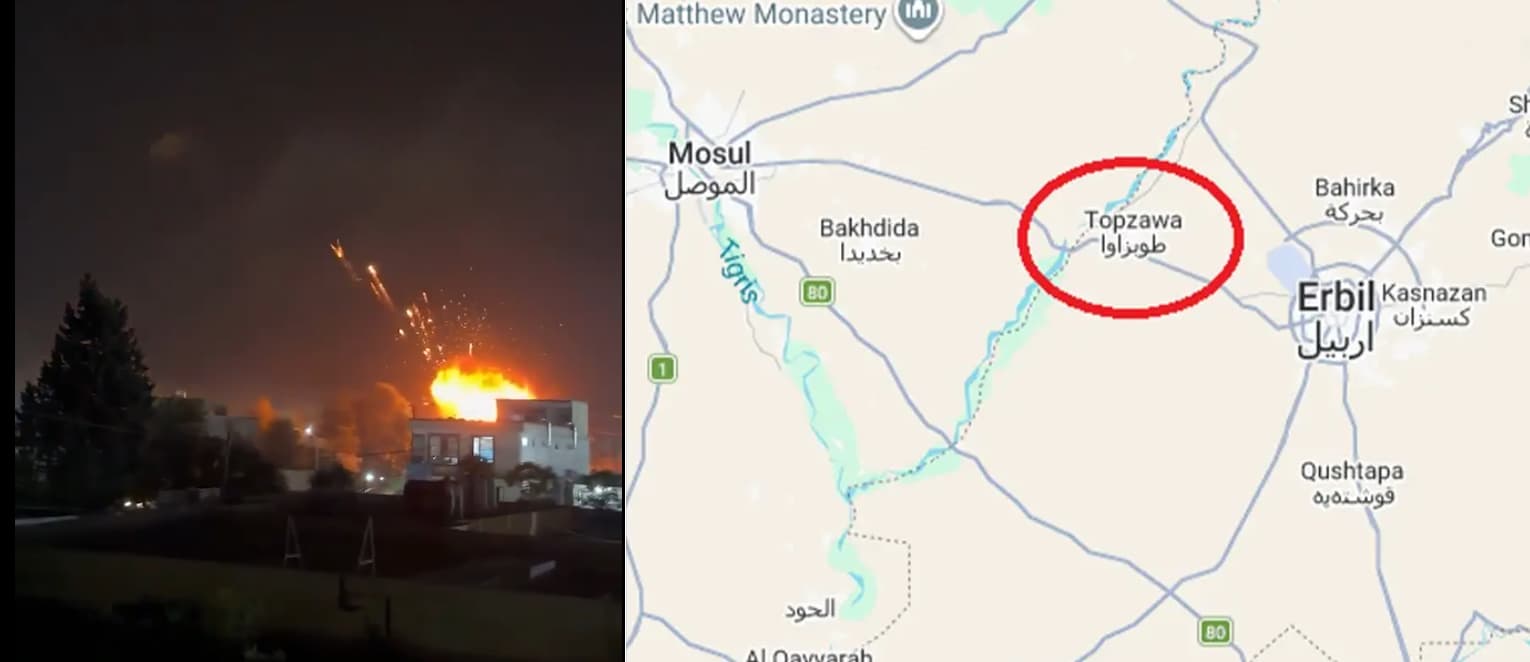
Despite the truce, Tehran and its allied factions have continued attacks on alleged targets in the Kurdistan Region.
However, even before the Iran-Israel war, the Region’s energy infrastructure had repeatedly come under attack by Iraqi armed groups, including strikes on the Khor Mor gas field in Sulaimani province between 2022 and 2025. These attacks often caused temporary, widespread electricity blackouts and forced foreign engineers to briefly evacuate, stalling multi-million dollar expansion plans.
In late 2022, multiple drone and rocket attacks also targeted areas near the section of the Iraq-Turkey Pipeline (ITP) that passes through the Kurdistan Region, disrupting production at facilities in Erbil and Dohuk as well.
Erbil-Baghdad ties
Turning to long-standing issues between Erbil and Baghdad, the Kurdish premier said, “We look forward with optimism to our relations with the current federal government, particularly with [newly appointed] Prime Minister Ali Al-Zaidi.”
Prime Minister Barzani added that among the issues he hopes to see resolved in the long term is the question of civil servant salaries in the Kurdistan Region.
“The issue of public salaries is structurally linked to the salaries of all citizens across Iraq,” he noted, expressing hope that “our public sector salaries will be treated no differently from those in other parts of Iraq, and that this issue is never entangled with political disputes.”
The Kurdistan Region's salary issue is a persistent financial crisis rooted in a revenue-for-funding dispute between Erbil and Baghdad, where the federal government often withholds monthly payroll transfers - totaling roughly $650 million to $800 million - due to disagreements over Erbil’s oil exports and non-oil revenues.
This has resulted in a decade of "missing" or deducted months, leaving a $21 billion debt in unpaid arrears to over a million civil servants in the Region and causing widespread economic stagnation and strikes.
As of May 2026, while the Kurdistan Regional Government (KRG) has improved compliance by remitting non-oil revenues and implementing the MyAccount digital payroll system for transparency, payments remain irregular and tied to the shifting political whims.
Another issue noted by the Kurdish premier on Wednesday is the digitalization of customs procedures and the implementation of the Automated System for Customs Data (ASYCUDA) in the Kurdistan Region.
Developed by the United Nations Conference on Trade and Development (UNCTAD) in the early 1980s, ASYCUDA is now used at all 22 of Iraq’s federal border crossings, including key southern ports. The system is designed to standardize and modernize customs procedures.
Erbil and Baghdad reached a new agreement in April to implement the system across the Kurdistan Region’s border crossings, in a move aimed at unifying procedures while preserving the Region’s legal framework. However, implementation of the agreement has since stalled.
Prime Minister Barzani said the Kurdistan Regional Government (KRG) has sought to reach a mutual understanding with Baghdad on the ASYCUDA. “I hope this understanding materializes into a formal agreement so that trade in the Kurdistan Region can return to normal, which will boost local revenues. If revenues increase, I believe both Iraq and the Kurdistan Region will benefit,” he said.