
SULAIMANI, Kurdistan Region – The new cabinet of the Kurdistan Regional Government (KRG) is amending the previous government’s reform package before sending it back to the parliament to pass it into law. The project aims to make reforms in the pension and salary systems in the Kurdistan Region.
The KRG sent a reform package to the parliament to debate and pass in August 2018. But the previous parliament did not pass the bill that would have eased the financial strain on the KRG due to disagreements among different blocs. The task was therefore left for the current parliament.
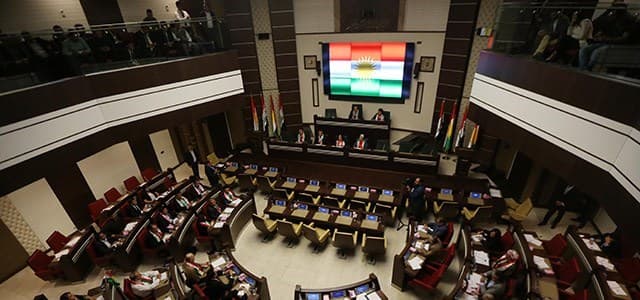
Rebwar Babkaye, an MP with the Kurdistan Democratic Party (KDP) bloc, said they are waiting for the summer recess to finish in order to debate the bill. In the meantime, the parliament is waiting for the KRG to send the package back to them.
Babkaye said he thinks the bill has a better chance to pass this year.
“There might be some differences of opinion, but there is better understanding this year between factions of the KDP, Patriotic Union of Kurdistan (PUK), and Change Movement (Gorran),” he said. “The government will change some of its sections and articles.”
Babkaye said the issue of ghost employees in the KRG’s payroll might cause some contention in debating the bill. Ghost employees are people registered on the government payroll by political parties who do not actually work for the government.
“Our final decision in this regard is to remove ghost employees from the payroll, even if this deals a heavy blow to the KDP,” said Babkaye.
PUK MP Luqman Wardi said his party wants to support the reform package.
“We should wait for the government to send the package back to us to see how it is,” said Wardi. “We will support and pass it if it serves the interests of the people of Kurdistan.”
Wardi said the PUK is not more to blame than other parties for the ghost employees.
“The KDP doesn’t have less of these people [on the register]. Gorran has these people too,” he said.
An official with the Kurdistan Islamic Union (KIU), who spoke to Rudaw on condition of anonymity, said the question of making reforms is necessary, but complex.
“We shouldn’t only address the issue of inflated salaries, ghost employees or double-salary receivers,” the KIU official said. “Rather, we should also address the problem of MPs or authorities who have numerous guards, with some of them being ghost guards. The officials receive their salaries.”
“It will be a mistake to send the reform package to the parliament without prior political agreement between the PUK and KDP because the three main blocs in the parliament cannot pass any bills without such an agreement,” he added.
Prime Minister Masrour Barzani will amend the reform package and sent it back to the parliament after the parliament recess is over, an anonymous KRG source told Rudaw.
The changes that will be made to the package will include: decreasing salaries of high-ranking officials, increasing salaries of civil sector’s pensioners, and removing ghost employees on the KRG payroll. The government will rely on a number of things in doing this, including its biometric system for determining the number of employees, the source said.
Gorran MP Shakhawan Raof said passing the reform bill was the first thing his party agreed on with the KDP before deciding to join the new government.
Under the proposed reforms, the KRG could save about a quarter of its current salary costs, 100-120 billion dinars ($85-100 million).
There are 1.249 million civil servants in the Kurdistan Region. Prior to the economic crisis that hit the Kurdistan Region in 2014, the KRG spent about 850 billion dinars on salaries.
After introducing austerity measures, the salary budget was reduced to 450 billion dinars as state employees were given just a fraction of their salary.
Already suffering under an economic crisis, KRG’s revenues went down by about half with the loss of Kirkuk’s oilfields to Baghdad in October 2017.
Translation by Salim Ibrahim
.png&w=3840&q=75)