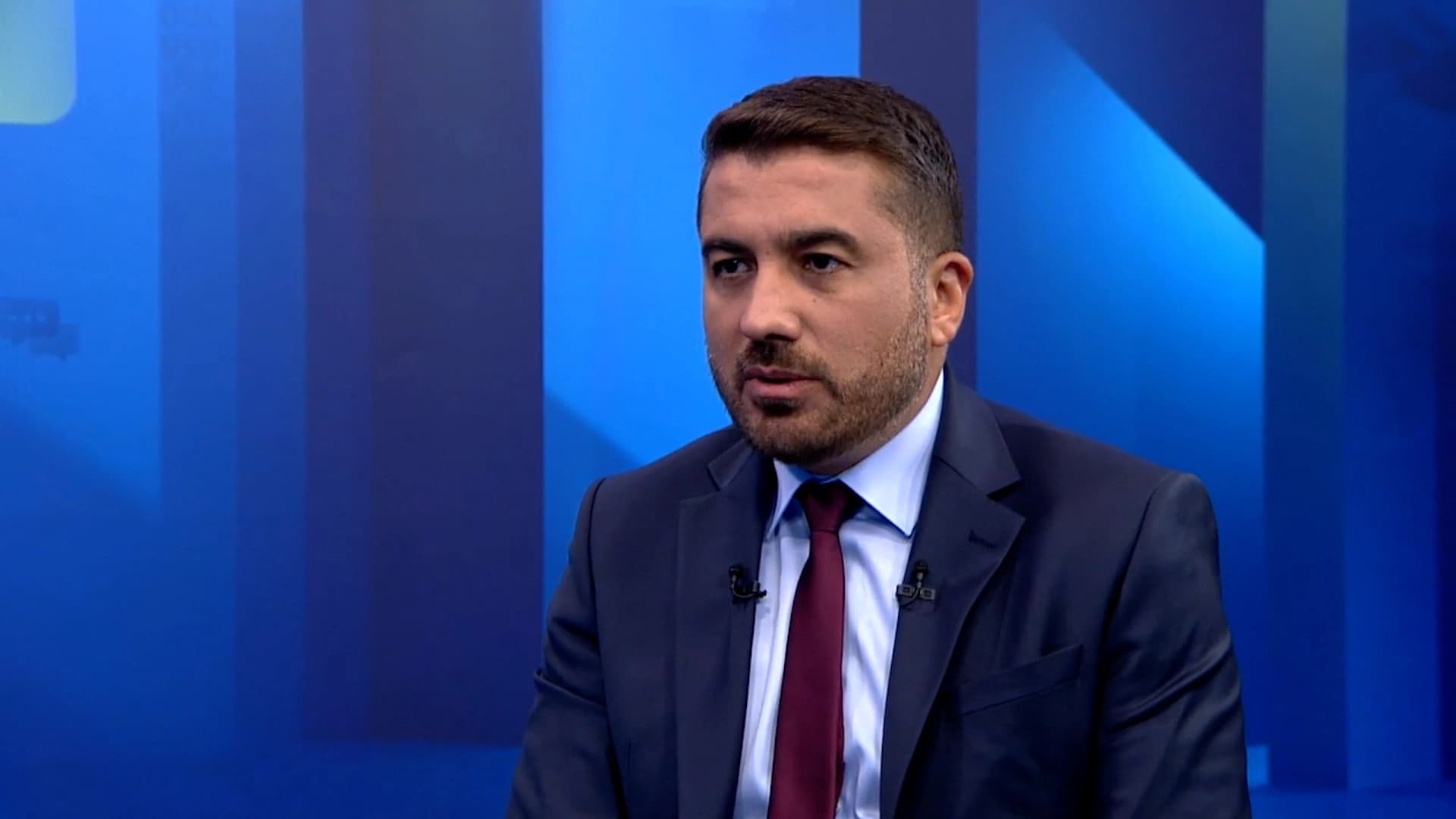

ERBIL, Kurdistan Region - The continuation of strikes from Iran against the Kurdistan Region is “unacceptable and must stop,” the German lawmaker with Kurdish descent Serdar Yuksel said.
Yuksel serves as a member of the state parliament in Landtag of North Rhine-Westphalia, representing the Social Democratic Party of Germany (SPD).
The parents of the 52-year-old lawmaker are from Kurdish areas in southeast Turkey. His family migrated to Germany in 1964, and he was born in Essen. He has been a member of the SPD for 36 years.
He has been a parliamentarian for North Rhine-Westphalia since 2010 and has won the trust of voters in Germany's largest state for the four consecutive elections, including the one in 2025, representing the voices of immigrant communities, particularly the Kurdish diaspora.
Yuksel visited the Kurdistan Region last week, meeting with President Masoud Barzani, leader of the Kurdistan Democratic Party (KDP) and Kurdistan Region President Nechirvan Barzani.
Support for Kurdistan Region
“I am here to demonstrate my support, on behalf of the German parliament, for all Kurds and the Kurdistan Regional Government [KRG],” Yuksel told Rudaw’s Dilbixwin Dara during an interview aired on Wednesday.
The Region has been on the sidelines of regional hostilities since February 28, when the US and Israel launched a nearly six week-long military campaign against Iran.
Kurdish authorities say the Region has been attacked with missiles and drones over a thousand times. Rudaw has documented 32 killings and more than 138 injuries as a result of the strikes.
“I wanted to convey a clear message of support through this visit and state that these Iranian attacks on the Kurdistan Region are unacceptable and must stop,” the German lawmaker noted.
Withdrawal of Coalition forces amid US policy shift
Rudaw learned in the beginning of August that the US, British, French and German forces have withdrawn hundreds of troops and key air-defense systems from Erbil International Airport in a surprise 72-hour pull-out.
British forces withdrew completely, while the United States, France and Germany retained only small contingents in the Kurdistan Region.
Yuksel rejected the claim of full German troop withdrawal in Erbil, pointing to “ongoing discussion in Germany about this issue.”
“A final decision on this matter has not yet been made,” he said, adding that he “strongly advocates for a large contingent of German troops (Bundeswehr) to remain in Kurdistan.”
Washington has agreed to withdraw its forces by September 30, a date that coincides with a deadline set by the Iraqi Prime Minister Ali al-Zaidi to disarm and organize armed factions.
In addition to coordinating attacks on the Islamic State (ISIS), the US-led Global Coalition also assists the Kurdish Peshmerga forces in advancing institutional reforms as well as providing military training.
The German lawmaker said Germany and other European countries “must maintain their military presence here” despite anticipated US withdrawal.
“We saw the chaos caused by the American withdrawal from Afghanistan [in 2021]; we do not want to leave chaos behind us here. Instead, Germany, along with its European partners, must fulfill its international responsibility here in Kurdistan,” Yuksel explained.
“We will continue providing military, economic, and humanitarian support to the Kurdistan Regional Government,” he added. “We know that Kurdistan is the last multi-ethnic and multi-religious region in this area. We must not leave the Kurds alone during this difficult time.”
On meetings with Kurdish leaders
In his current visit, Yuksel has met with President Masoud Barzani and Nechirvan Barzani.
"We discussed the current situation, Iran's attacks on the Kurdistan Region, and the issues in Syria and Iraq. We also discussed the challenges facing the KRG,” he said.
He described his meeting with President Masoud Barzani as “very meaningful and impactful.”
“I have known of him since childhood, having always seen him on television, but it was an opportunity to sit beside him,” he noted.
With regards to President Nechirvan Barzani, the German lawmaker hailed him as “a very important diplomat on the international stage.”
“Whether in Washington, Paris, Munich, Ankara, Damascus, or Baghdad, President Nechirvan Barzani is a high-level diplomat who commands great respect globally.”
On the Yazidi genocide, refugees in Germany
"Germany recognized the Yazidi genocide three years ago. Twelve years ago, I personally established a refugee camp where 5,000 Yazidis currently live,” Yuksel said.
He was referring to the Sheikhan camp in Duhok province. It houses around 2,500 Yazidi IDPs.
More than 12 years have passed since they fled their homes but their return is still impeded by lack of security, basic services, and unrepaired infrastructure.
“I call on the Iraqi government to provide financial assistance to support the return of the Yazidis and reconstruct Shingal's infrastructure. This has not yet been properly done. We press this demand in our discussions with Baghdad, as the responsibility for returning the Yazidis lies with the Iraqi government,” he said.
After seizing large parts of northern and western Iraq in June 2014, ISIS militants in August launched a brutal campaign against the Yazidi community in Shingal, killing an estimated 5,000 to 10,000 Yazidi men and older women, and abducting 6,000 to 7,000 women and girls for sexual slavery and human trafficking.
The offensive displaced about 400,000 Yazidis, most of whom fled to the Kurdistan Region, while thousands more sought refuge in Europe, North America, and Australia.
More than a dozen countries, along with the United Nations and the European Union, have officially recognized ISIS's atrocities against the Yazidis as genocide.
“One cannot recognize a genocide and then forcibly deport people the next day,” Yuksel said. “There must be a vision, and we support their right to residency. I personally advocated for this, and with my help, many individuals were able to remain in Germany.”
Situation of Kurds in Syria
Yuksel noted that Germany “reiterated during [Syrian President] Ahmed al-Sharaa's visit to Berlin that German and European aid and assistance in reconstructing Syria will only occur if human rights, the religious rights of components, and the rights of Kurds are accepted.”
The Syrian dictator Bashar al-Assad was ousted from power in late 2024 when a coalition of Sunni radical groups led by Hay’at Tahrir al-Sham launched an offensive against government-held areas.
Declaring an interim government in January 2025, Syrian authorities had become involved in massacring over 1,500 Alawites and 1,200 Druze community members in March and July of that year, respectively.
It had also engaged in fierce clashes with Kurdish forces in January, eventually settling through a ceasefire agreement to accelerate the then halted integration process of the northeast (Rojava) civilian and military institutions into the Syrian state system.
Sharaa issued a decree in January, promising to provide long-denied cultural and political rights to Kurds.
Meanwhile, European countries, the US and the UK have linked providing financial assistance and sanctions relief to guarantee safeguards of minority rights in the country.
"German positions on this matter are very clear: they want Syria's sovereignty to remain fully intact, but at the same time, they want Syria to remain a multi-ethnic and multi-religious state.
This has been emphasized to Ahmed Sharaa multiple times - both by the French President and by German Chancellor Friedrich Merz,” Yuksel said.
.png&w=3840&q=75)