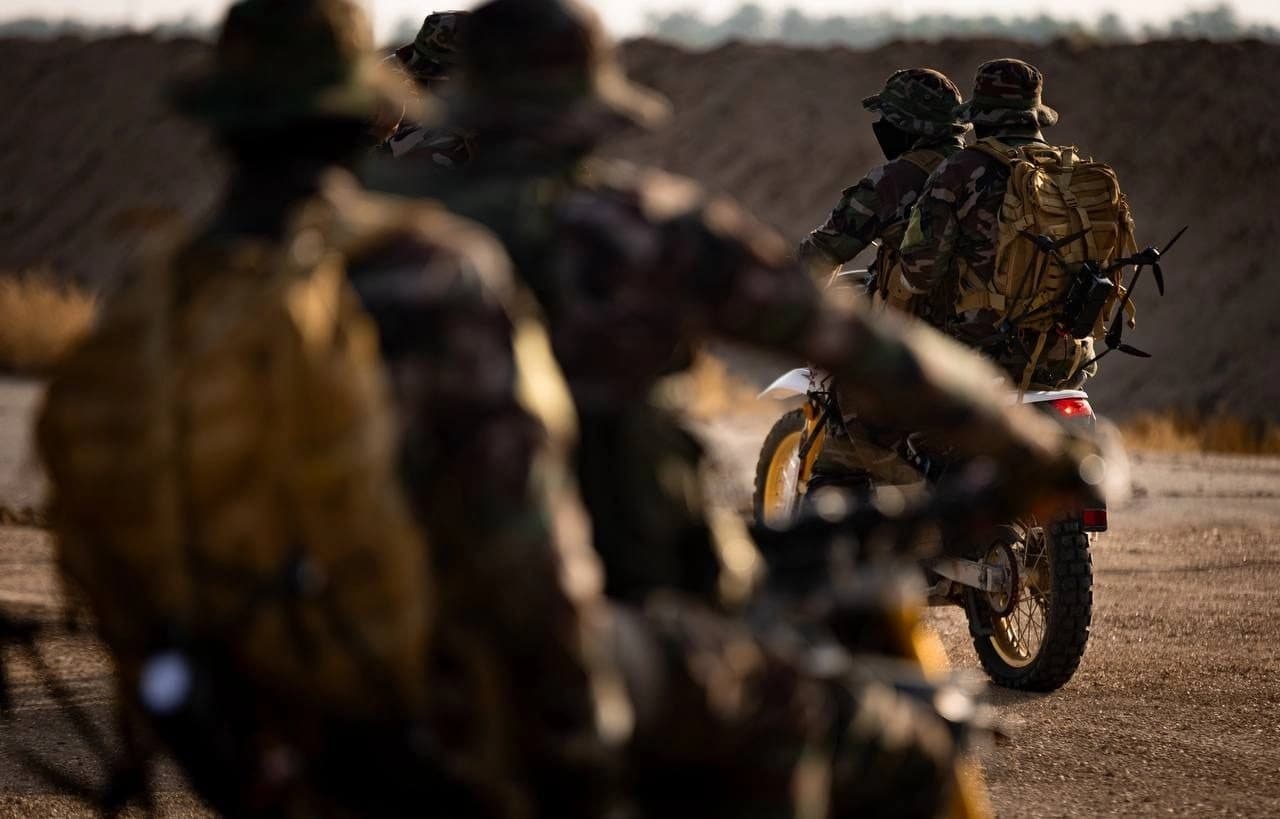

ERBIL, Kurdistan Region - Iran-aligned Kata’ib Hezbollah (KH) forces currently based in Babil province’s Jurf al-Sakhr subdistrict could be relocated to Anbar province, the head of the Iraqi Security Media Cell said on Thursday, as a week-long standoff between the group and Iraqi security forces risks a military confrontation.
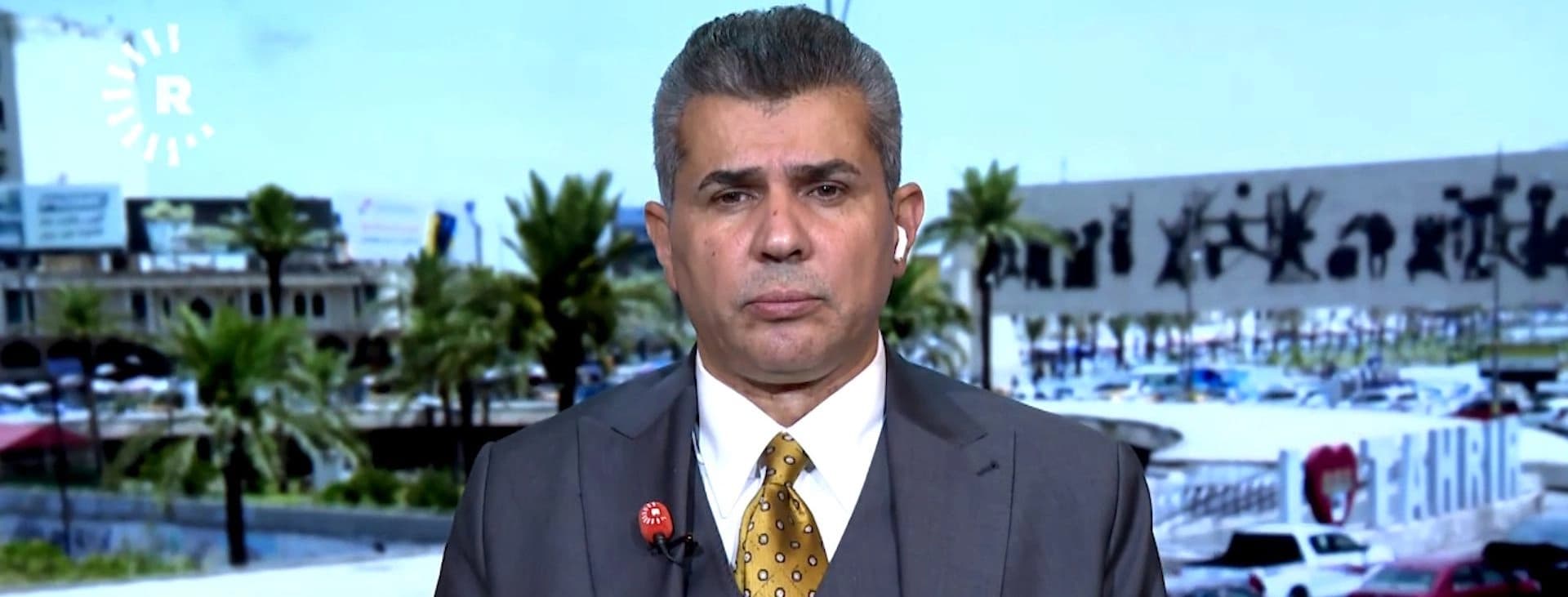
“These brigades are respected, have contributed greatly, and will be assigned duties in other areas,” Saad Maan told Rudaw’s Zana Kiyani in an interview.
He mentioned the town of Qaim in Anbar province near the Syrian border as an option, while emphasizing that the relocation will be executed according to “operational needs and the assessment of the military leadership” in coordination with the state-funded Popular Mobilization Forces (PMF).
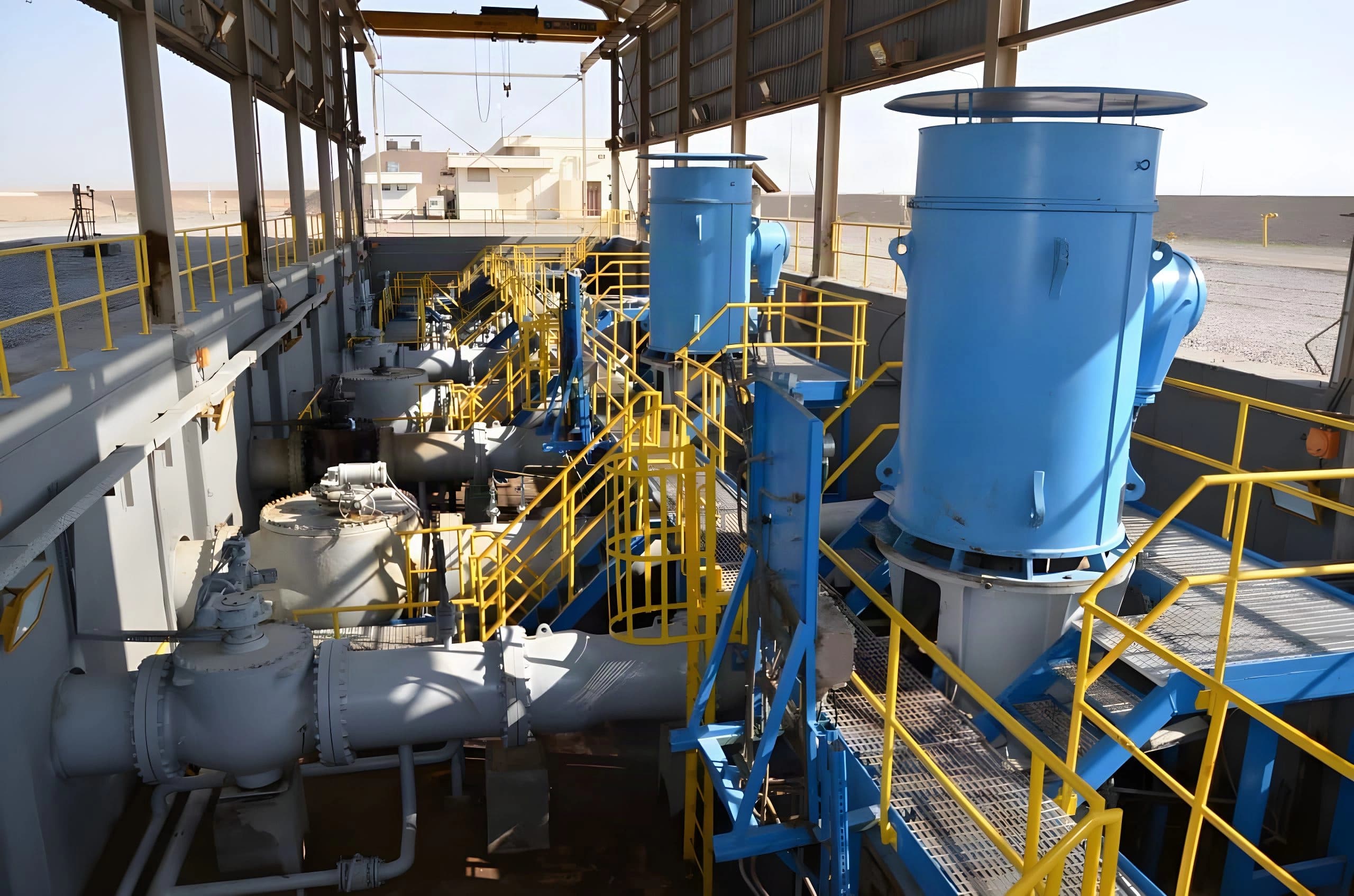
Maan’s statement comes as Iraqi Prime Minister Ali al-Zaidi has deployed troops around Jurf al-Sakhr after reports of oil theft in the town - which is under KH’s de facto control after they expelled militants of the Islamic State (ISIS) following the capture of the district in 2014.
Zaidi’s office announced earlier in the day that the federal police would establish a command center in Jurf al-Sakhr starting Friday at dawn. An Iraqi Army brigade, a federal police brigade, two brigades from the state-funded PMF, and a regiment from the energy police to “secure and protect the oil pipelines in the area” are expected to be stationed, the office’s statement read.
Commenting on the subject, Maan said that “the order has been issued and there is no turning back; we hope no clashes occur in Jurf al-Sakhr."
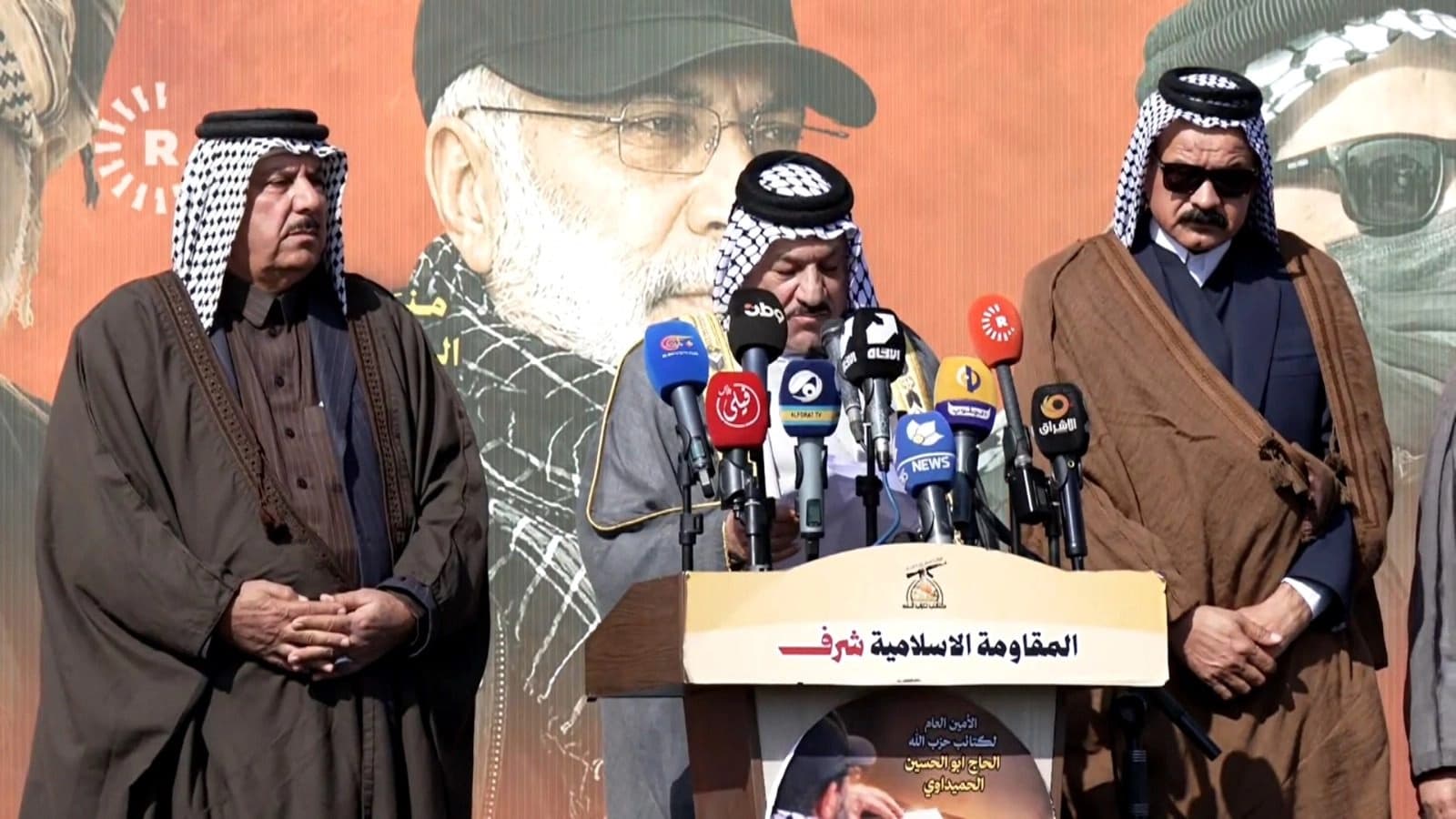
His statement coincided with Abu Taleb al-Saeedi, a senior KH commander, stating in a press conference on Thursday that “the departure of Kata’ib Hezbollah from this land will be on their bodies.”
Furthermore, Abu Hussein al-Hamidawi, the group’s leader, in a statement late Thursday instructed his fighters to return to their normal without elaborating.
“The future holds serious challenges, and confronting them will require men like you, possessing great patience, steadfastness and a strong sense of responsibility,” he said.
However, Hamidawi did not explicitly address whether Kata'ib Hezbollah would relinquish control of Jurf al-Sakhr.
But Maan was optimistic about a peaceful settlement of the issue.
“It will be a smooth and easy process with cooperation between us and the brothers,” he noted.
Below is the full interview of Saad Maan with Rudaw
Rudaw: Shortly, Kata'ib Hezbollah is expected to announce its message from Jurf al-Sakhr, and tomorrow forces are scheduled to be sent into the town. Will the force enter? Has an agreement been reached with Kata'ib Hezbollah?
Maan: Thank you. Greetings to you and to all our viewers in the Kurdistan Region of Iraq. Today, the special order was issued under the directive of the Commander-in-Chief of the Armed Forces [Ali al-Zaidi] to form the Controlling Headquarters, which is, of course, a diwani [executive] order. The Controlling Headquarters in Jurf al-Nasr is linked to the Federal Police Command in all respects. God willing, Major General - Lieutenant General Ahmed Hatem - has been appointed commander of the headquarters, and he has two deputies: the first deputy is for Defense affairs, and the second deputy is for Popular Mobilization Forces (PMF) affairs.
Of course, four formations are linked to this headquarters: an army brigade (the 38th Brigade), a federal police brigade (the 17th Brigade), two PMF brigades (the 72nd and 79th), and also an energy police regiment to secure the protection of the oil pipelines, as the energy police is the sectoral authority responsible for the issue of oil pipelines. Of course, this headquarters will be located within the administrative borders of the city of Jurf al-Nasr, and tomorrow at 6:00 am, the opening of this headquarters will commence, where it will exercise command and control over all the security units under its command that we mentioned. Naturally, the headquarters coordinates with the Babil Police Command, Karbala Operations Command, and Anbar Operations Command.
Does Kata'ib Hezbollah agree?
Well, as for our dear and honorable factions, they are part of the Popular Mobilization Commission, and the PMF is part of the Iraqi security apparatus. Therefore, it is not a matter of granting approval or not; these are the orders of the Commander-in-Chief. We respect and appreciate all our security units, and the brothers in the brigades affiliated with Kata'ib Hezbollah - or the brigades designated 45, 46, and 47 - are our people, our brothers, and our own. They have an honorable history in fighting ISIS, as well as in securing this area throughout the past period. However, today, as you know, the decisions concern the process of repositioning, distributing, and deploying forces. Accordingly, there was also coordination and understanding with the Chairman of the PMF and with the brothers in the PMF, and thus the decision was made.
I do not know if you are aware or not, but they say they will announce their stance. What is their stance? Are you aware of what it will be? Because yesterday they were saying you would only enter the area over their dead bodies.
As we said, they are our partners in fighting terrorism, but they are forces affiliated with the Iraqi security forces, and therefore they follow the orders of the Commander-in-Chief, and there will be no problem. Our expectations are clear and there will be no fighting; everything we see is clear, and God willing, it will be a smooth and easy process with cooperation between us and the brothers, leading to compliance with the orders of the Commander-in-Chief and also moving on to other duties. Certainly, these brigades are respected and have contributed a great deal, and they will be assigned duties in other areas.
In which area will they have different duties? Are you sending them to al-Qaim?
They may have a mission in al-Qaim or elsewhere - of course, that will be announced - because we certainly need their services. They are also among the important brigades that can take up their role in other places, whether in al-Qaim or other areas, according to need and according to the view of the military leadership in coordination with the brothers in the PMF.
If the forces enter tomorrow, will all the roads of Jurf al-Nasr be opened and the situation normalized?
God willing, it is certainly a gradual matter, a matter of days; there is an engineering effort and the Directorate of Explosives Control. You know that terrorism was present in this area for a long time, and there may be planted explosives or other hazards in some areas, so there will be a land-clearing survey as well as a gradual entry of the force and checkpoints - especially the Federal Police, which will have tasks of great importance. Of course, opening the road linking Musayyib, Bahbahani, and Amiriyat al-Fallujah is also one of the priorities among the tasks of the Controlling Headquarters, which will begin operations tomorrow at 6:00 am.
It is being said that forces will be sent to the Kurdistan Region, allegedly because there is oil smuggling in some areas. I am asking you about this.
Iraq's security is one and indivisible, and the Peshmerga and our security forces in the Region are part of the Iraqi armed forces. Certainly, coordination exists between Baghdad and Erbil and all our provinces in the Kurdistan Region of Iraq, whether in Sulaimani or Erbil. If there is a need to combat an act of corruption or smuggling, there will certainly be coordination and an operation to combat this smuggling. Today, oil smuggling harms the Iraqi economy, and when it harms the Iraqi economy, Erbil and Sulaimani will certainly be among those affected by it. So it is no surprise that there is coordination, as the Office of the Commander-in-Chief has continuous points of contact with the Region and with all parties at all levels. Therefore, if there is coordination between Baghdad and Erbil on a certain matter, I do not think there is any issue with that.
So there is currently coordination regarding an operation with the Peshmerga? Is there anything new to be carried out right now?
In fact, there is a committee that headed toward the northern areas - we are talking about Kirkuk and other areas - and certainly this requires coordination with the Kurdistan Region of Iraq and specifically with the Peshmerga. Coordination already exists, whether through the joint brigades in areas of common interest or through high-level coordination and intelligence efforts. The public interest of the nation prevails in all matters, and any issue or operation will only take place through a process of joint coordination.
It is being said that for those targeted areas of the Kurdistan Region - the places where oil is allegedly being smuggled - you will enter in coordination with the Peshmerga and later hand them over to the Peshmerga themselves. Is this true?
Certainly, if the matter requires it. The Peshmerga are part of the Iraqi security forces, so whenever there is a need for an operation in a certain area - and we have observed this in the issue of combating narcotics, where security forces are always joint whether in Sulaimani or Erbil, and the anti-Narcotics Directorate in Baghdad clearly supports combating narcotics in the Kurdistan Region of Iraq, and the same applies to the Peshmerga - if there is a target, a reason, or intelligence indicating this, then this measure must be taken. Because today we are not talking about a single strategy or tactic; this is a long-term strategy to solidify, strengthen, and bolster the Iraqi economy and eliminate all smuggling outlets. Whether the smuggling outlets are in this area or that one certainly does not matter. We are not targeting - I mean, is a specific person or party being targeted in Jurf al-Nasr? No, the issue is a national issue, a sovereign economic issue. So if this issue also exists in the Kurdistan Region of Iraq, there will certainly be cooperation to eliminate any attempt at smuggling or otherwise.