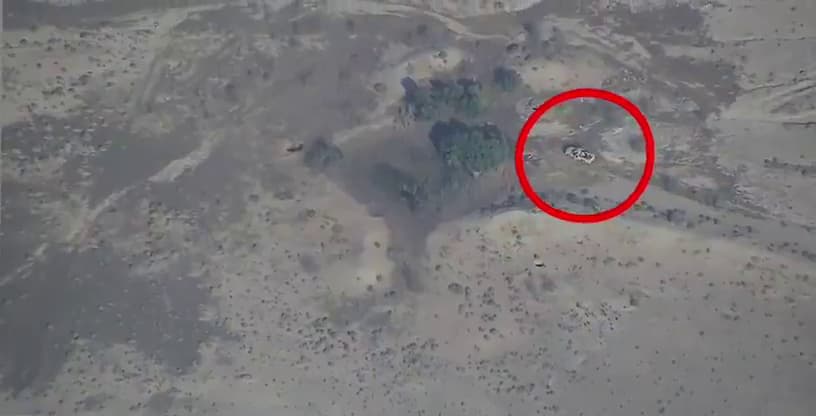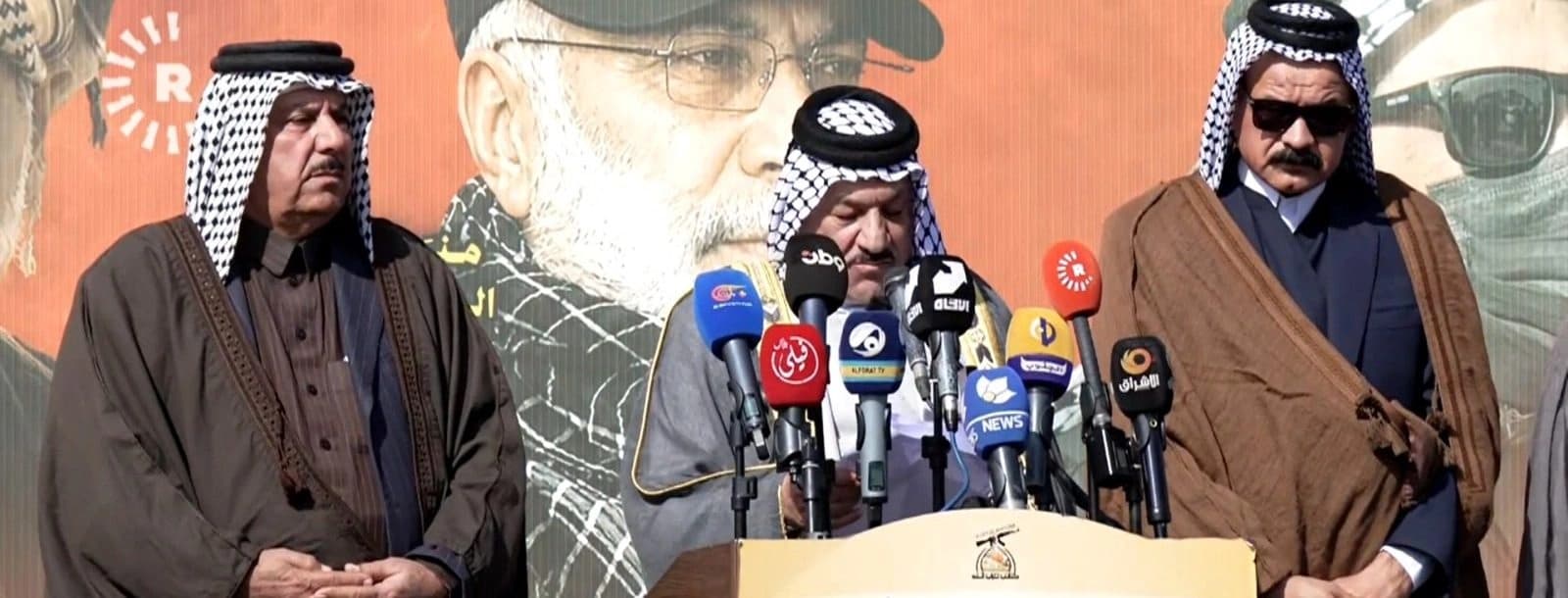

ERBIL, Kurdistan Region - Tribal leaders from several Iraqi provinces on Thursday warned against changes to security arrangements in Jurf al-Sakhr – a stronghold of one of the most powerful Iran-aligned factions in Iraq – following oil smuggling allegations, calling on the federal government to prevent the vital corridor for religious pilgrimage from being used as “a bargaining chip.”
Jurf al-Sakhr, also known as Jurf al-Nasr, emerged as a point of contention between Iraqi Prime Minister Ali al-Zaidi and the Iran-backed faction Kata’ib Hezbollah, which has maintained a strong presence in the southern Baghdadi enclave after it was recaptured from the Islamic State (ISIS) in October 2014. The standoff was cemented following leaked reports of oil smuggling in the town almost two weeks ago.
Zaidi has requested the faction to relinquish control over Jurf al-Sakhr and has sought to reorganize security forces in the area. His office, as the Commander-in-Chief of the Armed Forces, approved a redeployment plan on Wednesday that dispatched units from the federal police, Popular Mobilization Forces (PMF), and the Iraqi Army in the town.
The arrangements have sparked backlash from tribal leaders in Iraq’s south, which rely on Jurf al-Sakhr as a vital corridor for religious pilgrimages to the Shiite holy cities of Karbala and Najaf, saying that changes could undermine security and trigger tensions between Iraqi forces.
In statements issued on Thursday at a press conference in Jurf al-Sakhr, tribal representatives from Karbala, Babil, Najaf, Muthanna and other provinces rejected what they described as attempts to turn the area's security into a political bargaining tool, while calling for guarantees against a return of militant attacks.
“We reject making the security of the road to Imam Hussein a card in political bargaining or deals,” the Karbala tribal statement said, referring to the route used by millions of Shiite pilgrims traveling to the holy city.
“Any disturbance to the security of this area directly affects the security of Imam Hussein's shrine and its visitors.”
The tribal leaders argued that Jurf al-Nasr had been used as a launch point for attacks against pilgrims and residents of Karbala and surrounding areas, claiming that thousands of people had been killed, abducted or displaced along nearby roads since 2003.
Tribal representatives from Babil said the area's security should not be weakened, arguing that the presence of forces that helped defeat ISIS militants should not be undermined.
“We do not want to see the killing return,” the Babil tribal statement said, adding that the sacrifices made during the area's recapture should be recognized rather than questioned.
Tribes in Najaf rejected what they described as political interference in security affairs, saying they “do not accept our security files to be managed according to political calculations or American external dictates,” warning against “historical mistakes that could lead to clashes between the sons of one nation.”
The Karbala tribes urged the government to focus on “economic and public services instead of getting involved in complicated matters that threaten the security we have secured through great sacrifices.”
The changes follow a Tuesday decision by the office of Iraq’s commander-in-chief to redistribute security responsibilities in Jurf al-Sakhr.
Two PMF officials told Rudaw's Hastyar Qadir on Thursday that the 72nd and 79th brigades, which are expected to take over security duties from Kata'ib Hezbollah forces, are known as “moderate” and were previously tasked mainly with protecting Shiite pilgrims during religious occasions.
Taif Muhayawi, commander of the 79th PMF Brigade, said that “the force is officially affiliated with no armed group, but it is close to Faleh al-Fayyad, the head of the PMF.”
“The two brigades are slated to take over security duties in Jurf al-Sakhr in place of Iraq's Kataib Hezbollah,” both sources confirmed.
Although Baghdad has reportedly set Friday as a deadline for the Kata’ib Hezbollah to leave Jurf al-Sakhr, a PMF official believes the matter will take more time to be resolved.
Abu Taleb al-Saeedi, a senior Kata’ib Hezbollah commander, told Rudaw’s Ziyad Ismail that the decision to leave the town cannot be taken “exclusively” by the armed group. He said Shiite tribal leaders, who visited Jurf al-Sakhr on Thursday, “will not allow us to leave.”
Ahmed al-Issawi, a leader at the Wisdom (Hikma) Movement, told Rudaw’s Hastyar Qadir that “no specific date has been set as a deadline for Jurf al-Sakhr to be handed over to other security forces."
Issawi said the parliamentary committee dispatched on November 11 to investigate the oil smuggling allegations needs to submit its report before Zaidi could proceed with retaking the town - a process that may involve armed confrontation.
Harem Kamal Agha, a member of the Iraqi parliament’s committee investigating oil smuggling, told Rudaw on Thursday that the committee was awaiting reports from Kirkuk, Nineveh and the Kurdistan Region before finalizing its findings.
“We still have other meetings to hold, and the committee’s report will definitely be submitted next week,” he said.
Meanwhile, Islamic Revolutionary Guard Corps (IRGC) Quds Force commander Esmail Qaani met with Kata’ib Hezbollah leader Abu Hussein al-Hamidawi and other leaders of the PMF, a media affiliated with armed factions said Thursday.
“The outcome of the meeting was described as good,” Kaf channel reported on Telegram, noting that the meeting included PMF’s chairman Falih al-Fayyadh and the Badr Organization's chief Hadi a-Ameri.