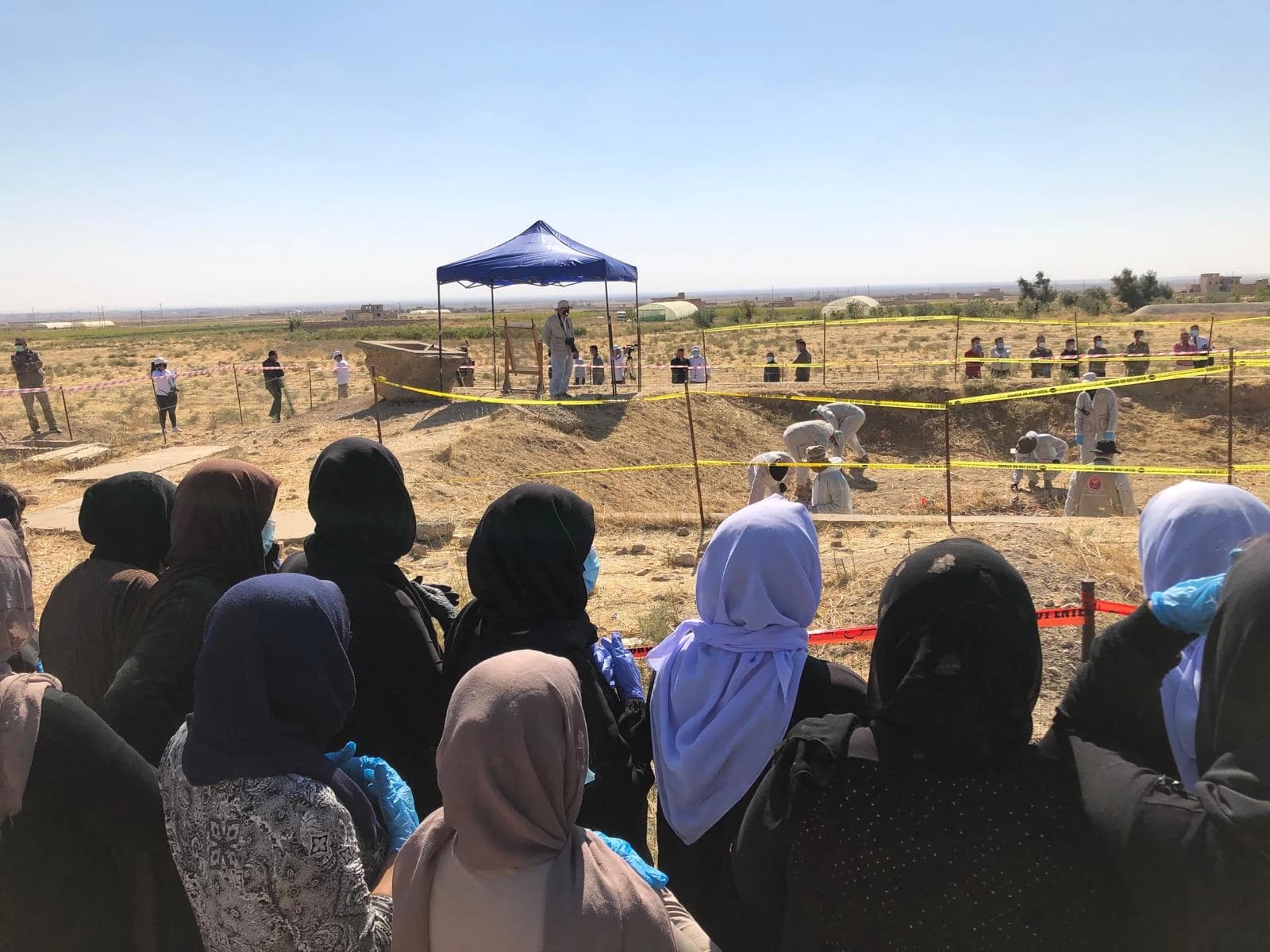

ERBIL, Kurdistan Region - Authorities in the Kurdistan Region and Iraq are preparing to exhume 18 mass graves dating back to the Islamic State (ISIS) group's atrocities against Yazidis in Shingal (Sinjar), a Kurdish official said on Saturday, as efforts continue to identify victims of the militants' 2014 assault.
"Eighteen mass graves in Shingal district have been prepared for exhumation. For this purpose, a technical delegation will visit Baghdad next week to finalize the procedures and methods for exhuming the graves," Aram Nouri, director of mass graves at the Kurdistan Regional Government's (KRG) Ministry of Martyrs and Anfal Affairs, told Rudaw's Zhinar Star.
On August 3, 2014, ISIS militants swept through Shingal, the ancestral homeland of the Yazidi religious minority, killing thousands of people, abducting women and children, and forcing hundreds of thousands to flee. The United Nations has recognized the atrocities as genocide.
During the genocide, ISIS militants massacred thousands of Yazidis, dumping their bodies in mass graves on both sides of Mount Shingal.
Nouri said the exhumations would be carried out in coordination with the Iraqi government under an agreement aimed at accelerating the recovery and identification of victims buried in mass graves.
"Previously, exhuming mass graves took a long time, but now the Kurdistan Region and Iraq have agreed that whenever a mass grave is discovered in the Kurdistan Region or areas outside the Kurdistan Region's administration, both sides must exhume it as quickly as possible and conduct DNA tests on the remains to identify the victims," he said.
Shingal is among areas disputed by the KRG and the federal government.
According to figures obtained by Rudaw from the Directorate of Mass Graves, 90 mass graves have been discovered in Shingal since the ISIS offensive in August 2014. Of these, 78 have been exhumed, containing the remains of 857 people.
Nouri said authorities could not yet determine how many victims were buried in the 18 graves awaiting exhumation, but investigations suggested that most were men.
"We cannot determine the numbers because whether a grave contains two people or 20 people, it is still considered a mass grave. However, according to investigations, the majority of those buried in these graves are men," he said.
Exhumations began in 2019 but have faced repeated delays, including disruptions caused by the coronavirus pandemic and difficulties identifying remains through DNA testing.
In June, families of Yazidi victims told Rudaw that hundreds of remains were still awaiting identification in Baghdad, with some relatives waiting more than three years for the bodies of their loved ones to be returned.
At the time, Yazidi lawmaker Khalid Sido said funding problems had disrupted forensic work and pledged to seek the release of funds to resume the identification process.