
ERBIL, Kurdistan Region - The Iraqi government has pledged to facilitate the return of thousands of families displaced from Babil province’s Jurf al-Sakhr subdistrict for nearly 12 years, while officials say security forces must first complete their deployment to clear explosive remnants and restore essential services to the long-restricted town.
“We promise all Iraqis, especially our people from Jurf al-Nasr, that they will have a dignified, honorable return,” Sabah al-Numan, spokesperson for the Iraqi Commander-in-Chief of the Armed Forces Ali al-Zaidi, told Dijla TV on Saturday, using the town's official name.
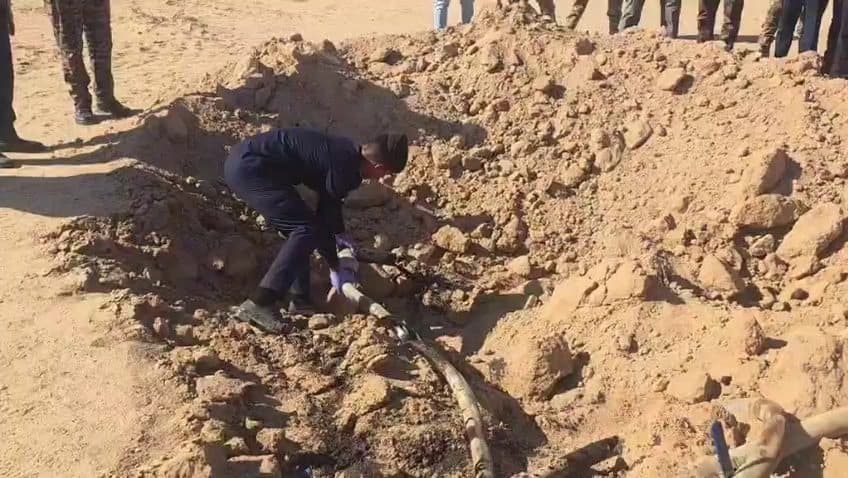
Numan said the return process would follow the completion of the security handover, with military engineering teams conducting extensive searches for landmines and explosives left behind by the Islamic State (ISIS), while the National Security Service would vet returning families to prevent wanted individuals from entering the area.
Located roughly 60 kilometers southwest of Baghdad, Jurf al-Sakhr was recaptured from ISIS in 2014 but remained under the effective control of the Iran-aligned paramilitary group Kata'ib Hezbollah, with its predominantly Sunni population barred from returning. Iraqi forces entered the town on Friday under a new joint command established following a standoff between the faction and Prime Minister Ali al-Zaidi's government over allegations of oil smuggling.
According to Iraq's Ministry of Migration and Displacement, more than 6,000 families fled Jurf al-Sakhr in 2014 and remain scattered across several provinces, including Babil, Baghdad and Anbar.
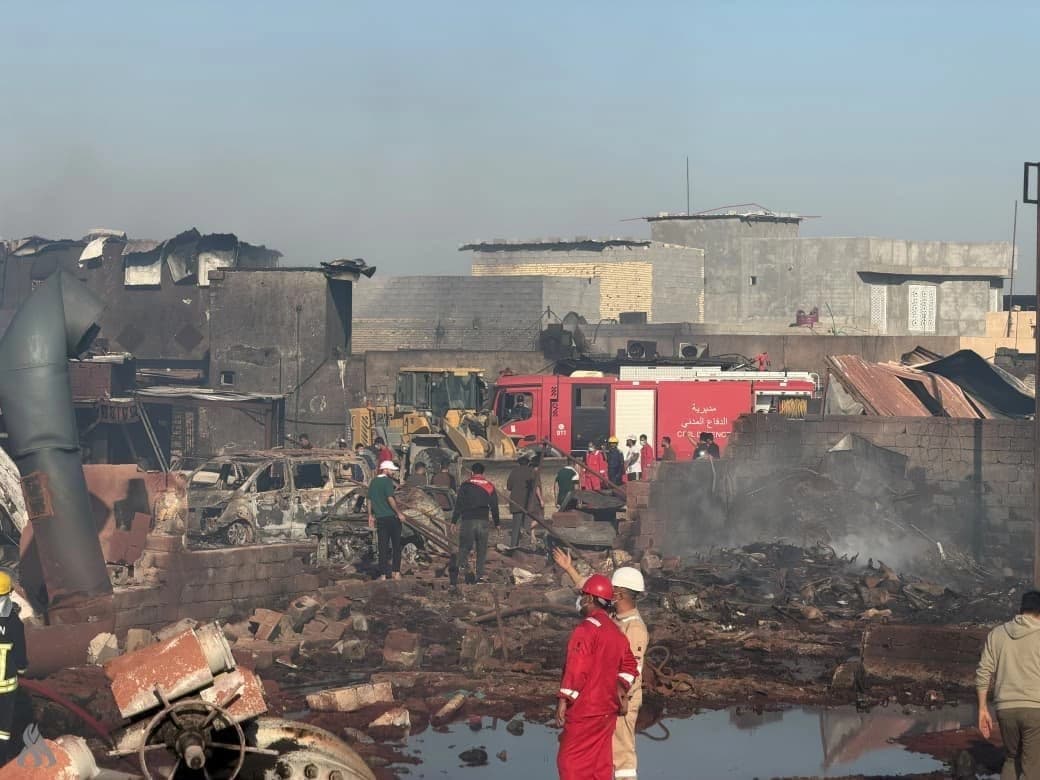
Numan said the authorities would undertake a major reconstruction effort once the security situation had stabilized, restoring infrastructure and essential services to an area devastated by years of conflict and restricted access.
He also stressed that families would not be punished for the alleged involvement of relatives in "terrorist" activities, invoking the Islamic principle that no person bears responsibility for another's wrongdoing.
“We are a state bound by laws and institutions. Certainly, a person will not be judged for another person's crime,” Numan said.
“The offending individual will be held to account to face justice, and the other, the innocent who was forced to abandon their home and abode, will have a dignified, honorable return with all the freedoms associated with that,” he added.
Numan pledged that the government would protect returning families and provide essential services, describing their return as a legal and moral obligation.
The assurances come as Iraqi security forces continue replacing the units previously controlling Jurf al-Sakhr. The new command is overseen by the Iraqi army, federal police and 72nd and 79th brigade of the Popular Mobilization Forces (PMF) formations, while Energy Police have assumed responsibility for protecting oil pipelines.
On Saturday, authorities also reopened a major road connecting Latifiya, Jurf al-Sakhr and Karbala, restoring a route that had remained restricted for years.
Ayad al-Janabi, a representative of Jurf al-Sakhr's displaced families, told al-Rabiaa TV on Saturday that the government was approaching the issue cautiously because of its sensitivity.
“Mr. Zaidi is untying this knot through steps, the first of which was the entry of joint forces to Jurf. This has taken place,” Janabi said.
He explained that the next steps would involve the new forces fully assuming security responsibilities, military engineering teams clearing explosive remnants, and the eventual return of families following security screening.
Janabi maintained that most displaced families currently living in Babil, Anbar and Baghdad had already undergone security vetting, potentially facilitating their return once the necessary arrangements are completed.
Meanwhile, the Albu Issa al-Qaysiyya tribe issued a statement expressing its support for Zaidi's efforts to end displacement and return families to Jurf al-Sakhr, al-Uwaysat and al-Bu Issa.
In a statement delivered on behalf of the tribe's sheikhs and notables, led by tribal chief Ziyad Kamil al-Dahal, the tribe pledged its support for the state and security institutions and praised the government's approach to restoring the rights of displaced residents.
The statement described their return as “a fundamental pillar for achieving social justice, turning a page on the past, and building a future prevailed by peaceful coexistence.”
Despite the assurances, no timetable has been announced for the return of displaced families.
Iraq's migration ministry told Rudaw on Saturday that preparations could take time, while its spokesperson told the state-run al-Sabah newspaper on Sunday that discussing an immediate return was "premature" until security operations had been completed.