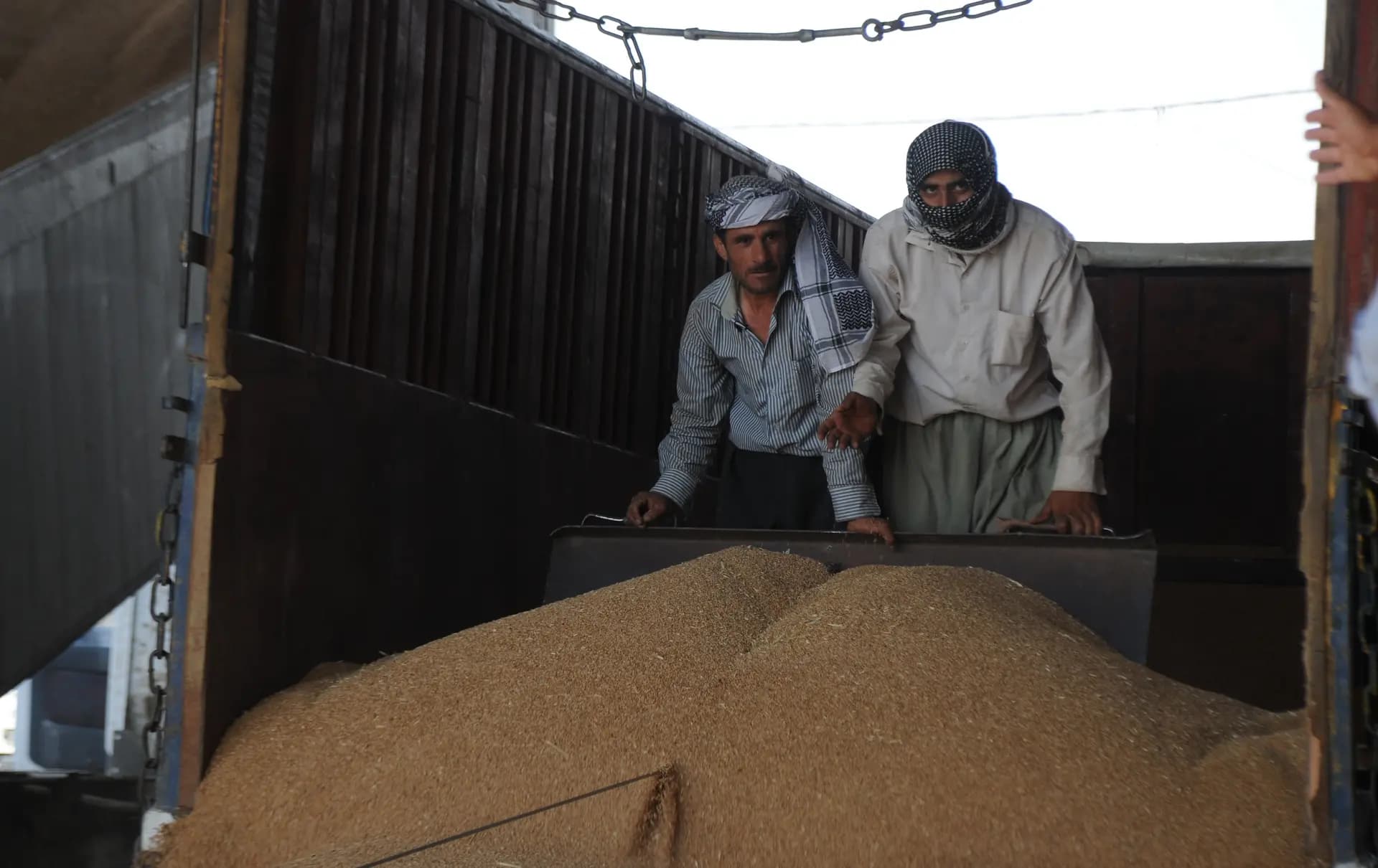

ERBIL, Kurdistan Region - Iraqi Minister of Trade Mustafa Nizar al-Ani said Saturday the ministry has disbursed 350 billion Iraqi dinars (nearly $267 million) to wheat farmers across the country last week, including those in the Kurdistan Region, as part of an accelerated effort to settle state dues amid an abundant, self-sufficient harvest season this year.
"The ministry is fully committed to purchasing the national harvest from all Iraqi governorates, including those in the Kurdistan Region," Ani told Rudaw.
The Iraqi Council of Ministers has established a tiered pricing structure for the current season’s wheat procurement. The government will purchase wheat at 700,000 Iraqi dinars (around $534) per ton from farmers registered under the national agricultural plan. Conversely, wheat produced outside the official plan will be bought at 500,000 dinars (around $382) per ton.
While Baghdad’s procurement plan originally capped purchases from the Kurdistan Region at 292,000 tons, the federal government raised the threshold to 400,000 tons in May following pressure from Erbil officials.
Despite the increase, the current quota maintains a downward trend in federal wheat procurement from the Kurdistan Region. Baghdad purchased 700,000 tons from Kurdish farmers in 2024, before reducing the cap to 400,000 tons in 2025.
Nationwide, heavy rainfall has driven up agricultural yields this year. The total wheat harvest is expected to exceed five million tons, prompting authorities to launch early procurement operations.
Ani confirmed that the government’s immediate priority remains "achieving food security, self-sufficiency, and fully meeting the needs of our citizens."
"Shifting toward exportation requires achieving stable, sustainable surpluses over several consecutive seasons," Ani added.
To protect domestic producers, the Iraqi government banned all wheat imports last week until the end of the current marketing season.
"Given the abundance of local production and advanced levels of wheat self-sufficiency, the government relies primarily on national production to supply local mills and the food ration system," Ani said, noting that imports will now only be utilized during exceptional shortages.
Iraq expects this year's wheat harvest to exceed five million tons, a senior trade ministry official said earlier this month, as authorities prepare to launch the grain marketing season in the Kurdistan Region.
Disputes between Erbil and Baghdad over budget transfers, oil exports, and agricultural coordination have repeatedly affected trade and procurement policies in recent years, prompting Kurdish officials to call for equal treatment of farmers in the Region under Iraq’s national support programs.