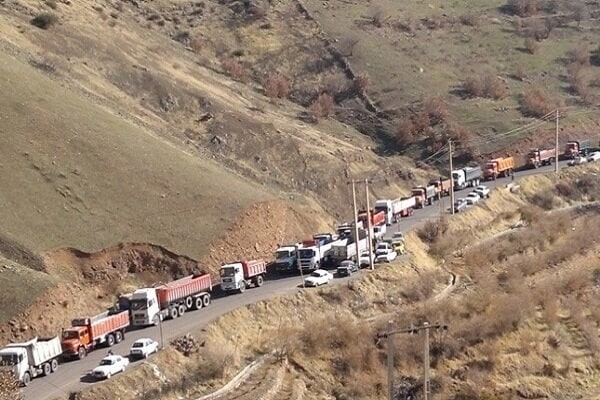

ERBIL, Kurdistan Region - An Iranian official said around 300 trucks bound for Iraq had been diverted after trade was suspended at the unofficial Sheikh Saleh crossing in western Iran’s (Rojhelat) Kermanshah province as the Iraqi government moves to assume control of Kurdistan Region border crossings.
The diversion came two days after Iraqi border forces closed the Pshta crossing with Iran in Halabja province following Iraqi Prime Minister Ali al-Zaidi’s orders on Tuesday to take charge of border crossings in the Kurdistan Region, which are not federally recognized.
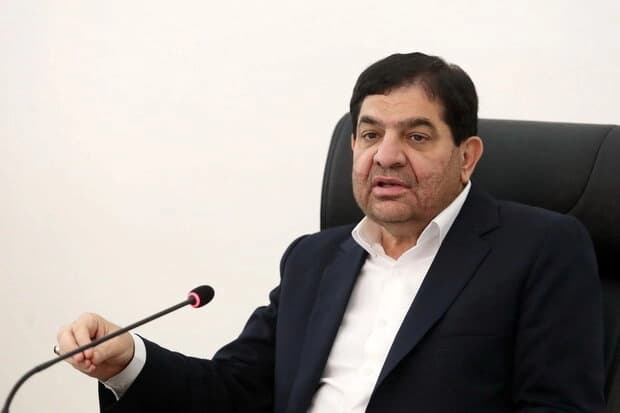
“To prevent exports from coming to a halt, around 300 trucks at the Sheikh Saleh crossing were directed to other crossings in the province,” Hassan Rostamzad, Kermanshah’s deputy governor for economic affairs, said in remarks published Friday by Iran’s semi-official Mehr News Agency.
He stated on Thursday that trade there had been suspended after Baghdad ordered the closure of informal crossings. On the Iranian side, the governor of Salas-e Babajani County in Kermanshah, where Sheikh Saleh is located, also confirmed late Thursday that commercial activity at the crossing had been suspended after Zaidi’s orders.
Economic, commercial exchanges, and exports of goods to the Kurdistan Region and Iraq are carried out through the two official borders of Parviz Khan and Khosravi, both of which are around 120 kilometers south of Sheikh Saleh, parallel to Khanaqin, bordering federal Iraq.
Commercial traffic at the Shushme border crossing - adjacent to Halabja - which is not a federally recognized crossing, was continuing, Rostamzad said. Meanwhile, Iranian media noted conflicting reports of its closing, stating that the status of Shushme’s border could not be confirmed.
He did not specify to which crossings the trucks were rerouted or whether their cargo had reached the Kurdistan Region or Iraq.
Kermanshah customs supervisor Dariush Sadeghi said Friday that the closure of commercial activity at Shushme had not been confirmed by the Kurdistan Region.
Zaidi orders, backed by Iraq’s federal Supreme Court, follow an investigation that found suspected oil smuggling involving the state-owned North Oil Company operating in the Kurdistan Region.
Kurdish leaders have strongly rejected the directives, describing them as unconstitutional and warning against efforts to return Iraq to a centralized system of governance.
The closure also comes amid weeks of increasingly frequent clashes between the IRGC and Kurdish opposition groups operating Iran’s western border with the Kurdistan Region, as tensions mount between Iran and the US and Israel.
Iran has significantly increased the deployment of Islamic Revolutionary Guard Corps (IRGC) commando and drone units to Kurdish areas in western Iran (Rojhelat) over the past week, with forces tasked with reconnaissance, artillery and drone attacks against Kurdish opposition positions, a watchdog reported Friday.
Trade volume between Iran and Iraq is estimated at $10 billion to $12 billion annually, with international trade fluctuations forming the backbone of Kurdistan's customs revenue. In October 2025, Tehran’s ambassador to Baghdad pointed to a possible increase in trade with Iraq to $30 billion annually with the opening of the new Chilat border corridor between Iran’s Ilam province and Iraq’s Maysan.
Iraq accounts for 22 percent of Iran’s total exports share, said Hassan Danaeifar, the chairman of the Iranian committee for the development of economic relations between the two countries, adding that “Iraq has always been one of Iran’s main trading partners for the past 15 years,” Mehr reported earlier in November.
Most exported goods are carried out through the official Parviz Khan border with Kurdish-populated areas, especially the cities of Kalar, Sulaimani, Mosul, Khanaqin, and Kirkuk in the central part of the country. Khosravi border, 20 kilometers from Parviz Khan, has the largest international land terminal in the Middle East, according to the state-run Islamic Republic News Agency (IRNA).