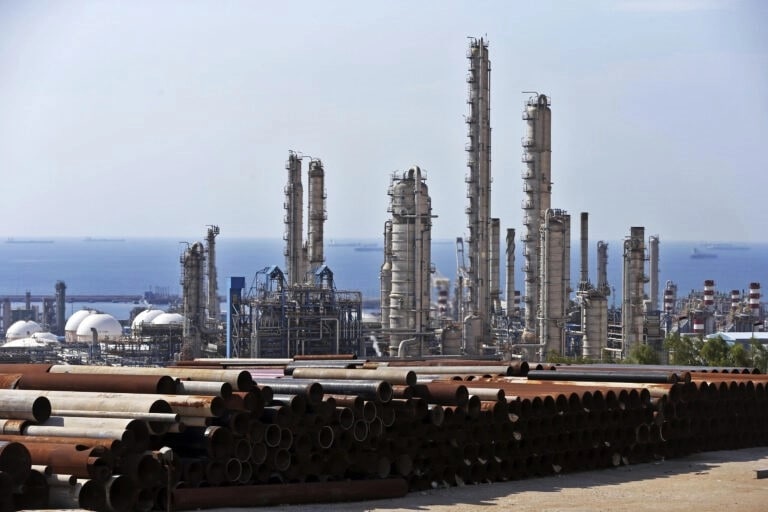

ERBIL, Kurdistan Region - Iran has warned that major petrochemical plants could shut down by Saturday as severe natural gas shortages, worsened by months of war and damage to energy infrastructure, threaten industrial production and electricity supplies in a country already struggling with sanctions, a collapsing currency and soaring living costs.
The warning comes as Iranian households face mounting hardship following the US-Israeli war, Washington's naval blockade, and tightening economic sanctions, which have restricted Tehran's oil revenues and access to foreign currency.
The Iranian rial has plunged to around 2.9 million to the US dollar, equivalent to 290,000 tomans, eroding purchasing power and driving up the cost of imported goods.
Ali Rabbani, director of energy consumption optimization at Iran's National Petrochemical Company, told the Iranian Labor News Agency (ILNA) on Wednesday that all methanol production units and most urea-ammonia plants would be taken offline by Saturday because of dwindling gas supplies.
"Currently, all gas feed units are experiencing restrictions and have been stopped due to the fact that they do not have the possibility of using alternative fuel,” he stated.
He said gas deliveries to petrochemical complexes had fallen “below 35 million cubic meters per day,” compared with a potential requirement of “90 million cubic meters, or 10 percent of the country's gas.”
Rabbani warned that gas-dependent facilities were already facing severe restrictions, with some operations suspended because they could not use alternative fuels.
The shortages are occurring before the coldest part of winter, when residential heating demand typically surges.
Pezeshkian acknowledges worsening crisis
President Masoud Pezeshkian recently acknowledged Iran's growing economic difficulties, describing the pressure facing the country as a "silent economic war" more difficult than military attacks.
He said Iran had experienced an imbalance between energy production and consumption even before attacks on its gas infrastructure worsened the shortages.
Pezeshkian said US and Israeli attacks had knocked out approximately 240 million cubic meters of daily gas production capacity, of which around 100 million cubic meters had been restored.
Iranian officials have offered differing estimates of the potential winter gas deficit, ranging from about 400 million to 530 million cubic meters per day.
Iranian news outlet Entekhab has warned that the widening shortage threatens electricity generation, industrial production and the wider economy.
Electricity and oil production under pressure
The gas shortage is also affecting Iran's electricity system, which relies heavily on gas-fired thermal power plants.
Mehdi Masaeli, secretary-general of Iran's electricity industry syndicate, recently said approximately 93 percent of the country's electricity was generated by thermal power stations, with natural gas accounting for around 80 percent of their fuel requirements, and that “the country's daily gas consumption during the peak cold days reaches about 900 million cubic meters.”
Insufficient gas supplies have forced some power stations to switch to diesel and heavy fuel oil, increasing costs and worsening air pollution.
Rolling electricity cuts introduced in November have added to the difficulties facing households and businesses.
The shortage could also affect Iran's oil industry, where natural gas is reinjected into reservoirs to maintain pressure and support production. Reduced gas availability could undermine longer-term crude output.
Meanwhile, shutdowns at methanol and fertilizer plants threaten export earnings and could disrupt agricultural supply chains.
Growing pressure on ordinary Iranians
The latest energy crisis adds to the hardship caused by war, sanctions, inflation and years of economic mismanagement.
Industrial shutdowns threaten employment and household incomes, while electricity disruptions increase costs for manufacturers and businesses.
Prolonged shortages could also drive up consumer prices, further squeezing families already struggling with the rial's depreciation.
Iran has experienced repeated protests over economic hardship, fuel prices and declining living standards. Further deterioration could deepen public frustration and potentially trigger renewed unrest.
With winter approaching, Tehran faces a difficult choice between maintaining household heating supplies and protecting industrial production, as the combined effects of war damage, sanctions and longstanding energy shortages place growing pressure on the economy.