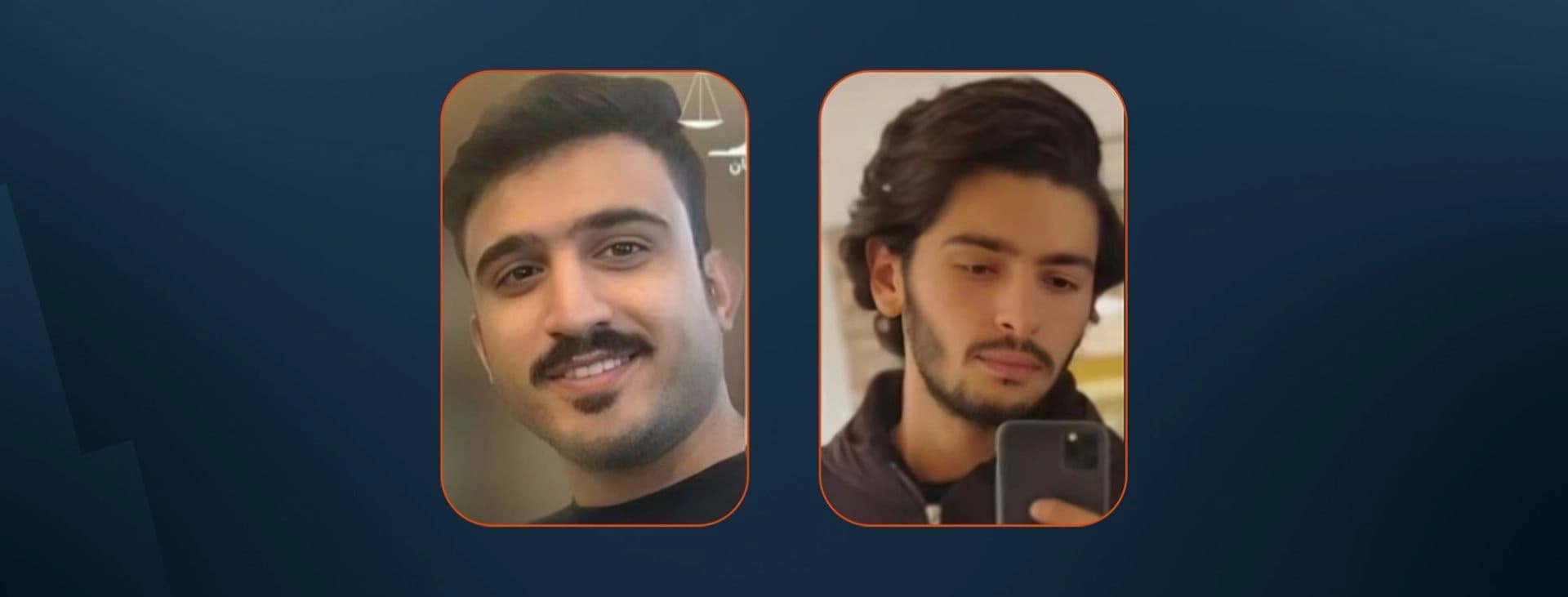

ERBIL, Kurdistan Region - Two young Iranian men sentenced to death over their alleged involvement in the killing of a Basij member during the 2022 nationwide protests have been transferred to solitary confinement, raising fears that their executions are imminent, a legal rights organization reported on Saturday.
The Dadban Legal Advice Centre said Milad Armoon, 27, and Navid Najaran, 34, were moved to solitary cells at Qezel Hesar prison near Tehran on November 21, days after their death sentences were upheld by the supreme court.
Iranian authorities have increasingly used executions and imprisonment as instruments of state repression, according to rights organizations, seeking to silence and intimidate a restive population demanding greater personal and political freedoms. The crackdown comes amid a deepening economic crisis that has affected millions of Iranians, fueling public anger over declining living standards and restrictions on civil liberties.
The Human Rights Activists News Agency (HRANA) reported on November 20 that Iran's Supreme Court had upheld the death sentences of Armoon and Najaran in the case known as the Ekbatan dossier, while overturning those of two other defendants, Mehdi Imani and Seyed Mohammad Mehdi Hosseini.
The four men were sentenced to death in June by Branch 15 of Tehran's Revolutionary Court, presided over by Judge Abolqasem Salavati, on charges of moharebeh, or waging war against God.
The case stems from the death of Arman Aliverdi, a member of the Basij paramilitary force, during the 2022 Woman, Life, Freedom protests in Tehran's Ekbatan neighborhood. More than 50 people were subsequently arrested, with 14 facing prosecution.
In a separate criminal proceeding, Najaran was acquitted of involvement in Aliverdi's murder due to insufficient evidence, while Armoon received a five-year prison sentence and was ordered to pay compensation for his alleged role in the assault.
Despite those rulings, both men remain under death sentences imposed separately by the Revolutionary Court.
The threat of execution comes amid an intensifying crackdown on dissent in Iran, where authorities have increasingly carried out executions of protesters, including public hangings. In August, authorities publicly executed two young men, Abdolfazl Sepahi Badjani and Amir Hossein Safari Hosseinabadi, in Isfahan after convicting them of killing police officers during the January protests. Human Rights Watch documented at least five public executions between March and August, saying the authorities were using the death penalty to spread fear and discourage further protests.
According to Norway-based Iran Human Rights (IHRNGO), at least 41 protesters have been executed since March, including 39 arrested during the January 2026 protests and two linked to the 2022 Woman, Life, Freedom uprising. Another 16 political prisoners affiliated with banned opposition groups and 17 people convicted of espionage-related offences have also been executed. The organization's latest tally puts the total number of executions across all criminal offences, including murder and drug-related convictions, at 733 since the beginning of 2026. At least 121 protesters arrested during January's unrest remain on death row, the organization warned on November 16.