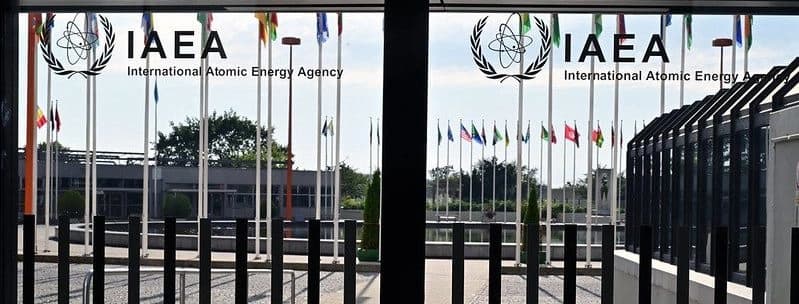

ERBIL, Kurdistan Region - The United States, France, Germany and Britain published a joint statement on Thursday prodding Iran to allow inspectors from the International Atomic Energy Agency (IAEA) to return to its nuclear sites.
“We urge Iran to engage without further delay with the Agency to implement the technical steps necessary for the full resumption of inspections in Iran. This includes providing the requested information regarding the affected nuclear facilities and nuclear material, as well as facilitating the Agency’s verification activities at all nuclear facilities,” the statement read.
Aside from the Bushehr nuclear power plant, the watchdog cannot verify the status of Iran's declared nuclear facilities or material and has not received information from Iran nor had access to inspect its nuclear facilities since 2025, IAEA Director General Rafael Grossi said on Wednesday in a board meeting in Vienna.
US President Donald Trump has repeatedly insisted that Iran must not be allowed to develop nuclear weapons, making the issue a central focus of Washington’s policy toward Tehran.
The US and Israel launched a joint aerial campaign against Iran in late February targeting military sites and some of Tehran’s nuclear facilities. In mid-June 2025, during a 12-day war with Iran, Israel struck above-ground enrichment laboratories, conversion plants, and centrifuge workshops across Natanz, Isfahan, Karaj, and Arak.
According to the watchdog’s last verified estimate in June 2025, Iran possessed approximately 440.9 kilograms of uranium enriched to 60 percent purity.
“Since this Board last met, little if any progress has been made,” the joint statement read, adding that the Agency has not received any information from Iran regarding the status of its declared nuclear facilities and nuclear material, nor has it been granted access to the requested facilities.”
“The reports make clear that since February 2026 the only in-field verification activity has been at Bushehr Nuclear Power Plant. While access to Bushehr is welcome, Iran should not expect praise for such inspections while continuing to refuse inspections at every other declared facility, failing to meet even its most basic safeguards obligations,” the statement said, adding that the four countries “fully share the DG’s ‘increasing concern’ about the Agency’s lack of access to and information about Iran’s fourth declared enrichment plant in Isfahan.”
The statement comes amid growing concerns over the status of Iran’s stock of highly enriched uranium. The agency has previously warned that Iran’s uranium enrichment had reached 60 percent purity, a short technical step from the 90 percent generally considered weapons-grade.
Satellite Imagery shows renewed activity since early September at a site northeast of Tehran that Israel has linked to nuclear weapons development and struck in March, a US-based nuclear expert said in October. The IAEA recently voiced “increasing concern” regarding an Iranian uranium-enrichment plant in Isfahan.
Grossi said in March that the agency believed a significant amount of Iran’s most highly enriched uranium was stored in a tunnel complex in Isfahan, where diplomats suspect the Isfahan Fuel Enrichment Plant (IFEP) is located.
A US State Department program earlier in November said it was offering up to $20 million and the possibility of relocation to anyone with information on Tehran’s nuclear program.
Meanwhile, Iran’s national assembly earlier in the month called for reviewing the country’s membership in the Nuclear Non-Proliferation Treaty and a possible withdrawal, semi-official Mehr news agency reported.
Iran’s permanent mission to the UN issued a statement on Thursday conveying reluctance to future inspections, alleging that “information gathered by the IAEA could be exploited to facilitate future military strikes against its nuclear facilities.”
“Tehran argues that it is unreasonable to expect Iran to provide sensitive nuclear data and grant unrestricted access while its nuclear sites remain targets of military attacks and continued threats,” their statement read, claiming that “Iran’s cooperation has gone beyond its legally binding obligations.”
The countries dismissed what they termed Iran's "stonewalling strategy," urging that Iran's cooperation would prove imperative. "It is up to Iran to seize this opportunity, change course, and address the international community's long-standing concerns regarding its nuclear program."