
ERBIL, Kurdistan Region - Trade through Iran’s Kurdish border areas has surged dramatically as the country’s conventional maritime and land routes face growing disruption due to the US embargo. The value of goods entering through a system that allows locals to carry merchandise across the border has risen from just $3 million last year to more than $200 million this year.
The head of customs in Iran’s West Azerbaijan province said that 140,713 tons of goods worth $208 million entered the country through the system, which is locally known as kolbari, during the first five months of the current Iranian year.
That compares with only 870 tons worth around $3 million during the same period last year — an increase of roughly 69 times in value and more than 160 times in volume, according to figures published by the state-run IRNA.
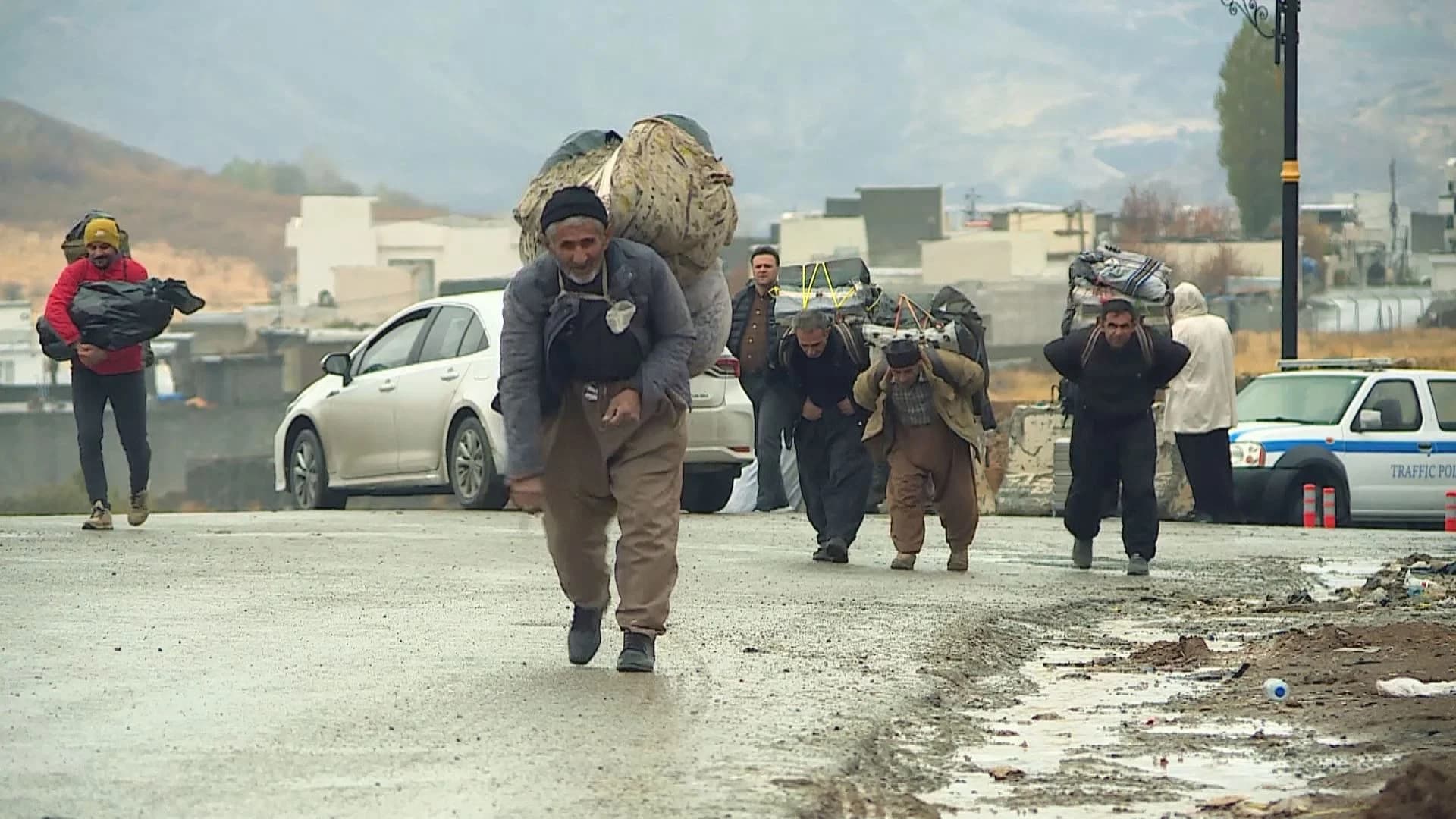
While Iran promotes the formal kolbari systems, Iranian border guards and the Islamic Revolutionary Guard Corps (IRGC) continue to target the border couriers that operate in unofficial crossing. Yousef Mamapour, father of one child, was shot dead on August 19 by the border guards in Sardasht border areas. In July alone, six kolbars were killed and another six were wounded by the Iranian security forces according to the Norway-based Hengaw rights group.
The sharp rise shows how trade is increasingly shifting towards Iran’s semi-official borders, including routes connecting the country with the Kurdistan Region, as pressure mounts elsewhere.
Kolbari traditionally refers to the practice of Kurdish couriers, known as kolbars, physically carrying goods across the rugged mountain border between Iran and the Kurdistan Region. Merchants in Tehran and big cities across Iran use the kolbari routes to avoid paying high tariffs imposed by the government.
In recent years, however, Tehran has sought to formalize parts of the trade and allow larger quantities of goods to enter through designated border markets and crossings.
West Azerbaijan customs officials said the province has become an increasingly important transit hub. In the first five months of the year, more than 1.7 million tons of foreign transit goods worth over $4.3 billion passed through its customs facilities, up 14 percent from the same period last year.
The increase comes as Iran’s other major trade corridors face severe congestion and disruption.
At Bazargan, one of Iran’s principal crossings with Turkey and a key gateway to Europe, truck drivers have reported waits of as long as 25 days, severely slowing the movement of goods and increasing costs.
“The naval blockade has been in place for some time, and we should have prepared alternative corridors much earlier,” Arman Khaleghi, secretary-general of the House of Industry and Mining, told Khaneh Eghtesad news outlet. “We should not have a 25-kilometer queue at the Pakistani border, nor should waiting times at the Bazargan border crossing reach 25 days.”
Iran’s southeastern routes through Pakistan have also come under strain. Earlier this year, hundreds of trucks were reported stranded around the Gabd-Rimdan crossing amid customs disputes and delays. Pakistani authorities disputed claims that the crossing had completely shut, but acknowledged that Iranian trucks and cargo had remained at the border for several days in some cases.
Those land routes have become increasingly important as restrictions on shipping through the Strait of Hormuz and the US naval blockade complicate Iran’s maritime trade.
Against that backdrop, the Kurdish frontier is emerging as an increasingly significant alternative.
The dramatic growth in kolbari imports suggests that goods which previously entered through ports or established international crossings are increasingly being diverted towards smaller western routes.
For Iran, whose economy depends heavily on keeping goods moving despite sanctions, war and disrupted transport networks, its once-marginal Kurdish border trade is becoming far more important.