
ERBIL, Kurdistan Region — The Iranian government announced a price hike for non-quota emergency gasoline on Sunday, raising the rate to 10,000 Tomans while keeping twice-monthly quota allotments unchanged.
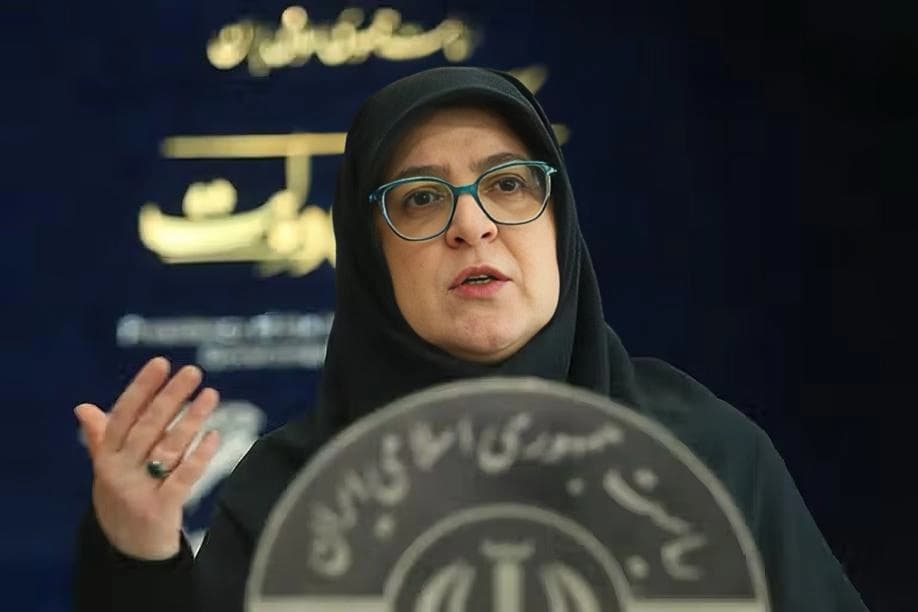
In a video public address, government spokesperson Fatemeh Mohajerani said the measure was part of an effort to "ensure the stability of the supply and demand flow and national resilience."
"I must state that, as we promised the public, the price of quota gasoline, meaning 60 liters at 1,500 Tomans and 50 liters at 3,000 Tomans, will not change at all," Mohajerani assured viewers.
While the 110 liters of monthly subsidized fuel remain untouched, the rate for emergency refueling via gas station cards will increase to 10,000 Tomans starting at midnight on Shahrivar 17 (September 8), Mohajerani added.
The spokesperson claimed that 85 percent of Iranians meet their monthly needs within the 110-liter quota, adding that all revenue generated from the price adjustment will be directed toward public livelihoods.
Mohajerani also pointed to a renewed focus on expanding public transportation, converting vehicles to compressed natural gas (CNG) and liquefied petroleum gas (LPG) to lower demand, and increasing production capacity.
Fuel pricing remains a highly volatile topic in Iran. In November 2019, nationwide protests erupted after the government announced sudden gasoline price hikes ranging from 50 percent to 200 percent.
Iran is currently navigating a severe economic crisis driven by tightening US sanctions. The Iranian rial has lost roughly 60 percent of its value since March, with the US dollar trading at around 2.1 million rials last Wednesday.
The currency's collapse and subsequent inflation have been exacerbated by a US-imposed maritime blockade on Iranian ports implemented in July.
The economic pressure follows a 40-day war between Iran and a US-Israeli coalition that began on February 28. Tensions have persisted through intermittent clashes, including US strikes last Sunday on two Iranian rocket launchers on Larak Island in the Strait of Hormuz, where US Central Command (CENTCOM) said Islamic Revolutionary Guard Corps (IRGC) forces were preparing to deploy sea mines. Iran subsequently launched retaliatory attacks against US positions and regional allies, prompting further American strikes on Iranian military infrastructure.
The renewed escalation unfolds against the backdrop of a prolonged standoff over the Strait of Hormuz, through which roughly a fifth of global oil supplies passed prior to the conflict. Iran has maintained traffic restrictions in the vital waterway, while Washington enforces a maritime blockade targeting Iranian ports and oil exports.
The IRGC confirmed early Sunday that it had targeted a US aircraft carrier and destroyer with ballistic missiles, hours after the US military reported striking three Iranian crude oil tankers in retaliation.