
ERBIL, Kurdistan Region - Iranian authorities have sentenced 10 protesters to death and six others to a combined 256 years of imprisonment over January demonstrations, as the head of the judiciary warned on Monday that anyone who dared to protest against the state would be dealt with “decisively.”
According to information obtained by US-based Human Rights Activists News Agency HRANA, 16 individuals were detained in the city of Isfahan over the killing of a member of the Islamic Revolutionary Guard Corps (IRGC) in a case known as the “Isfahan Shohada Square,” during protests in January over the worsening economic situation and devaluation of the currency which spread nationwide.
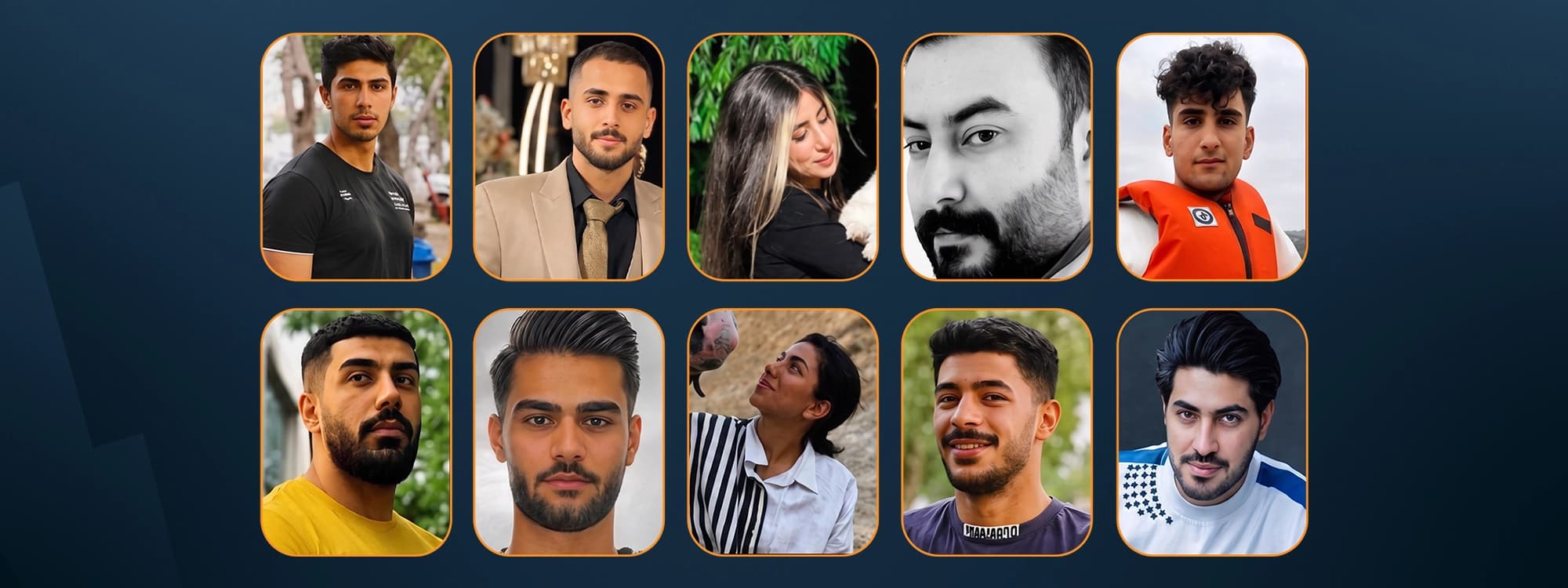
The 16 individuals were arrested on charges including “enmity against God” through carrying bladed weapons, “destruction of public property,” “assembly and collusion,” and “propaganda against the regime.” The Isfahan Revolutionary Court sentenced 10 citizens to death and 11 years in prison each, while the other six defendants received prison sentences ranging from 16 to 36 years totaling 256 years of imprisonment.
The nature of the defendants’ alleged connection to the deaths of the two individuals remains unclear and the indictment against the 16 defendants does not include any specific charges related to the killings. Instead, the case has focused mainly on other charges.
During the hearing, no evidence was presented that specifically pointed towards the defendants’ role, participation or involvement in the deaths of the two individuals, the rights group said.
Ahmadreza Saeedi, one of the defendants, told the judges that he had been subjected to torture during interrogation. He alleged that the investigator assigned to the case used an electric shock device to injure his neck and genitals.
Protests ensued in late December first instigated by shopkeepers and bazaar merchants in Tehran and swiftly spread beyond markets and commercial centers to encompass students, the general public, activists, and social groups, becoming one of the largest protest movements of recent years.
Iranian authorities claimed that over 100 members of the security forces were also killed during the demonstrations in which the IRGC and security forces responded with deadly crackdowns and gunned down tens of thousands of protesters, while thousands more were arrested or summoned by security agencies.
HRANA, which adopted a methodology centered on documenting “minimum verifiable cases” through February 2026, places verified protestor fatalities at 6,488 and confirmed arrests at 53,777, with additional verification hampered primarily by authorities having restricted communication via threats to medical personnel as well as an internet blackout for over a week across the country during the protests.
Iran has executed 524 individuals in the first eight months of this year, according to Norway-based Iran Human Rights, compared to the total number of executions last year, which stood at 1,639.
On Monday, head of the judiciary Mohseni Ejei made explicit threats and warned of a “firm response” to the “enemy and its mercenaries,” saying that the judiciary would act “more decisively than ever” in prosecuting anyone undermining the “security of the people and the country,” citing “enemy” efforts to “create unrest.”
Iranian authorities have used executions since the 1979 Islamic Revolution in what rights groups describe as a tactic to intimidate and spread fear in the public, quell protests and suppress dissent.
Since the crackdown on protesters in January, rights groups have reported a rise in arbitrary detentions, enforced disappearances, torture, and executions, which has raised concerns internationally among rights groups as well as the UN.