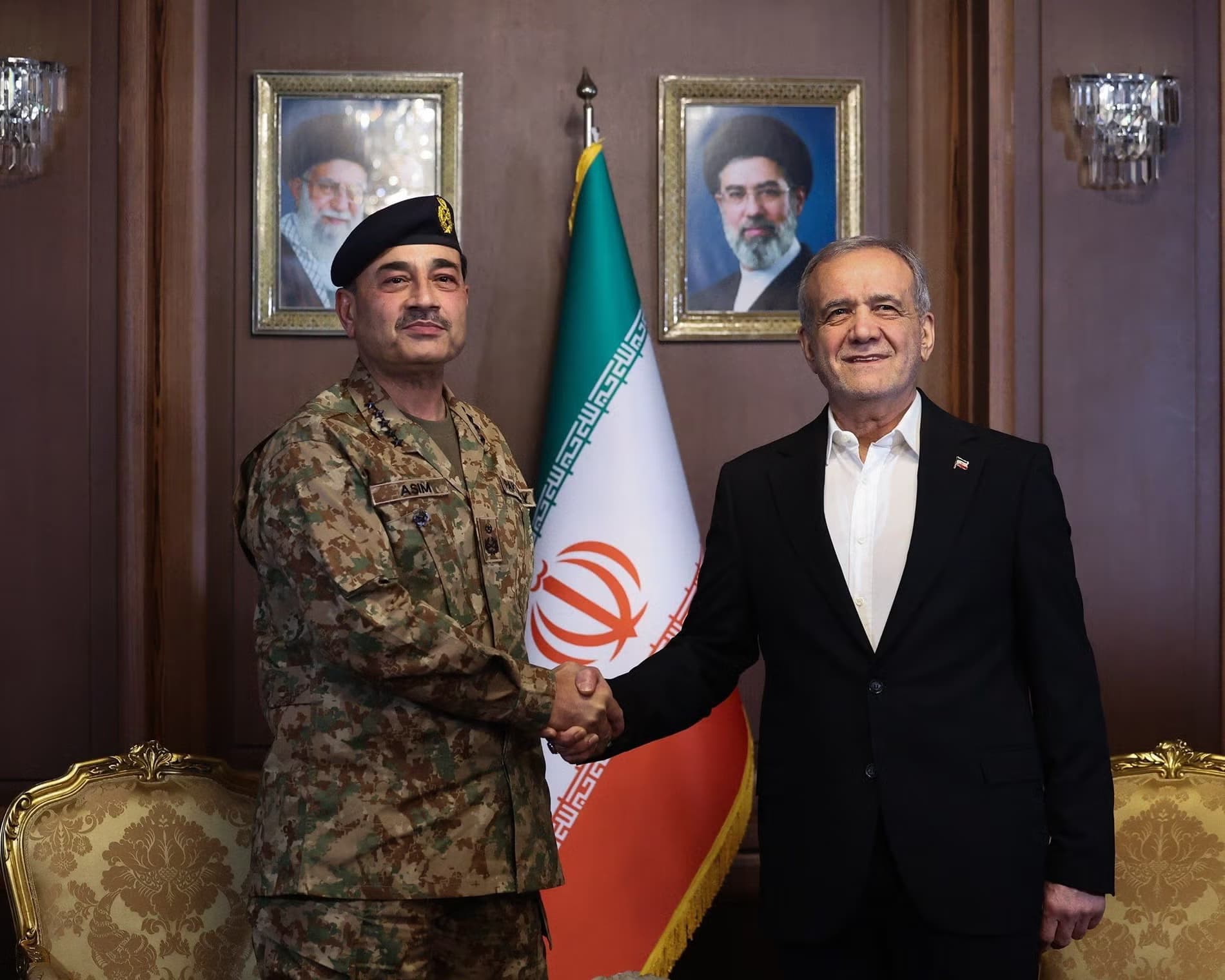

ERBIL, Kurdistan Region - Pakistan’s army chief is expected to arrive in Tehran on Monday as part of Islamabad’s efforts to promote peace in the Middle East, Iran’s foreign ministry said on Sunday, as Tehran faces mounting economic pressure from Washington.
Field Marshal Asim Munir’s visit is “aimed at strengthening bilateral cooperation between Iran and Pakistan, as well as continuing Pakistan’s good offices to help promote peace and security in the region. Asim Munir will meet and hold talks with senior Iranian officials during the visit,” Iran’s state-owned IRNA news agency cited foreign ministry spokesperson Esmail Baghaei as telling reporters.
The announcement came hours after Iranian Foreign Minister Abbas Araghchi spoke by phone with Munir. The two reviewed the latest regional developments and exchanged views on ongoing efforts to advance political and diplomatic solutions, as well as ways to strengthen bilateral consultations and cooperation, according to IRNA.
Pakistan has emerged as a key mediator between Iran and the United States since Washington and Israel launched an aerial military offensive against Iran in late February.
Islamabad’s mediation helped bring an end to the fighting and led to a memorandum of understanding between Tehran and Washington. Tensions have nevertheless persisted, with the two sides continuing tit-for-tat measures and imposing rival restrictions affecting shipping through the Strait of Hormuz.
Munir’s visit comes as Washington steps up economic pressure on Tehran. US President Donald Trump earlier this week announced what he described as “Economic Warfare” against Iran and warned of economic consequences for countries providing Tehran with a lifeline. US Treasury Secretary Scott Bessent said on Thursday that Washington would impose “the toughest sanctions in history” on Iran, with further measures expected to be announced on Monday.
The Strait of Hormuz, a crucial route for global energy supplies, has remained at the center of tensions since the conflict, disrupting oil shipments and adding to economic pressure across the region.