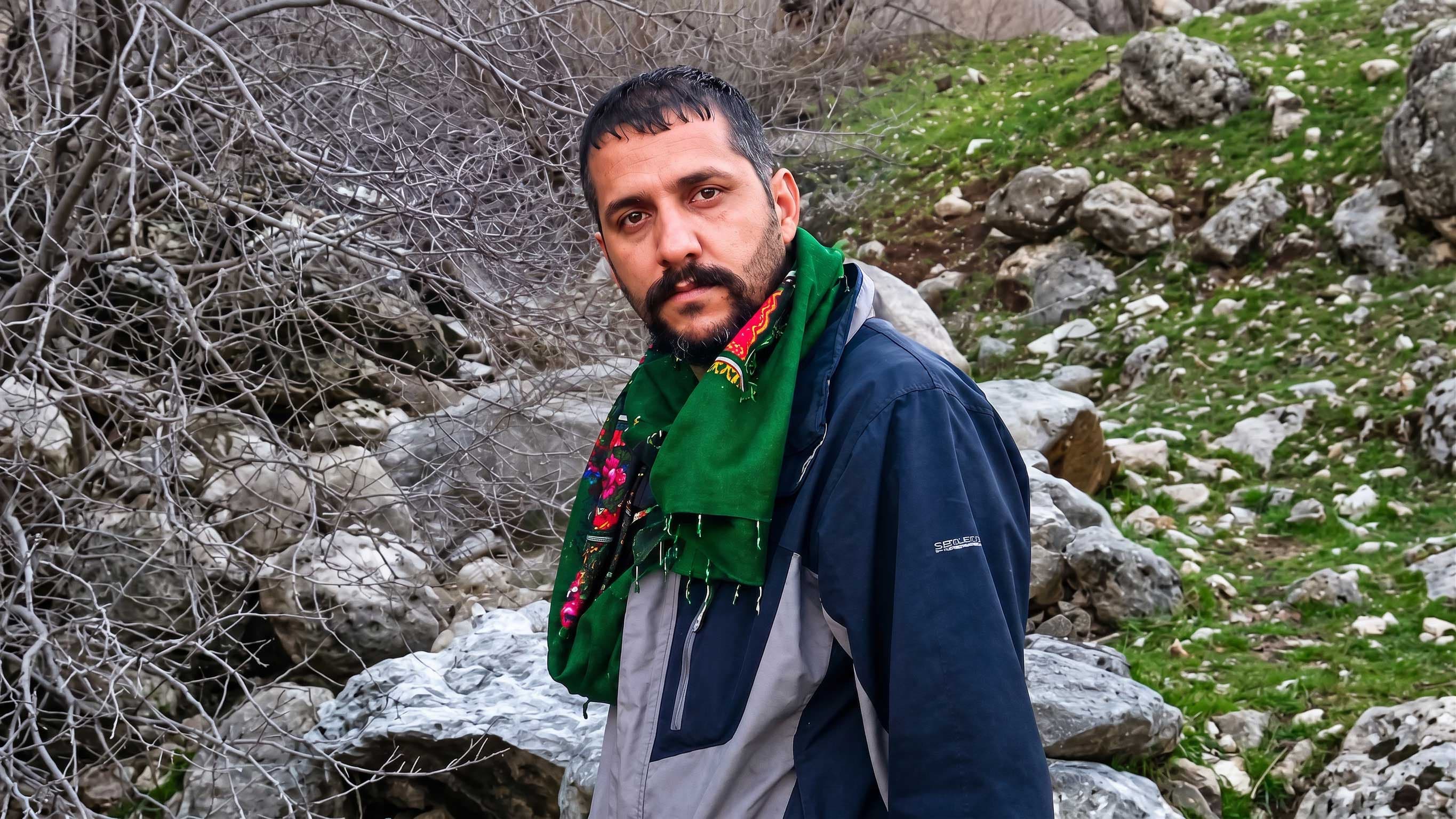

ERBIL, Kurdistan Region - For more than two decades, Mehdi Tavakoli used his camera to document Kurdish life, culture, and hardship. He photographed refugees fleeing the Islamic State (ISIS), mentored hundreds of aspiring photographers, organized cultural events, and repeatedly found himself in the crosshairs of Iranian authorities for his civil activism.
On July 26, the 37-year-old photographer's life came to a violent end at the hands of the regime in Tehran.
Mehdi Tavakoli, along with his mother Maryam Aslani and his sister Somayeh, were traveling late Sunday near the village of Bayandereh on the road between Baneh and Marivan in Iran's Kurdistan province, when security forces fired “multiple bullets,” killing all three.
Since the 1979 revolution, Iranian authorities have viewed activism in Kurdistan strictly through a security lens. Environmentalists, lawyers, teachers, journalists, and civil and political activists are routinely intimidated, detained and imprisoned by the state’s two main intelligence bodies - the Islamic Revolutionary Guard Corps Intelligence Organization, and the Ministry of Intelligence.
Tavakoli, a prominent photographer, had managed the Kurdistan Photographers House, founded the “Chaw” art house, organized photography exhibitions in the Kurdistan Region, and served on the jury of the 2026 Kurdistan Photo Festival in Sulaimani.
A source close to the family told Rudaw English that the family has since been placed under heavy pressure from authorities to frame their deaths as the result of a car accident. Bullet wounds discovered during the ritual washing of the bodies contradicted that account. Iranian authorities have not publicly explained the killings.
In conversations with Rudaw English, his friends and family only agreed to speak on condition of anonymity for fear of retribution from the IRGC Intelligence and Ministry of Intelligence.
"The family remains under intense security pressure and has been threatened not to make any statements to the media or publicize the incident," the source said, adding that Tavakoli had been summoned for more than five hours of questioning by Iran's intelligence office just one week before the shooting.
For nearly five decades of Islamic Republic rule in the Kurdish areas of western Iran, the IRGC has reigned supreme. It has the final say across the region, and activists deemed a threat to the state routinely find themselves in its crosshairs.
A life behind the lens
Tavakoli was born in 1989 in Sanandaj, the same year Ali Khamenei ascended to power in Iran. Khamenei was close to the top echelon of the IRGC, most of whom began their careers fighting against the Kurdish insurgency in the 1980s.
He discovered photography at the age of 14 and quickly turned it into both a profession and a mission.
After earning a bachelor's degree in graphic design at Hamadan University and a master's degree in photography in the northern city of Rasht in Gilan province, Tavakoli returned to Sanandaj, where he taught photography at schools, universities, and the Iranian Youth Cinema Society. Former students and colleagues credit him with helping shape a new generation of Kurdish photographers across the Kurdish region of western Iran (Rojhelat).
Over the course of his career, he participated in 20 group exhibitions and held eight solo exhibitions in Tehran, Sanandaj, Urmia, Sulaimani, Saqqez, Hamadan, and Toronto.
Tavakoli's footprint extended far beyond galleries. In 2014, as ISIS swept across northern Iraq and Syria, forcing hundreds of thousands of Kurds to flee Kobane in Syria and Shingal (Sinjar) in the Kurdistan Region, Tavakoli spent three months in refugee camps in the Region documenting the lives of displaced families.
The experience left a lasting mark. According to people closest to him, witnessing the suffering of refugees affected him so deeply that he stopped taking photographs altogether for three years.
More than a photographer
Friends describe Tavakoli as someone who utilized photography as a medium for preserving his beloved Kurdish heritage and strengthening civil society.
"For Mehdi, Kurdish identity and humanitarian principles were above everything. He was deeply attached to the nature and mountains of Kurdistan. He was an honest person who supported photographers in Rojhelat; many of them achieved success in international competitions thanks to his encouragement," one friend said.
Tavakoli also believed in supporting his community beyond the arts.
When a devastating earthquake struck Kermanshah in 2017, public anger grew over the delayed response of state institutions to one of Iran’s most underserved regions. Much of the relief effort fell on activists such as Tavakoli, who used private donations from across Iran to support those affected. He spent two months in the disaster zone helping distribute aid.
He was also deeply involved in civil society, helping organize New Year’s Newroz festivities in neighborhoods across Sanandaj despite increasing pressure from authorities. Dozens of participants were detained across the Kurdish region for participating in Newroz celebrations in recent years and wearing Kurdish attire and singing Kurdish songs.
His activism repeatedly led to detention. He was arrested in 2016, 2019, and 2020, and again during the 2022 Woman, Life, Freedom protests that erupted after the death of a Kurdish woman, Zhina (Mahsa) Amini, in morality police custody in Tehran.
Iranian security forces used mock executions, torture and sexual assault as part of their brutal crackdown on protesters in 2022. At least 551 protesters were killed by the IRGC and other security forces.
In the Kurdish areas, the IRGC used heavy machine guns, including DShKs, against protesters, particularly in the city of Javanrud.
It is unclear what Tavakoli endured in detention; it is only known that he spent three months behind bars.
A heart for the youth
Despite repeated arrests, Tavakoli continued investing in young artists.
In 2023, he established the Kurdistan Photographers' House in Sanandaj, creating branches throughout the province and bringing together more than 300 photographers through exhibitions, workshops, and cultural events.
One of his close friends said Tavakoli believed art could offer young people hope and a purpose.
"Mehdi believed that we must do whatever we can for the new generation, introducing them to art and photography so they can be occupied with creative work and stay away from negative paths, especially drugs," he said.
Another childhood friend said his ambitions extended beyond photography.
"Mehdi believed that through art, we must educate people to love their homeland and focus all their efforts on introducing Kurdistan to the world."
By his mid-30s, Tavakoli had organized more than 30 photography exhibitions showcasing the work of his students, many of whom went on to gain recognition in Kurdish and international photography circles.
An unanswered killing
According to the sources, Tavakoli's final journey began at the request of his mother, who expressed a desire to travel through the Kurdish cities of Marivan, Saqqez, and Baneh.
Instead, the family never returned home.
The source said they were shot at close range by the IRGC before being taken to Salahaddin Ayyubi Hospital in Baneh. They were eventually buried in Sanandaj's Beheshti Mohammadi cemetery alongside those killed during the Woman, Life, Freedom movement.
One week has passed, yet Iranian security forces and local authorities have offered no public explanation for the deaths.
For friends and former students, Tavakoli's legacy lies not only in the photographs he left behind but also in the hundreds of young photographers he inspired and the belief that art could preserve identity, document injustice, and give a voice to those living through conflict.