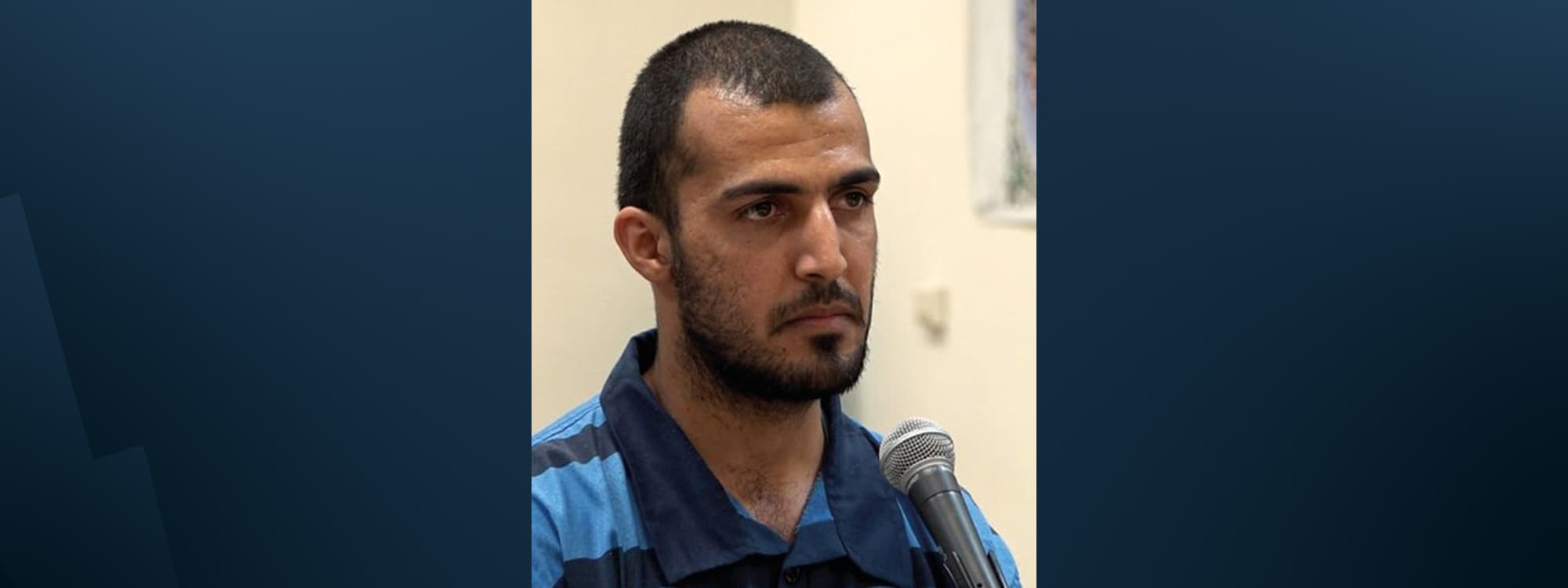

In the remote village of Faslan, nestled in the rugged landscape of western Iran, an elderly father and his family struggle to survive under harsh livelihood conditions, their entire existence relying on just two cows. They are impoverished, isolated, and completely disconnected from the macro-politics of the Middle East. But earlier this year, when their 27-year-old son, Mehrdad Mohammadinia, was swept up by security forces on a chaotic Tehran street, this vulnerable rural family was suddenly thrust into a predatory judicial underworld where human life is traded like a commodity.
On June 1, 2026, after less than five months in arbitrary detention, Mohammadinia was secretly walked to the gallows of Ghezel Hesar Prison in Karaj and hanged at dawn. His family was never notified. They were denied a final hug, a final conversation, and a final goodbye.
The tragedy of Mohammadinia’s execution contains a darker, systemic horror. Smuggled judicial records, internal appeal petitions, and interviews with informed sources reveal that while the young man was sitting in a freezing cell, a prominent, state-vetted attorney was actively bleeding his destitute family dry, extorting billions of tomans under the table for a defense he knew was completely useless.
To the world, the Iranian judiciary, via its media arm Mizan News Agency, presented Mohammadinia as a dangerous, highly trained operative executing operational actions on behalf of the ‘Zionist regime’ and the hostile US government. However, the court’s own internal intake files, leaked through the human rights group Kurdpa, paint a devastatingly different picture. Internal documents explicitly describe Mohammadinia as a simple, uneducated migrant worker who had moved from his Kurdish hometown of Qorveh to heavy-haul fruit crates at the Tehran Fruit and Vegetable Market, where he also slept to save money. The intake text explicitly notes that the young man did not appear to possess political insight and was illiterate from a scientific and political literacy standpoint, as well as regarding social media. He did not even own a smartphone capable of navigating apps, and his sole worldly asset was a cheap, domestic Pride car bought in installments, with one final payment still outstanding at the time of his arrest.
On January 9, 2026, Mohammadinia stepped out of his market lodgings in his casual home clothes just to buy groceries. He walked straight into a chaotic, pulsing surge of anti-regime demonstrators fleeing tear gas. Terrified and swept up by the crowd, he ran with them. It was a momentary choice that made him an easy target for a regime desperate for high-profile scapegoats to fulfill execution quotas.
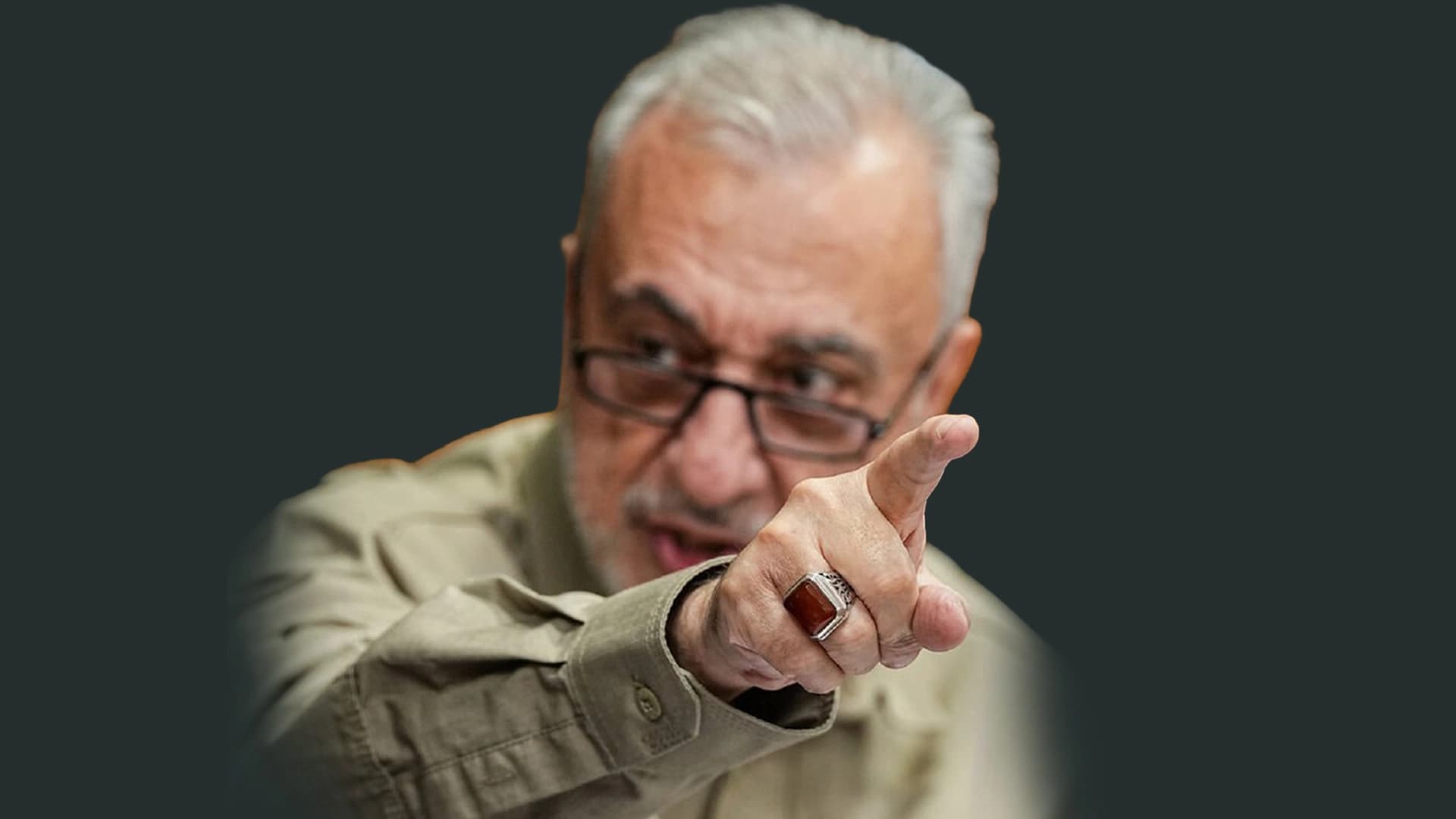
Because independent human rights lawyers are strictly barred from political cases in Iran, the state assigned Mohammadinia a public defender named Younes Karimi. By law, under Article 348 of the Criminal Procedure Code, these state-affiliated attorneys are mandated to represent capital defendants completely free of charge. Instead, Karimi, a first-class attorney based in the upscale neighborhood of Azimiyeh, Karaj, saw an opportunity for massive financial exploitation according to documents published by Kurdpa human rights organization. Karimi is a media personality who frequently appears on the programs of the Islamic Republic of Iran Broadcasting, the same state network notorious for airing the forced confessions of political detainees. Realizing the rural family would undergo any hardship possible to save their son, Karimi appears to have forced them to bypass the official electronic judicial system and sign a private, physical paper contract outside the portal.
He demanded 2.6 billion tomans, equivalent to 15,000 US dollars, telling the family that if the money was not paid, he would refuse to carry out the Supreme Court appeal. To hide the illicit transaction from the presiding judge, Karimi refused to purchase or cancel the mandatory judicial tax stamps. On the court's computer screens, the system assumed the defense was pro-bono. Behind the scenes, Karimi was charging a fortune to this deprived Kurdish family. Mohammadinia’s relatives scraped the cash together by any means necessary, and during every subsequent interaction, the lawyer forced them to bring him gold coins and regional souvenirs just to manage the file. Despite taking their life savings, Karimi never once visited Mohammadinia in prison, never spoke to him for even a few seconds, and submitted a boilerplate appeal that completely failed to reflect Mohammadinia's actual statements.
The velocity of Mohammadinia's journey from the street to the gallows signals a terrifying acceleration in Iran's machinery of death. On February 21, just 44 days after his arrest, state media broadcasted a heavily edited, 108-second video of his trial at Branch 15 of the Revolutionary Court, presided over by Abolqasem Salavati, internationally notorious as Iran's Death Judge. There were no family members, independent journalists, or defense attorneys in the room. In the footage, surrounded by masked, black-uniformed guards, a visibly traumatized Mohammadinia stares at the floor and delivers a brief, scripted confession, stating that he got carried away by the hype and was truly regretful.
Analysis of the smuggled appeal text reveals a major procedural fraud used to justify the execution. Throughout the entire interrogation phase, Mohammadinia was strictly indicted for destroying a mosque's window panes, a property crime carrying a prison term, and he explicitly denied burning the building or tearing down signs. However, at the eleventh hour, Judge Salavati suddenly and arbitrarily added a massive new capital charge directly to the final judgment sheet, accusing him of the arson of the Imam Hadi Seminary. Mohammadinia was never once interrogated nor arraigned for this arson. Furthermore, the judiciary deliberately buried ironclad physical evidence that proved his innocence the documents show. The seminary’s own custodian testified under oath that the arsonists wore black t-shirts, yet CCTV footage recovered from the Fruit and Vegetable Organization proved that Mohammadinia left his workplace wearing a distinct navy-blue hoodie, showing he was not present at the seminary location at all.
To bridge the gap between a broken window and a hanging rope, Judge Salavati heavily extended security laws, invoking Article 1 of the Law on Intensifying the Punishment of Espionage to apply the maximum penalty of execution to a politically illiterate laborer.
When Mehrdad Mohammadinia and his co-defendant, Ashkan Maleki, were executed on June 1, the state did not just take their lives; it deliberately hid the evidence to erase their humanity by hanging them for a crime they did not commit. By keeping the executions secret, barring chosen lawyers, and allowing predatory state-vetted attorneys to financially drain families, the Iranian judiciary has created a frictionless, corporate assembly line of death.
In the village of Faslan, the two cows remain; but the son who broke his back in Tehran's fruit markets to keep his family fed is gone, buried in an unmarked grave, the victim of a system that monetizes the despair of the poor before silencing them forever.
The views expressed in this article are those of the author and do not necessarily reflect the position of Rudaw.