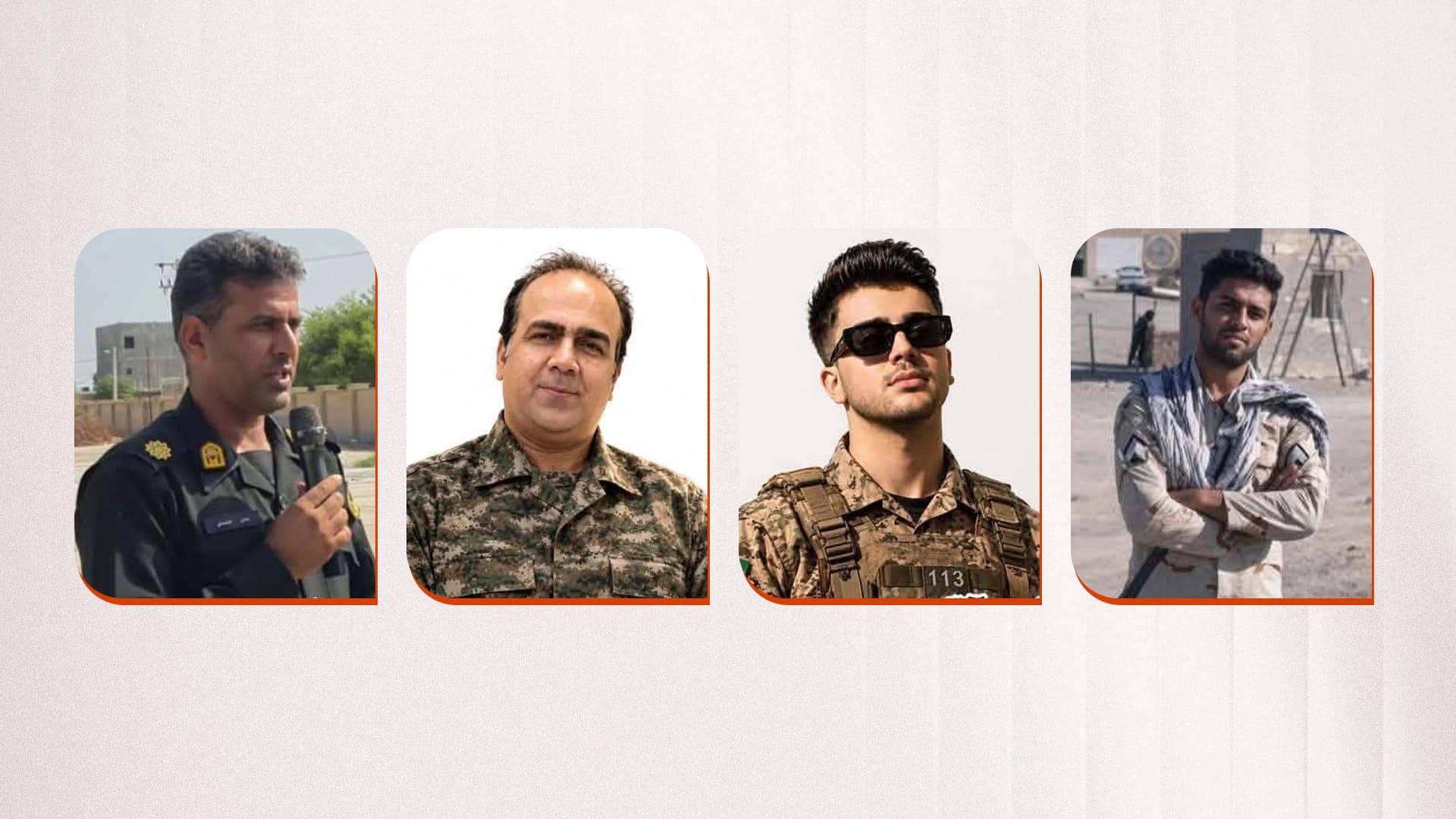
ERBIL, Kurdistan Region - Eight Kurdish political prisoners, including a teenager who was 16 at the time of his arrest, have been sentenced to death in Iran, a rights monitor warned Wednesday, amid an intensifying crackdown on political detainees and civilian protesters across the country.
The prisoners - Pakhshan Azizi, Pezhman Touberehrizi, Hatem Ozdemir, Yousef Ahmadi, Arman Marefati, Mohammad Faraji, Raouf Sheikh Maroufi, and Mohsen Eslamkhah - are among inmates facing possible execution in prisons across Iran. According to the Hengaw Organization for Human Rights, their convictions were based on forced confessions obtained under duress.
The cases come amid a sharp increase in executions of prisoners held on politically motivated charges. Iran has executed several political prisoners since the outbreak of war on February 28, while more than 14 others - of whom many were accused of collaborating with Israel - have reportedly been hanged in recent days.
Eslamkhah's case has drawn particular attention for his arrest in 2022 as a minor. After being accused of involvement in the killing of a Basij member during protests in Iran’s West Azerbaijan province of Bukan, he was sentenced in February after authorities waited to charge him as an adult.
Mohammad Faraji, Raouf Sheikh Maroufi, and Mohsen Eslamkhah were among those arrested in Bukan in connection with the Women, Life, Freedom (Jin, Jiyan, Azadi) protests that erupted following the death of Kurdish woman Jina (Mahsa) Amini in September 2022. According to Hengaw and the Kurdistan Human Rights Network (KHRN), they are now facing execution in the coming months.
Concerns surrounding Eslamkhah come amid broader reports of Iranian authorities targeting minors in the country’s eastern Kurdish-majority region (Rojhelat). In a September 2025 report, the Center for Human Rights in Iran (CHRI) said at least 11 children, most of whom were Kurdish boys aged 15 to 17, were arrested by security forces in the Kurdish province and held without access to their families or lawyers. CHRI said many of the arrests were carried out during home raids without warrants and that families were not informed of the children's whereabouts.
Hengaw's Statistics and Documentation Center said in May that at least 46 political prisoners and prisoners of conscience have been executed in Iran since the beginning of 2026, including several Kurdish detainees.
The case of Azizi, a Kurdish women's rights activist from Mahabad, has become one of the most prominent among female political prisoners in Iran. According to rights groups, she was sentenced to death on charges of armed rebellion, prompting repeated calls for her release from international organizations and activists.
Prisoners facing execution are often charged with unsubstantiated offenses such as "baghi" (armed rebellion), "moharebeh" (waging war against God), or "efsad-e fel arz" (spreading corruption on earth), according to court rulings cited by Hengaw and KHRN.
Iranian authorities have long used such charges in cases involving anti-regime activists, civilian protestors, and individuals involved in protecting women’s and children’s rights.
The latest warning follows a series of executions involving Kurdish prisoners. KHRN reported in May that Kurdish political prisoners Mehrab Abdollahzadeh, Nasser Bakrzadeh, Ramin Zaleh, and Karim Maroufpour were executed after Iran's Supreme Court upheld their death sentences.