ERBIL, Kurdistan Region - US defense and security companies are exploring opportunities to help strengthen the Kurdistan Region’s air defenses following the withdrawal of US-led coalition forces, as a visiting American joint business delegation discusses potential projects with Kurdish and Syrian officials.
Treefa Aziz, the Kurdistan Regional Government (KRG) Representative to the United States, highlighted the role of American private sector companies as being well positioned to “fill the gaps” within the Kurdistan Region security apparatus, underscoring the Kurdistan Region as a critical US ally and investment hub despite the withdrawal of American forces.
Aziz disclosed that a joint American business delegation, the US-Kurdistan Business Council and the US-Syria Business Council - with more than 25 members representing various sectors spanning security, defense, oil, and gas, as well as transportation, shipping, construction, real estate, and education - met with government officials and private sector representatives in Syria and the Kurdistan Region to discuss opportunities for further American investment.
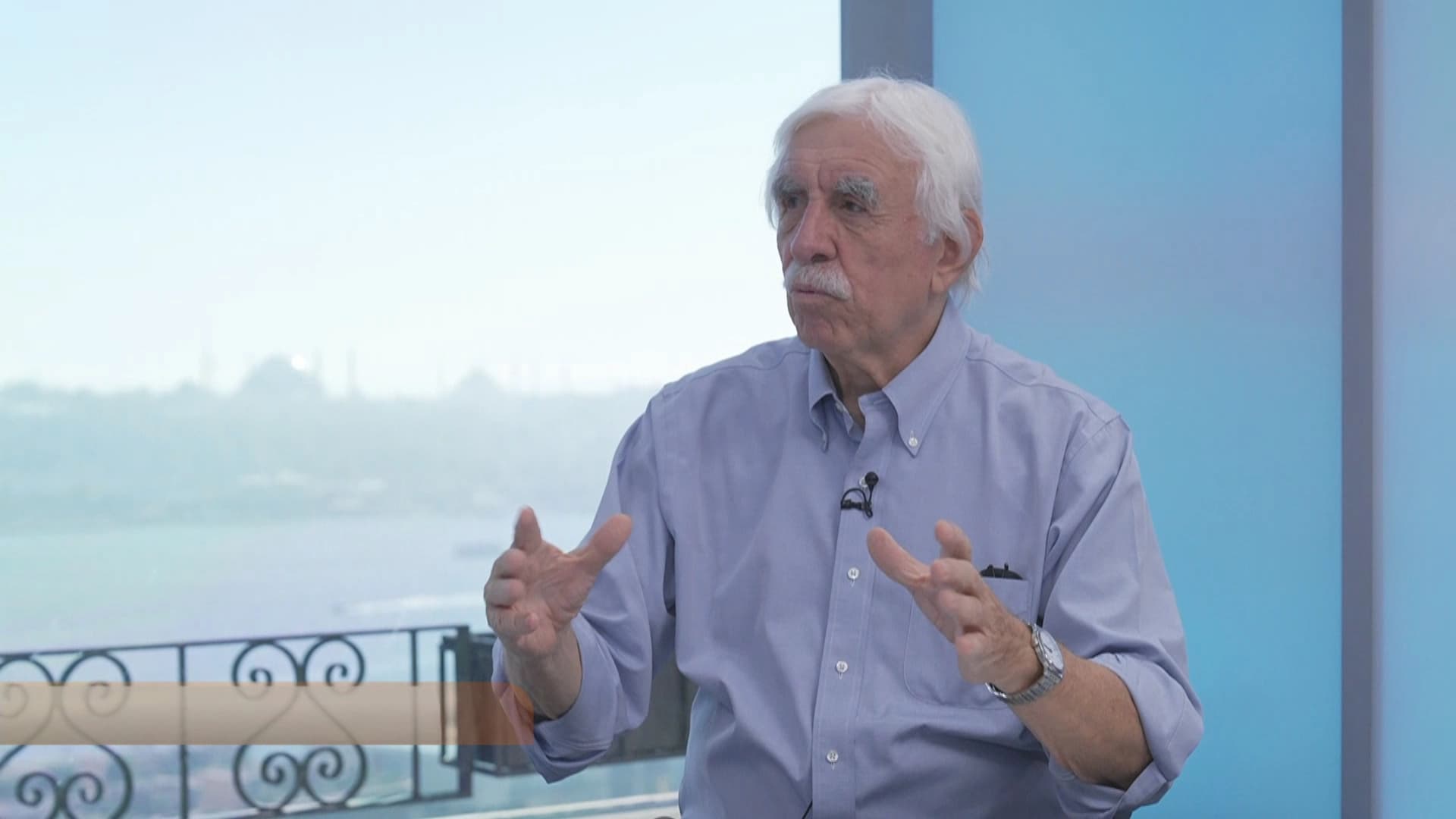
“The defense companies that are here have an intention and a role to play in the defense of Kurdistan by filling in the gap that now has been created from the departure of the US military and the [international] coalition partners,” Aziz said in an interview with Rudaw’s Nma Nabaz at the annual Middle East Research Institute (MERI) Forum in Erbil.
“That gap can be filled in by the private sector now,” she added, referring to the role of private companies in providing training and security services.
Aziz stated that the defense companies “have projects in other countries within the Middle East that they would like to discuss and bring here to Kurdistan… to help “fill the gaps” in air defense and “other sectors within the security apparatus.”
The delegation “had very productive meetings” with the Ministry of Peshmerga and the Ministry of Interior, she stated, and include visits to Damascus, Erbil and Sulaimani.
According to Aziz, the US hopes to be able to invest in Syria, including Kurdish-majority areas (Rojava), as well as Iraq and the Kurdistan Region “very soon,” signaling a “cross-border interest for companies.”
“Many of the defense companies are discussing the protection and the security needs of the new Syrian government,” she said, adding that many energy companies “are operating in Kurdistan and want to expand their business into Syria [as a whole],” a majority of opportunities which “are in Rojava.”
The US-led coalition to Defeat the Islamic State (ISIS) formally concluded its military mission in Iraq on September 30, 2026, with American forces completing their withdrawal from Erbil Air Base under a 2024 agreement between Washington and Baghdad.
The departure has raised concerns in the Kurdistan Region over air defense capabilities following more than 1,000 missile and drone attacks since late February at the start of the US-Iran war. The United States has said security cooperation with Iraqi and Kurdish forces will continue from elsewhere in the region.
“This year we have language in the Senate bill of that legislation to keep the financial support for the Peshmerga going into the next fiscal year” of 2027-2028 and “we still have very strong bipartisan support from the US Congress not just for Peshmerga but for Kurdistan,” she stated.
“We will continue to work with members of Congress to ensure sure that that support continues and strengthens as time goes on,” adding that the US “want[s] Iraq to succeed,” framing economic prosperity and political stability as a “win-win” for all parties involved.
American companies in Kurdistan Region represent ‘enormous opportunity’ for investment in Syria
Discussing economic opportunities following the US-led international coalition’s exit from Iraq, President of the US-Kurdistan Business Council David Tafuri highlighted potential prospects for American companies to “support cross-border trade,” noting an “enormous opportunity” for companies that have been invested in the Kurdistan Region to invest in Syria, including Kurdish-majority areas (Rojava).
The Peshmerga Ministry released a statement confirming that Minister Shorsh Ismail on Tuesday received Tafuri and the accompanying delegation to discuss investment and cooperation. Tafuri also met with Mazloum Abdi, chief of the now-dissolved Syrian Democratic Forces (SDF) who currently serves as the advisor to the Syrian presidency.
Tafuri said the delegation included companies specializing in counter-drone defense and satellite reconnaissance.
“We brought a number of defense and security companies, companies that do anti-drone defense, also satellite reconnaissance companies, to look at helping with that problem,” Tafuri stated, highlighting interest from both the KRG and the Iraqi federal government.
Tafuri said improved air defenses could help prevent casualties and protect businesses from drone attacks. He added that American private sector companies could potentially help address some of the security challenges created by the US military withdrawal.
Tafuri stated that while “The presence of the American troops has a stabilizing impact… perhaps private sector defense companies from the United States can fill the void.”
The withdrawal has raised concerns among Kurdish officials over potential gaps in military capabilities, particularly air defense systems, as the Kurdistan Region continues to face repeated drone and missile attacks from Iran-aligned Iraqi armed groups.
Kurdistan Region President Nechirvan Barzani urged Baghdad on Monday to accelerate the deployment of air defense systems and ensure weapons remain under state control.
The delegation's visit comes as the Kurdistan Region seeks to strengthen its security capabilities while maintaining its relationship with Washington.
Both Tafuri and Aziz affirmed that the withdrawal of US forces did not signal a weakening of ties, but rather a shift “beyond military assistance" toward broader economic and political cooperation.
“Kurdistan remains a strategic and strong partner of the United States” and a “committed ally,” both Aziz and Tafuri respectively concluded.