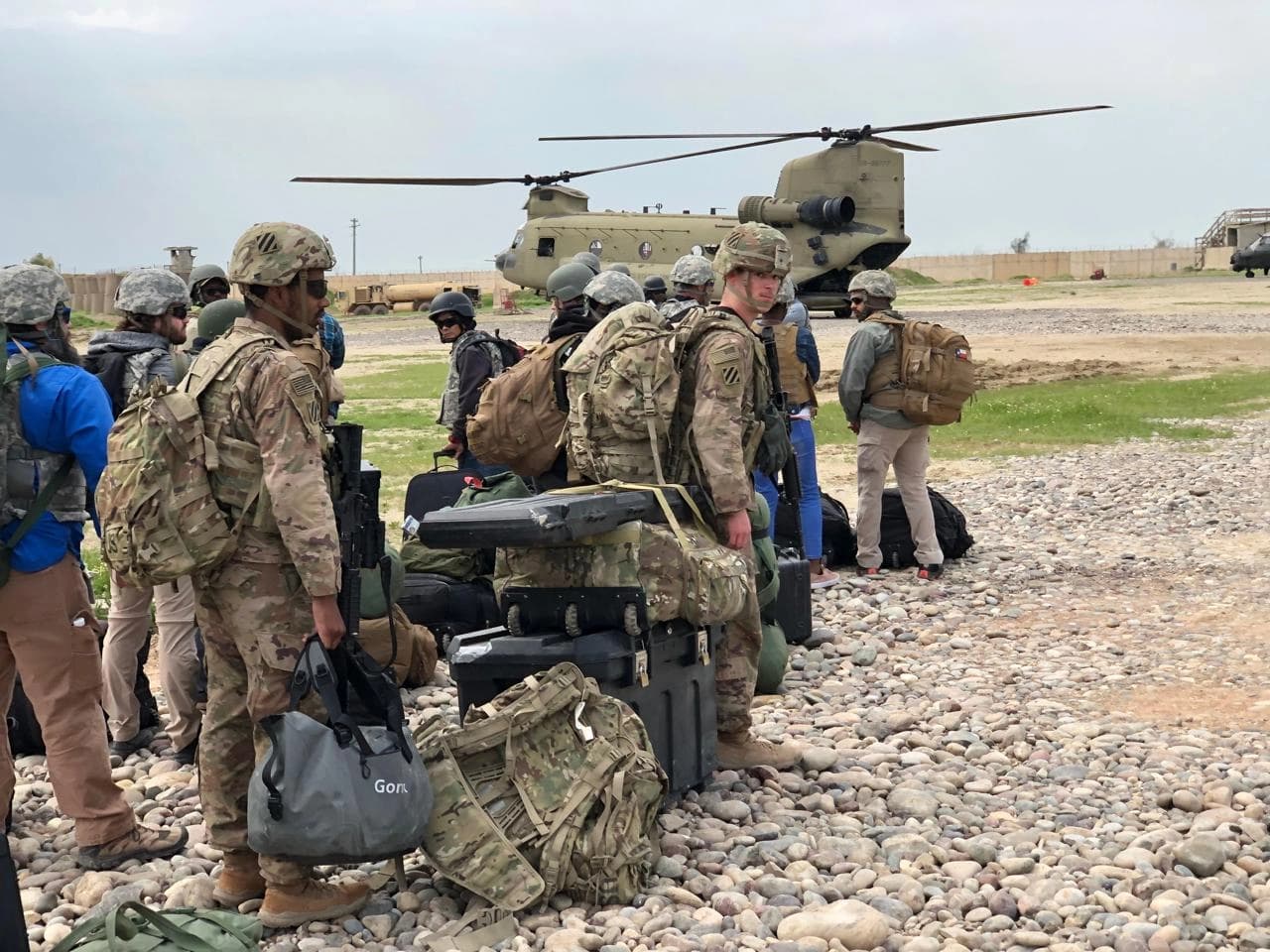

ERBIL, Kurdistan Region - Iraqi and Kurdish leaders on Wednesday said the country’s forces were ready to assume full responsibility for security as the US-led coalition formally ended its military mission in Iraq and American forces completed their departure from Erbil Air Base.
At a ceremony in Baghdad marking what the government called Iraq’s “Sovereignty Day,” Prime Minister Ali al-Zaidi said the end of the coalition mission marked the country’s transition to full responsibility for its security and stability, while stressing that the fight against terrorism was not over.
“The conclusion of the International Coalition’s mission does not mean the end of our battle against terrorism,” Zaidi said.
The departure ends the coalition’s military mission in Iraq more than 12 years after Baghdad requested international assistance against the Islamic State (ISIS) as the group seized large parts of the country in 2014. Washington and Baghdad agreed in 2024 on a phased conclusion of the mission, culminating in the September 30 withdrawal. The United States has said its counter-ISIS cooperation with Iraqi and Kurdish forces will continue from elsewhere in the region.
Zaidi thanked coalition countries and their commanders, officers, trainers and advisers for working alongside Iraqi forces during the war against ISIS, saying security cooperation would continue in a new form with a greater focus on technology and digital capabilities.
“The mission has concluded in victory, and the responsibility for safeguarding this victory now rests with all of us,” Zaidi said.
He also reiterated his government’s push to bring armed groups under state authority, saying there should be “no weapons outside the framework of the law and no force outside state institutions.”
Kurdistan Region Prime Minister Masrour Barzani, speaking in Erbil, thanked the United States, European countries and other coalition members for their role in defeating ISIS and strengthening the Peshmerga, while stressing the readiness of Kurdish and Iraqi forces to confront future threats.
“Iraq’s capabilities are better compared to the past, and Peshmerga forces are well-organized and stand ready to fight any attack or danger facing the Kurdistan Region,” Barzani said.
“Therefore, I assure you once again that our forces are ready to face any threat or attack that would, God forbid, target the Kurdistan Region or Iraq,” he added.
The Kurdistan Regional Government has nevertheless expressed concern over the coalition’s departure at a time of heightened regional instability, particularly the absence of an alternative air-defense system after more than 1,000 drones and ballistic missiles struck the Kurdistan Region during the recent regional conflict. The Peshmerga ministry has said Baghdad bears primary responsibility for protecting the Region’s airspace.
Kurdistan Democratic Party (KDP) President Masoud Barzani also thanked coalition forces for their role in defeating ISIS and restoring stability, stressing that their departure should not mark the end of security cooperation.
Barzani said Iraq and the Kurdistan Region could pursue bilateral agreements with coalition countries according to future security needs, while stressing close coordination between the Peshmerga and Iraqi forces.
He said anyone seeking to threaten the Kurdistan Region should know that the Peshmerga remained capable of defending its people and territory.
Central Command (CENTCOM) said Wednesday that coalition personnel and equipment had completed their “orderly departure” from Erbil Air Base, marking the conclusion of Operation Inherent Resolve’s military mission in Iraq.
The withdrawal completes a process that saw coalition forces leave bases across federal Iraq before consolidating their remaining presence in the Kurdistan Region. Iraqi officials had told Rudaw ahead of the deadline that no foreign coalition troops would remain in the country after September 30.
CENTCOM Commander Admiral Brad Cooper said ISIS no longer poses a systemic threat to Iraq and that Iraqi security forces, including the Peshmerga, are capable of addressing remaining threats.
The United States has said the end of the mission in Iraq does not end its security relationship with Baghdad or Erbil. CENTCOM spokesperson Captain Tim Hawkins told Rudaw earlier this month that US forces based elsewhere in the region would remain prepared to work with Iraqi and Kurdish forces when threats emerge.
First Deputy Speaker of Iraq’s parliament Adnan al-Dulaimi also described September 30 as an important turning point, saying the withdrawal marked the restoration of Iraq’s “security and military sovereignty.” “The day represents a new phase for Iraq, based on sovereignty, institution-building and development,” Dulaimi said.
Supreme Judicial Council chief Faiq Zidan congratulated Iraqis on the occasion, describing it as a milestone in strengthening the independence of national decision-making and reaffirming respect for the constitution and rule of law.
Qasim al-Araji, Zaidi’s national security adviser, said the end of the coalition mission marked an “important milestone” in negotiations and understandings dating back to July 2021, but stressed that “the end of the coalition mission does not mean the end of the partnership.”
The end of the mission leaves Iraq responsible for its domestic security while preserving a broader framework for defense cooperation with Washington and other coalition countries.