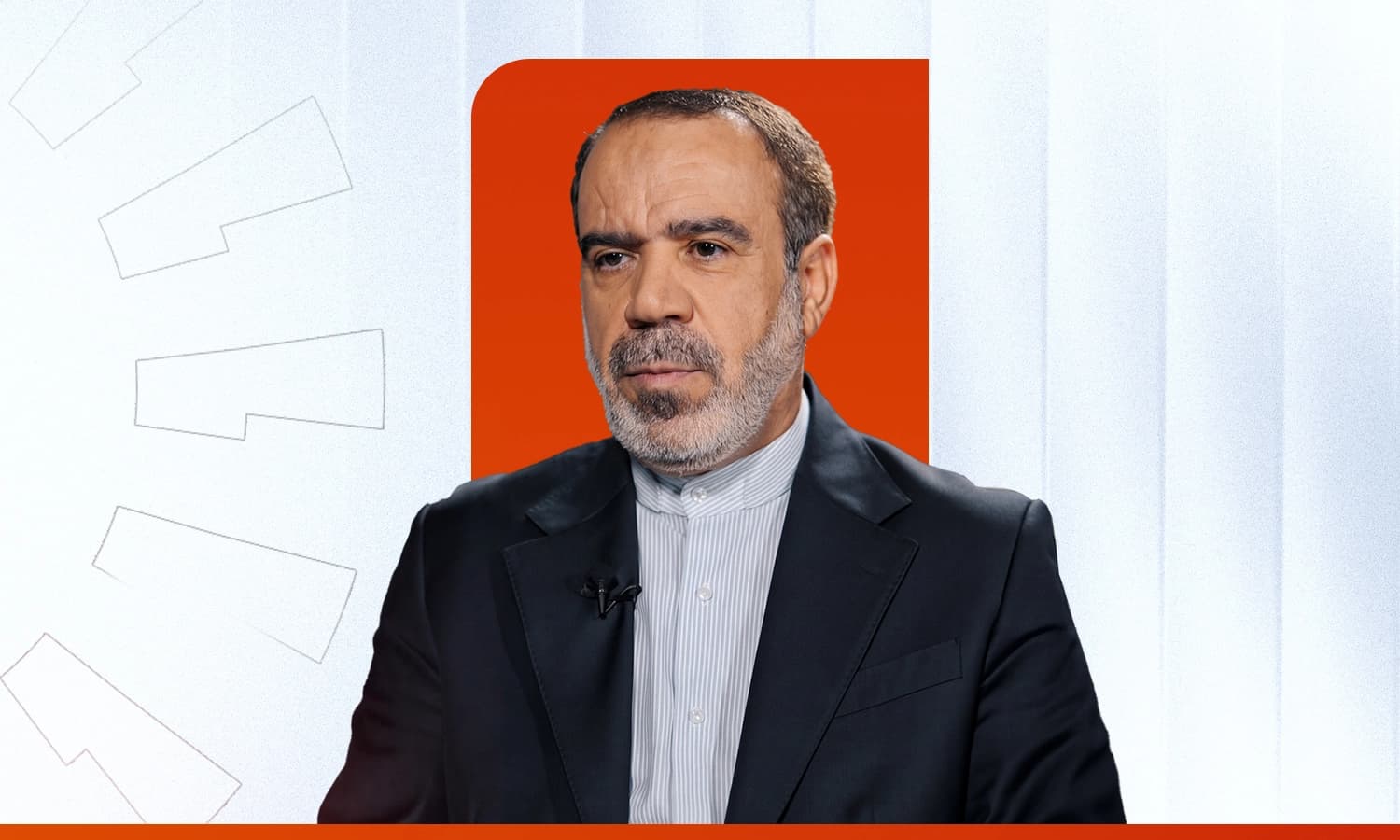

ERBIL, Kurdistan Region - Iran does not rule out further attacks on alleged targets in the Kurdistan Region despite the withdrawal of US forces from Iraq, Iran's consul general in Erbil told Rudaw in an interview aired Thursday, citing alleged activity by the Central Intelligence Agency (CIA) and the presence of Iranian Kurdish opposition groups.
Speaking to Rudaw's Hiwa Jamal, Faramarz Asadi repeatedly declined to say whether Tehran would halt its attacks on alleged targets in the Region following the US withdrawal, claiming that “security forces and formations of the CIA are still here [in the Kurdistan Region] and continue sowing discord.”
“If they at any moment want to make a move against the Islamic Republic of Iran, they will be targeted as part of American interests and targets,” he warned.
The remarks come after the US-led Global Coalition to Defeat the Islamic State (ISIS) concluded its mission in Iraq on September 30 under a 2024 agreement between Baghdad and Washington.
Despite the withdrawal, US Central Command (CENTCOM) spokesperson Tim Hawkins told Rudaw in mid-September that Washington remains committed to the security of Iraq and the Kurdistan Region, and that American forces stationed elsewhere in the Middle East are prepared to respond to emerging threats.
The Kurdistan Region has faced more than 1,000 drone and missile attacks by Tehran and its aligned Iraqi armed groups since the US and Israel launched a joint military campaign against Iran on February 28, according to Rudaw's tracking. As of mid-September, the assaults had killed at least 32 people and wounded around 154 others.
Asadi accused US forces formerly stationed in Erbil of trying to provoke Iranian strikes near civilians, including by driving and parking military vehicles on the city's ring roads.
“We knew the Americans wanted to make a show and instigate us against Erbil,” he said, claiming that Iran had refrained from preemptive strikes because American personnel were close to civilians.
He further criticized the US surveillance balloon that had been deployed over Erbil, calling it a threat to Iran and saying Tehran had raised its presence with both Baghdad and Erbil.
The Islamic Revolutionary Guard Corps (IRGC) struck and destroyed a US Tethered Aerostat Radar System (TARS) over Erbil on September 2, Kurdish security sources confirmed to Rudaw English at the time.
Asadi also defended Tehran's attacks on positions held by Iranian Kurdish opposition groups, rejecting descriptions of some of their camps as residential areas.
“These are military camps of anti-revolutionary groups. These aren't civilians. It is in these places where all plots and joint action against the Islamic Republic of Iran are formulated. We have to answer these,” he alleged.
The Iranian diplomat further purported that the dissident groups are cooperating with Israel to carry out attacks inside Iran, including sabotage at nuclear facilities and attacks on scientists.
For their part, Iranian Kurdish opposition parties have repeatedly denied acting on behalf of the US or Israel.
Mustafa Hijri, leader of the Democratic Party of Iranian Kurdistan (KDPI), the largest and oldest Kurdish opposition group to the Iranian establishment, told Rudaw in April that his party and its allies had deliberately stayed out of the US-Israeli war with Iran and had not received American weapons.
In a similar vein, Abdullah Mohtadi, secretary-general of the Komala Party of Iranian Kurdistan, separately rejected allegations of ties to Israel as well.
Despite this, Kurdish dissident groups have continued to bear the brunt of Iranian attacks on their positions and residential camps in the Kurdistan Region.
Asadi also criticized an alliance formed by five Iranian Kurdish opposition parties shortly before the war, claiming they had been forced into cooperation by outside powers.
The parties announced the Alliance of Political Forces of Iranian Kurdistan on February 22, bringing together the KDPI, the Free Life Party of Kurdistan (PJAK), the Kurdistan Freedom Party (PAK), Komala of the Toilers of Kurdistan, and the Organization of Iranian Kurdistan Struggle (Khabat). They said the alliance aimed to coordinate their struggle against Tehran and advance Kurdish self-determination.
The Iranian consul general in Erbil cast the alliance as an American attempt to draw Iran into a confrontation with the Kurdistan Region.
“To be fair, neither Kurdistan nor Iraq were aware of it, and this was an effort to instigate the Islamic Republic of Iran against Erbil by the Americans,” he said, further censuring the alliance as “disrespectful” to both the Kurdistan Region and Iran, claiming that considerable effort had been needed to prevent a confrontation.
The consul general also denied that Iran was behind drone attacks targeting the residence of Kurdistan Region President Nechirvan Barzani and the office of Prime Minister Masrour Barzani.
“It was 100 percent not the Islamic Republic of Iran,” he said, claiming Iranian officials had been informed that a drone used in the attacks had been launched from around the city of Mosul in northern Iraq.
The Kurdish President's residence in the Region’s northern Duhok province was targeted in March, while the Prime Minister's office in Erbil came under drone attack later in August.
After the August attack, the Kurdistan Region's counter-terrorism forces said the drone had been launched from Iranian territory. Asadi nonetheless insisted that “the Islamic Republic of Iran has not and does not have any target in the Kurdistan Region among the Kurdish parties and the Barzani family.”
Separately, Asadi denied Iranian responsibility for the assassination of former KDPI leader Abdulrahman Ghassemlou, who was killed along with two associates during negotiations with Iranian representatives in Vienna in July 1989.
“During the talks, people who were opposed to the talks opened fire on them. The representative of the Islamic Republic was injured, and Ghassemlou was killed,” he said.
However, as Rudaw has previously reported, Austrian authorities investigated Iranian suspects in connection with the killings, but arrest warrants were issued only months later, after the suspects had left Austria. Austrian police named Mohammad Jafari Sahraroudi of the IRGC as the main suspect. He was seen earlier this year as part of the Iranian negotiating team in Islamabad.
.jpeg&w=3840&q=75)