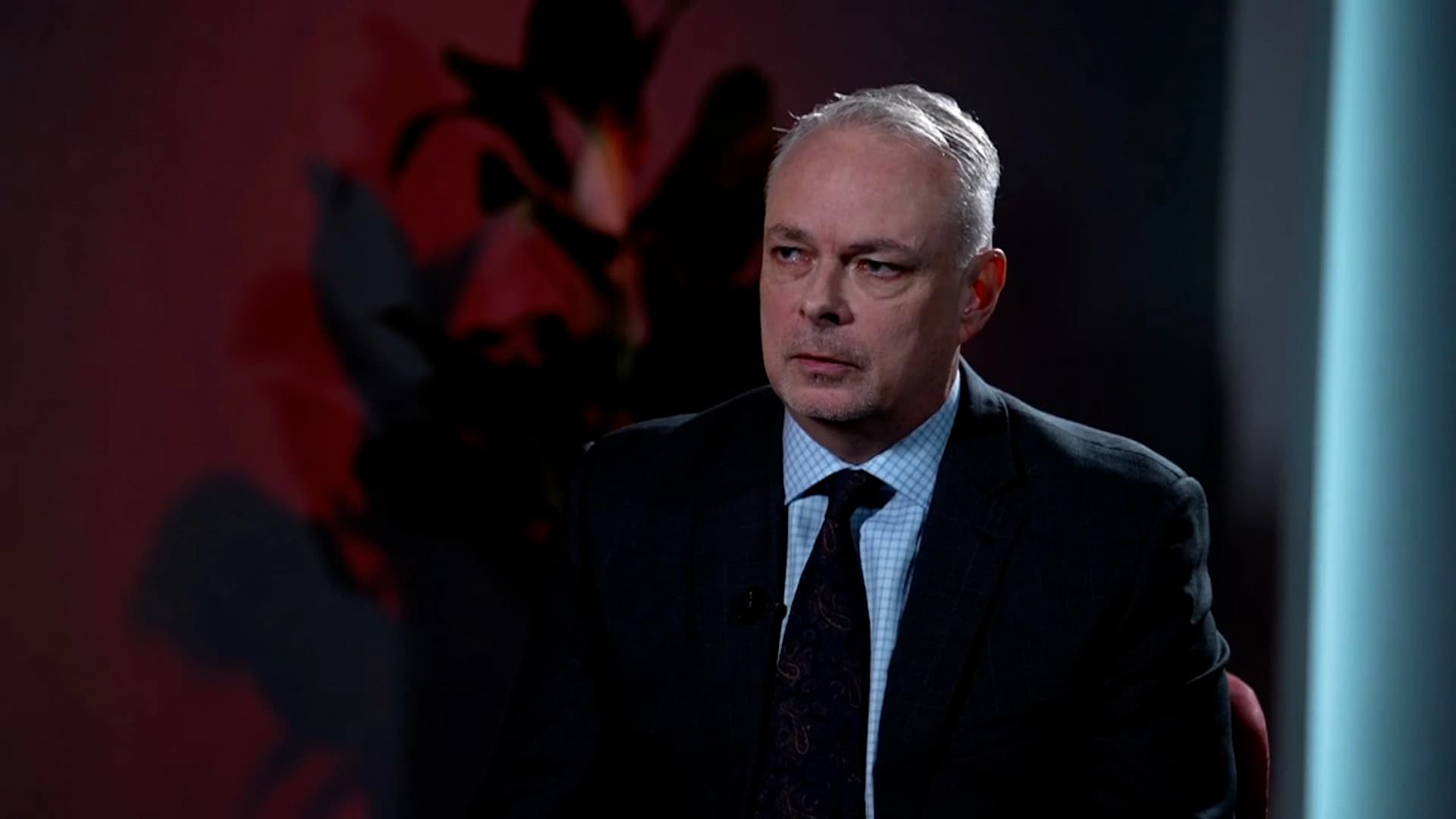
ERBIL, Kurdistan Region - Around 200,000 Yazidis remain displaced 12 years after the Islamic State (ISIS) committed genocide against the community in Shingal (Sinjar), the International Organization for Migration (IOM) chief in Iraq told Rudaw on Monday.
“In August 2014, between 250,000 and 400,000 Yazidis fled Sinjar during the invasion of Daesh. Of those displaced, we can estimate that about 150,000 Yazidis have returned to Sinjar,” Pascal Reyntjens told Rudaw’s Jafar Mubasher, noting that “we still have another 200,000 who are most likely still displaced, either in the country... or abroad."
Monday marks 12 years since ISIS militants launched their assault on Shingal, killing an estimated 5,000 to 10,000 Yazidi men and elderly women, abducting 6,417 women and children, and forcing hundreds of thousands from their homes in what has been widely recognized internationally as genocide.
"Twelve years after what happened, we still have 2,500 Yazidis, mostly women and children, who are still missing,” Reyntjens said.
The IOM mission chief said the largest group of Yazidis living abroad is believed to be in Germany, where an estimated 30,000 remain.
Reyntjens said the IOM runs reintegration and reparations programs to help families return to their home communities and rebuild their livelihoods. The organization also assists Yazidis whose asylum applications have been rejected in host countries as they plan their futures, including the possibility of returning to Iraq.
The following is the full transcript of the interview with Pascal Reyntjens:
Rudaw: From your organization's perspective, what is the current situation of migrants from Sinjar?
Pascal Reyntjens: First and foremost, thank you for receiving me in your show and this commemoration. I think it's very important to commemorate what happened 12 years ago. To your question, basically, we remember that in August 2014, between 250,000 and 400,000 Yazidis fled Sinjar during the invasion of Daesh.
Of those displaced, we can estimate that about 150,000 Yazidis have returned to Sinjar, though we still have another 200,000 who are most likely still displaced, either in the country, either abroad, so some of them are in the camps in KRI or in other informal sites. Also, to be noted that, as I speak, 12 years after what happened, we still have 2,500 Yazidis, mostly women and children, who are still missing. The main point also is to mention the fact that this year we also do celebrate the five years of the Yazidi survivor law, which is de facto an important legal instrument that tentatively needs to be put in place in an enhanced manner very soon.
So, many Yazidis have been supported in order to claim their rights linked to this law.
What do your statistics say about Yazidi displaced persons and migrants?
Well, basically we know that the main population in terms of Shingalis outside of the country are living in Germany mainly. The statistics, which are not official, it's an estimate, we talk about something like 30,000 who are still in Germany.
As I said a bit earlier on, we know that something like 200,000 have not returned yet to their place of origin.
What assistance does IOM provide to Yazidis?
Well, basically, it's a variety of assistance. I think that the need to commemorate the terrible events is there. So, we do work at the community level to make sure that everyone will remember what happened in 2014. We also make sure that, as mentioned earlier on, we have the Yazidi survivor law.
We do accompany Yazidis in order to put their claim properly towards the authorities. So, we have a specific legal team who is following up with individuals so that they can put in their claim. But what we also do, and I think is important, I mentioned the number of people who are still displaced, we also try to have a top-down approach as well as a bottom-up.
So, basically, what we try to do is to listen to the Yazidis, to their own hopes and expectations, knowing that when Daesh left Sinjar, basically, the entire city had and still needs to be rebuilt. But it's not only the infrastructure that needs to be put in place, it's the entire social setting, including schools, on the one hand, but also teachers, access to health care, but also specialists. And basically, to succeed in doing so, the approach that we are having is to listen to the concerns, the needs, but also the hopes of the Yazidi survivor when they envisage to return to Sinjar, and then to make sure that we try to align as much as we can our actions in that direction to favor the return to Sinjar as a first option.
Some countries are deporting some Yazidis, what do you do for these people?
Yeah, all right. So, yeah, I mean, one of the realities is that you have the legal framework that is around people who have fled, in this case, the Daesh issues, and who did not obtain, as I speak, or did not have a full administrative situation in the host country. We have, as IOM, what we call the reintegration and reparation programs, which are there to support families, households, to travel back to their place of origin, to support them in terms of livelihood.
And as I said earlier on, it's the same for the ones who are coming from abroad, and the ones who didn't go outside of the country. We do support them in terms of legal follow-up of their case, so that they can be recognized as survivor, so that they can also move towards rebuilding a future, and also that they keep remembering the past in order to build a better future for them, for their families, and so on.
Some countries also do not grant asylum rights to Yazidis, what can you do for them?
Well, basically, when it comes to asylum rights, some of the Yezidis have obtained the asylum and the protection under international law in a third country.
I mean, some of them in Germany, some in other countries. Well, in this case, basically, it's the choice of the individuals at some point to decide to return, they don't have to leave to come back. But if they do so, IOM still will be there to support the legal framework once they are back.
Now, if it's to obtain protection abroad, based on international protection linked to the refugee status, we are not directly dealing with it. It's a matter of, in many instances, from the authorities in the host countries with their own asylum system. What we can do, basically, is to be next to the people who, unfortunately, would receive negative answers from this country, and we'll have to envisage their future differently and tentatively back in the country.