
ERBIL, Kurdistan Region - Iraq seeks partnerships with major American companies to establish alternative routes for crude oil exports and establish long-term economic stability, Iraqi government spokesperson said on Wednesday.
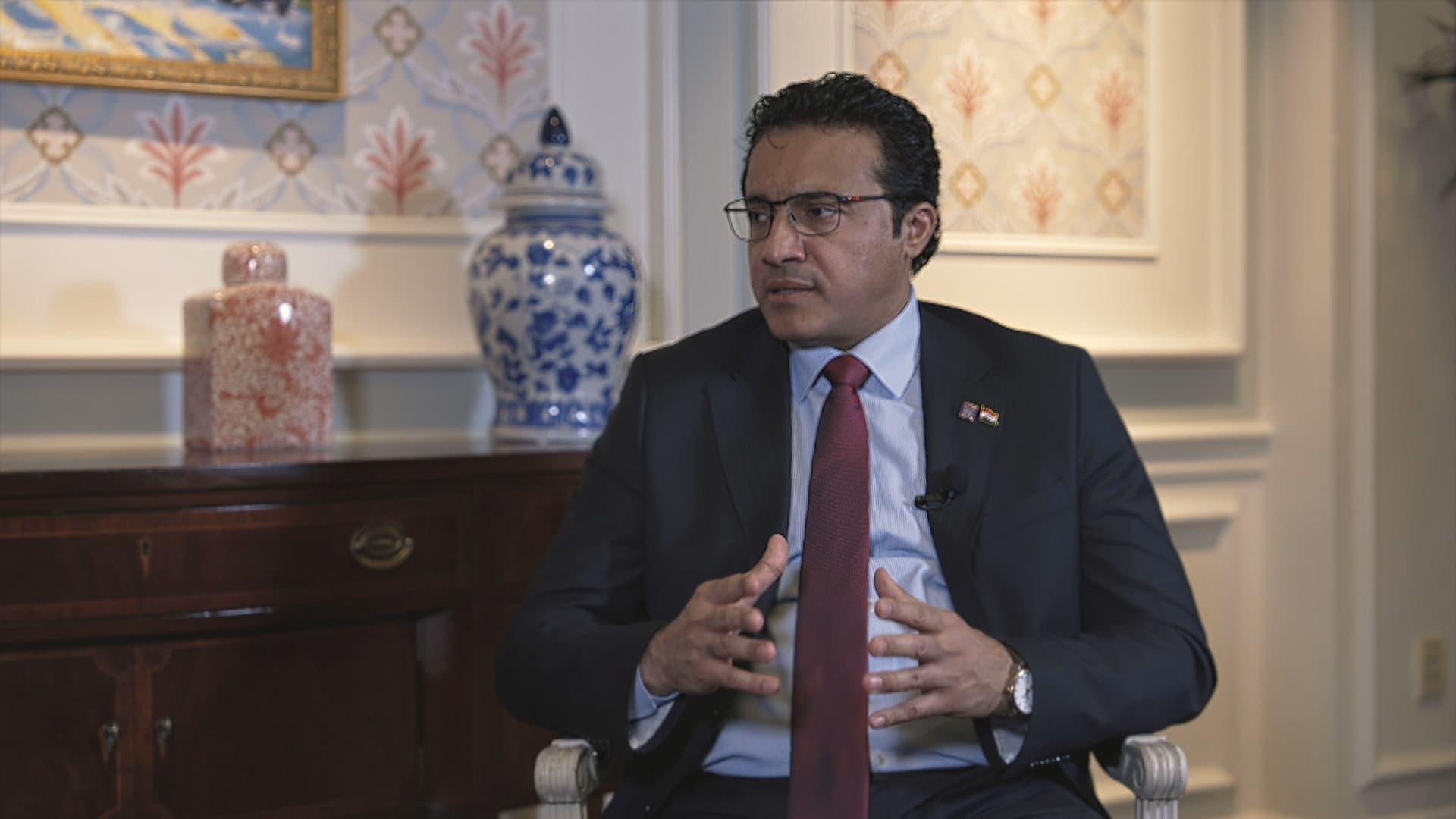
"Iraq now possesses a vision to diversify the export sources of its oil and requires partnerships with major American companies, which are highly professional in this field and possess extensive experience and history," Haider al-Aboudi, who is accompanying Iraqi Prime Minister Ali al-Zaidi in a week-long visit to the US, told Rudaw’s Diyar Kurda.
Zaidi and his high-level delegation arrived in Washington on Monday, where he met with US President Donald Trump on Tuesday to focus on strengthening bilateral ties and American investment in Iraq's energy, electricity, and infrastructure sectors.
"This relationship has taken on a new approach from a new horizon, paving the way for a strategic partnership based on the economy and investment in shared fields, from which both sides will benefit based on mutual interests and mutual gain," Aboudi said.
The spokesperson emphasized that "these types of relations, which rely on shared interests, will have greater continuity and stability compared to a relationship based solely on security and military aspects, similar to the past year and the two previous decades that Iraq has gone through."
Zaidi met with the American oil giant Chevron's president, Mark Nelson, and its board of directors on Thursday at the company’s Texas headquarters,
The premier’s media office reported that Zaidi “called on the company to expand and accelerate its operations in Iraq to achieve a strategic goal adopted by the government, which is to increase crude oil production, expand Iraq's capabilities in the field of refining and processing products, and enable the oil sector to diversify its export outlets.”
Last week, Iraq's oil ministry reported a contract with Texas-based HKN Energy to develop an oil field in the central Salahaddin province, days after Baghdad struck an agreement with Halliburton for the development of two oilfields in southern Iraq.
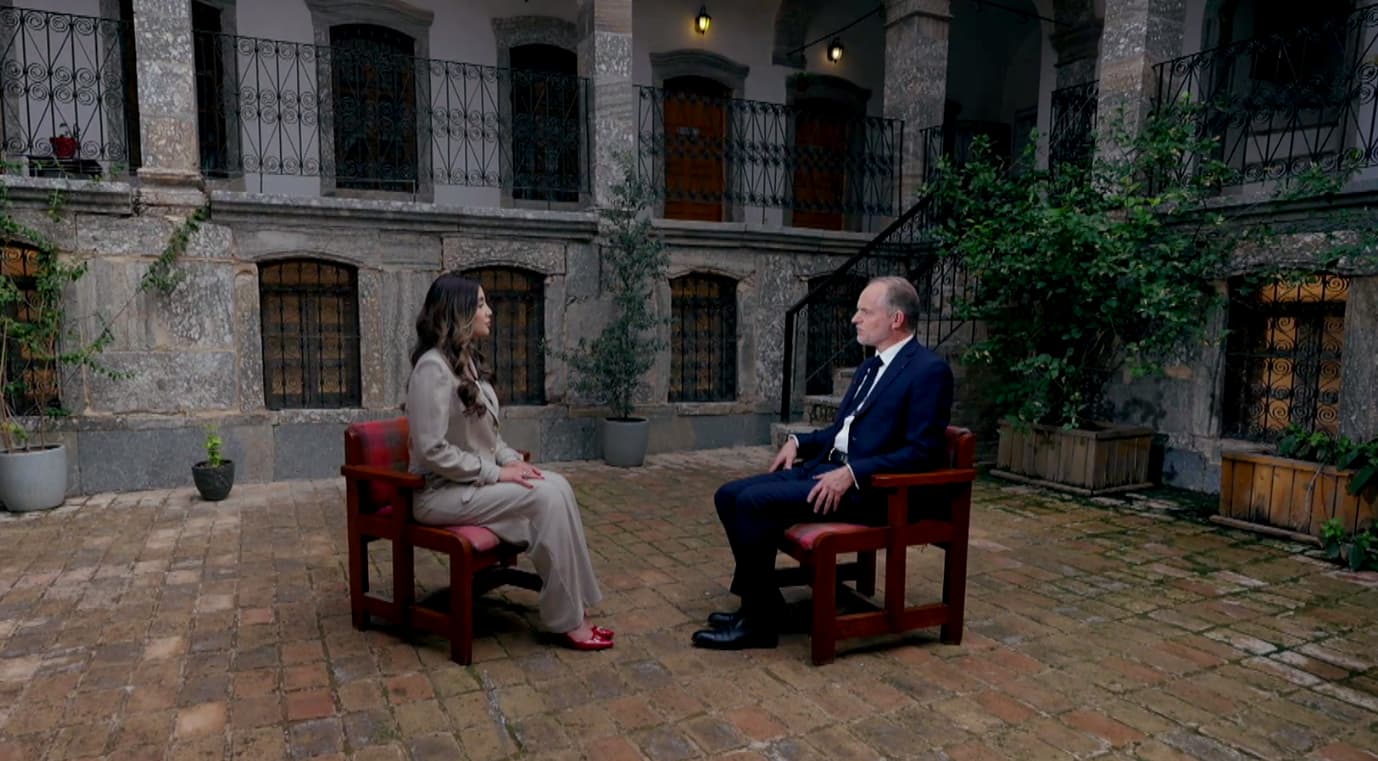
Following is the full transcript of the interview with the Iraqi government spokesperson, Haider al-Aboudi:
Rudaw: How was the White House meeting? Donald Trump was very pleased, and the Iraqi prime minister also appeared to be very happy. What was the outcome of that meeting, if you were to tell the people of Iraq and the Kurdistan Region?
Haider al-Aboudi: Yes, thank you, and thanks to your esteemed channel. To begin with, yesterday's meeting between Iraqi Prime Minister Ali Faleh al-Zaidi and the President of the United States was, in fact, an important meeting that marked a new shift and a new chapter in the history of bilateral relations between Baghdad and Washington. This relationship has taken on a new approach from a new horizon, paving the way for a strategic partnership based on the economy and investment in shared fields, from which both sides will benefit based on mutual interests and mutual gain. These types of relations, which rely on shared interests, will have greater continuity and stability compared to a relationship based solely on security and military aspects, similar to the past years and the two previous decades that Iraq has gone through.
As you know, relations were previously shrouded in an atmosphere of crises and crisis management. But today, this new beginning toward a continuous and stable economic partnership steers the trajectory of bilateral relations between the two countries into a new, stable strategic sphere that addresses the interests of both peoples. These understandings emerged from the important meeting between the Prime Minister and the US President, which will lead to the signing of several agreements.
Trump said that they will support this prime minister with the challenges facing him. What kind of support are you asking for from the US President? In what aspects do you want America to support you, and what promises did you receive from him so that when you return, you can implement those agreements and further develop your relations with America?
In addition to the warm reception and the genuine support provided to the Iraqi delegation headed by the Prime Minister, which everyone noticed, the government's methodology and its procedural steps in dealing with complex and accumulated files have elevated the international community's view of the Iraqi government at this stage, raising the level of international trust and its global reputation. This is because foreign relations are based on interaction and the guarantees available within this shared space. Today, this interaction is interpreted by our international and strategic partners—especially the United States of America—from an important angle: the Iraqi government's ability to achieve its ministerial program of restricting weapons to the hands of the state, as well as its ability to manage the economic file with a steadfast vision rooted in the interests of the Iraqi state. The current phase and the region's geopolitical circumstances are highly complex and delicate, requiring a careful reading to organize the Iraqi economy, which is traditionally described as a rentier economy. However, at this stage, the Iraqi government has moved forward to arrange its affairs toward concluding strategic economic partnerships that compensate for the Strait of Hormuz crisis and open new horizons and safe corridors for the Iraqi state's revenues.
You mentioned restricting weapons to the hands of the state, and the Prime Minister promised that weapons will be in the hands of the state by September 30. Isn't this a big promise? Previous governments have also tried this; what gives you such high confidence to tell America that you will bring weapons back under state control and that those groups will no longer possess them?
It is not a promise, but rather a pledge from the Iraqi government and the Prime Minister, made from the very first moment he gained confidence for the government's ministerial program. This program emphasizes that restricting weapons to the state is one of the pillars of Iraqi sovereignty, linking security decisions to a centralized system. From this premise, the climate of our state's internal stability is secured. This stability provides a safe environment for investment and a positive climate for development. Through this stability and through these security guarantees, our international partners and friends continue to view the state as the environment of Iraq representing a promising developmental and investment opportunity worthy of this strategic partnership.
There was no representative from the Kurdistan Region in the delegation at the White House, and people asked, 'Why wasn't one included?' What is your response to that question?
Allow me to say the question is inaccurate. Why? Because when the Prime Minister was asked about his relationship with the Kurdistan Region, he described it as a part of his own body. He represents the Kurdistan Region, he represents Basra, and he represents the western and eastern provinces of Iraq. Who represents the Kurdistan Region? The Prime Minister says he does.
Yesterday, a meeting was held here with the US Secretary of the Treasury. You know that Iraq had a cash liquidity problem; did you receive a promise that this cash problem will be resolved and that America will send dollars to Iraq once again? Have the restrictions that were imposed on the previous government been lifted?
Regarding the liquidity related to the flow of dollar payments: first of all, this is not aid. This is a clear point; they are Iraqi funds. This framework and this procedure were established nearly two decades ago in coordination with the American side, leading to the opening of an account for the Central Bank of Iraq at the US Federal Reserve. Into this account, the financial payments resulting from oil exports are deposited. This goes back to the philosophy of this account and has a history, part of which you and financial experts may already know. The coordination for the Central Bank to receive these dollar payments is conducted according to a structured, well-studied annual plan that aligns with the monetary policy adopted by the Central Bank, so it pays or requests a batch of these foreign currency amounts from the American side for purposes it determines according to its monetary policy. Things in this regard are no longer as they were previously after air transport routes were disrupted—because this is transported by air, not by land. Now, a batch was released not too long ago, and there is coordination for another batch. Therefore, in light of all indicators of Iraqi-American interaction and partnership, things are moving in the right direction in accordance with legal entitlements and the dictates of this partnership.
Will Iraq's money no longer be held hostage by America? Can the Iraqi people be happy and say that this has been completely resolved?
The relationship between Iraq and the United States of America is not defined by these funds you mentioned. The creation of this account was tied to post-2003 circumstances and the fear that creditors might seize these assets, because as you know, there are funds or debts dating back to the 1980s, and there are international parties tracing the details of debts owed by Iraq back to the Iran-Iraq War. So, this procedure represented a decision for the temporary protection of Iraqi funds so that there is no direct seizure or decision from international courts to take these funds. Therefore, depositing them legally in the US Federal Reserve represents a protection of Iraqi funds, and they are not being held hostage.
The Prime Minister is heading to Houston with a briefcase full of agreements to strike deals with American oil companies. Such agreements have been made in the past. What is the good news in this for Iraqis? Is this only beneficial for America? If it is good for Iraq, what is the benefit for the Iraqi people? Why are the contracts only being given to America instead of China and Russia? That is to say, there should be open competition so that all countries can participate, rather than simply awarding the contracts to the Americans.
This file, in truth, contains a set of details tied to American agreements and communications. There are upcoming signings expected between the two sides, especially in the energy sector—here energy means oil and electricity—as well as in the developmental field. Iraq now possesses a vision to diversify the export sources of its oil and requires partnerships with major American companies, which are highly professional in this field and possess extensive experience and history. On this basis, advancing these understandings and translating them into legal agreements is one of the key stops during the Prime Minister's visit to the United States of America.
Before coming to America, the Prime Minister launched a major anti-corruption campaign, and all Iraqis, including those in Kurdistan, were happy with this campaign. Will this campaign continue and take down bigger heads and more prominent corrupt figures? Or are the obstacles too many, preventing you from confronting corruption easily?
Operation Dawn anti-corruption campaign that was launched, which all Iraqis and perhaps even the world witnessed, represents a national commitment from the Iraqi government, and it is also a national commitment from the Supreme Judicial Council and the Iraqi Parliament. These three branches of government have combined and integrated their efforts to combat a file that has come to threaten the Iraqi state, its wealth, and the resources of the people. Today, this confrontation with the forces of corruption represents an ongoing event, not a temporary one. These authorities, particularly the Judicial Council and the Integrity Commission, continue to follow up on and track evidence and confessions from arrested suspects. The Iraqi government will not hesitate and will not stop tracking down those involved in violating the sanctity of public funds, nor will it stop pursuing those whose wealth has been illicitly inflated and who have become involved.
My viewers in Kurdistan want me to ask about the salary issue: Will the issue of the Kurdistan Region's civil servants be resolved under this government? What is the Prime Minister's intention, and how do you plan to resolve this issue so that this question is no longer asked of you as the spokesperson for the Iraqi government?
This file is not tied to intentions; rather, one should ask what the procedure and methodology of the Iraqi government are in dealing with the salaries file in the Kurdistan Region. The salaries of the Kurdistan Region do not differ from the salaries of all Iraqi state employees in that they represent a firm commitment from the government to secure citizens' livelihoods. But do the Region's salaries suffer from a technical issue? Yes, there is a technical problem related to coordinating and unifying the procedures for non-oil revenues from the Region, as all state revenues should pour into a federal pool at the Federal Ministry of Finance. Up to this moment, there is a gap between what the Ministry of Finance pays for the Region's salaries—meaning the number—and what is received from the Region's revenues deposited with the Ministry. The continuation of this gap might not accelerate the stabilization of this file, but the Iraqi government remains a firm and total guarantor of all these salaries, and it is committed to securing all the salaries of Iraqi employees, including them.
Does this mean those technical issues will be resolved soon and this problem will come to an end?
Without a doubt, there are agreements and joint coordination efforts to overcome all these technical obstacles.