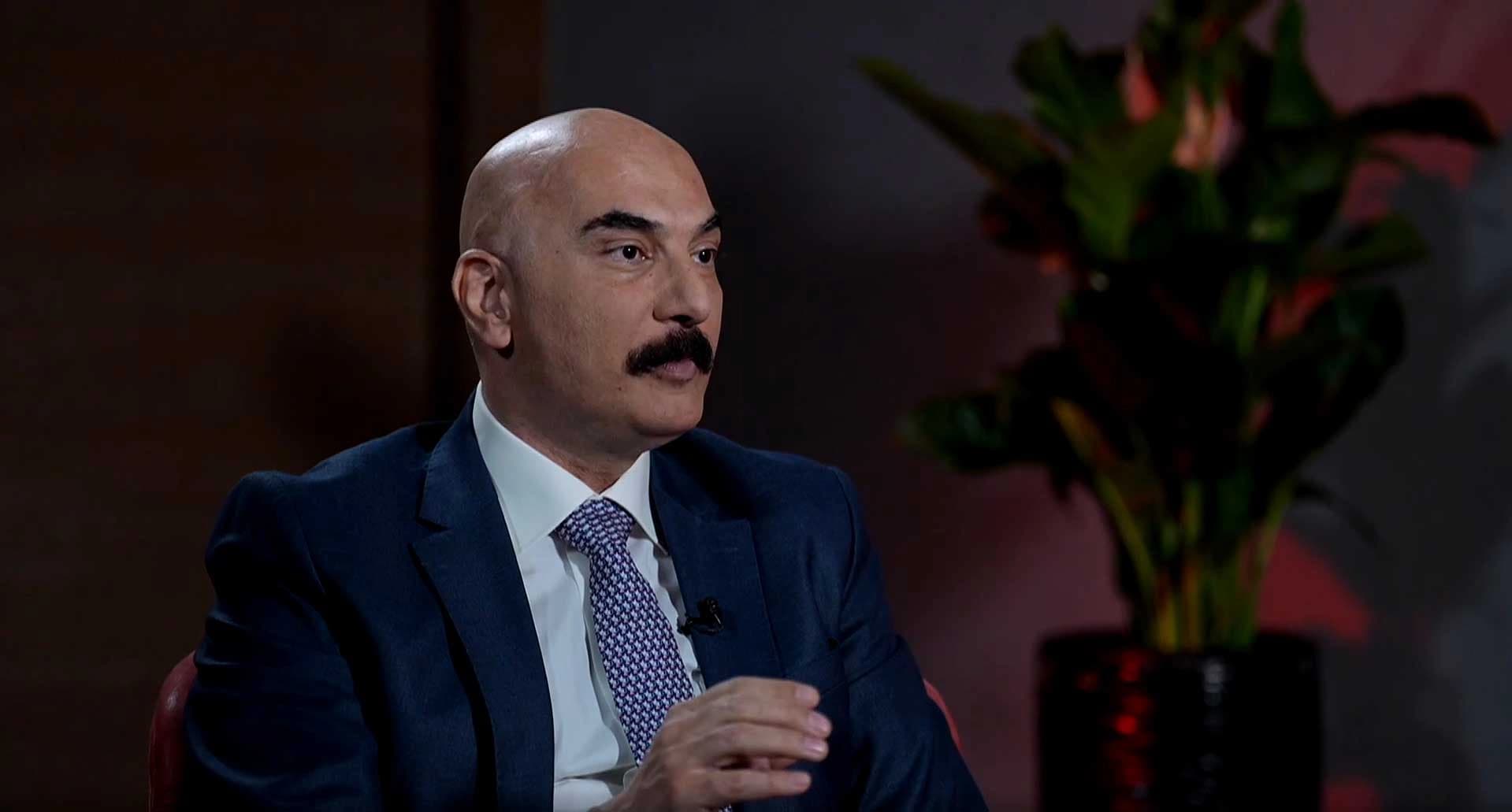
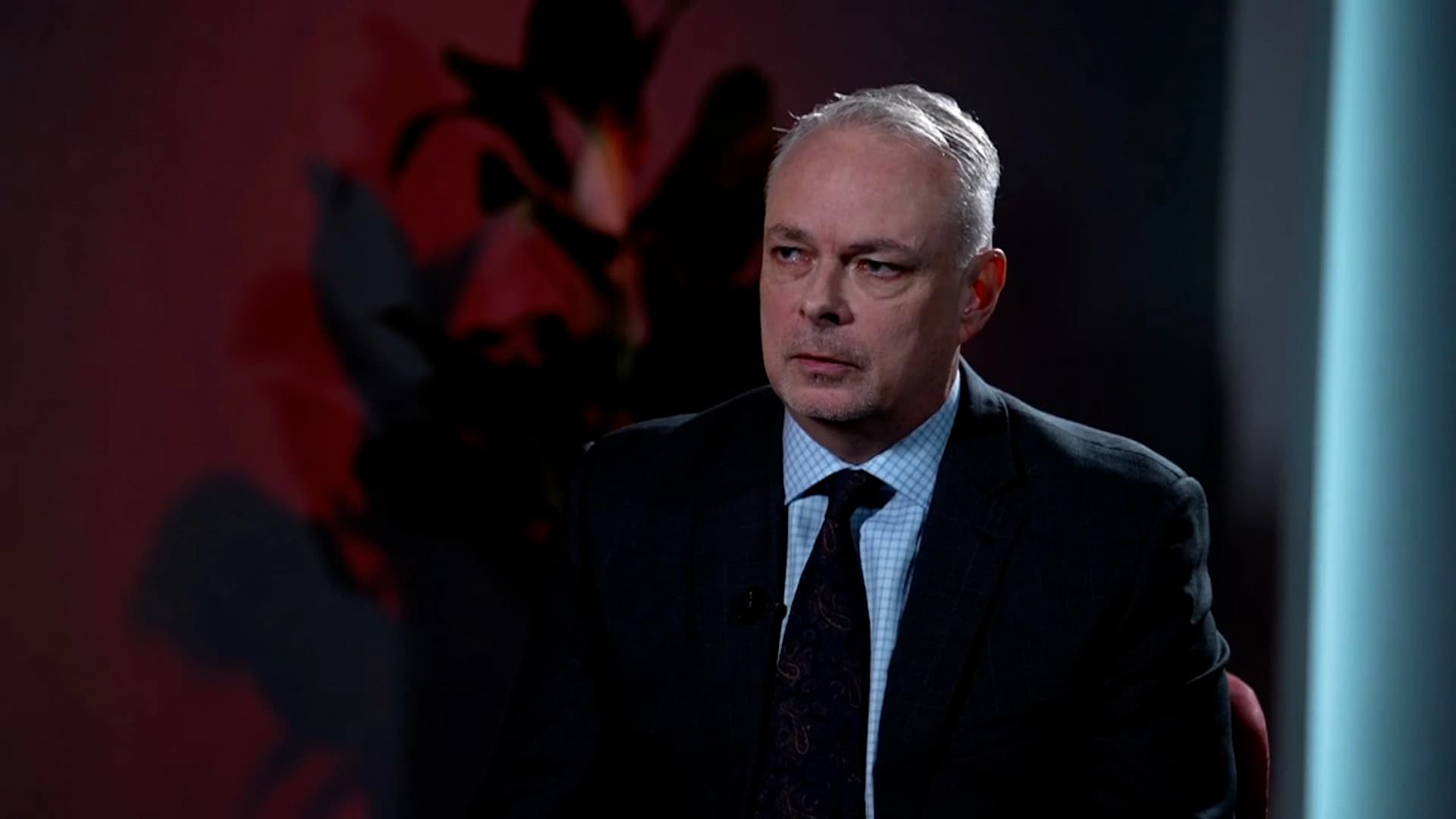
ERBIL, Kurdistan Region - Kurdistan Region President Nechirvan Barzani is “a very good friend” and “trusted ally” of Italy, Rome’s top diplomat in Iraq said on Wednesday, ahead of a ceremony in Erbil where the Kurdish leader is set to receive Italy’s most prestigious Order of the Star distinction, the Knight of Grand Cross.
“Italy’s Order of the Star is awarded to individuals who have played a significant role in strengthening relations,” Italian Ambassador Niccolo Fontana told Rudaw’s Nwenar Fatih, lauding President Barzani for playing “a major role in strengthening relations [between Erbil and Rome].”
The Kurdish president “is a very good friend and a trusted ally of Italy,” the ambassador affirmed, praising the Kurdish leader for his contributions to taking ties between Kurdistan and Italy to “an excellent level” and for acting as a “trusted mediator” in complex dossiers.
“Nechirvan Barzani is respected in Europe for his ability to build bridges and overcome differences,” the top Italian diplomat underlined.
Following is the full transcript of the interview with the Italian Ambassador to Iraq, Niccolo Fontana:
Rudaw: Mr. Fontana, welcome to Rudaw. I'm glad to have you here.
Niccolo Fontana: Thank you so much. It's a pleasure to be here with you today. Thank you.
This is a really important moment that we speak and also, I think, a milestone in relations between Italy and the Kurdistan Region of Iraq, not just the Kurdistan Region of Iraq, the Kurds in general. How did it happen that the Italian state and the president of Italy decided to award this state medal to Mr. Nechirvan Barzani, the president of the Kurdistan Region of Iraq?
First of all, here we are talking about the Order of the Star of Italy. It is an honor, as you said, that is conferred by our head of state, the president of the Italian Republic, to those individuals that in different capacities have played an important role in strengthening relations with Italy. And President Barzani is really one among them. And so our President of the Republic decided to confer upon him the highest rank of the Order of Star of Italy, which is the Knight of Grand Cross.
And I think the Knight of Grand Cross is the highest rank.
Exactly, exactly. You're right. And in the past, this order was conferred to other very prominent, either political or business leaders. Just an example, Ban Ki-moon, the former Secretary General of the United Nations.
How does Italy view the role of Nechirvan Barzani in strengthening the relations between the Kurdistan Region and Iraq in general with Italy?
Niccolo Fontana: If I had to sum it up, I would say that President Barzani is a very good friend of Italy. He is a trusted ally and he was always, first as Prime Minister of Kurdistan, then now as President, a steadfast supporter of the need to increase the political, cultural, social and economic relations between Kurdistan and Iraq and Italy. He played a role in attracting Italian companies to this market. He was a key figure in our decision to establish a consulate here and to elevate that as a consulate general as we have it today in Erbil, and he visited Italy several times in the past, lastly in the month of May, and he had a very positive meeting and discussion with our head of state, President Mattarella.
And how do you describe the current relations between Kurdistan and Iraq with Italy?
I would say we're talking about an excellent level. I think that we've been always very close on the political sphere and on the cultural sphere where, to be frank with you, we could do a little more, and we're committed to that, is in the economic sector. I think there is a lot of significant untapped potential to develop new partnerships, attracting Italian companies to Kurdistan, to Iraq, and also fostering the trade. Because in these countries as a whole, there's a huge demand of Italy and Made in Italy.
President Nechirvan Barzani always strives for agreements and peaceful resolutions, within Kurdistan, Iraq, and he frequently plays a role in peaceful resolutions in other countries too, I mean in the region. How do you view and how does Italy view this role of Nechirvan Barzani?
You're right. He plays a very relevant and significant role. He is a trusted mediator, pragmatic leader, well-known out of the boundaries of the region and very much appreciated in Europe for his ability to bridge and always to overcome differences. I still remember the first time I had the honor to meet him when I was a younger diplomat. We had a meeting together with our foreign minister back then and I remember after that encounter we were all impressed by his knowledge, not only of what is going on in this region, but by his knowledge of the European political dynamics.
Sir Fontana, when we talk about Italy, of course, I cannot stop myself from asking about the football team.
But you should stop. I'm just kidding.
It's less excitement that we don't see the Italian national team in the World Cup. Unfortunately, Italy didn't qualify the national team. But we, as Kurds, we don't forget that in 1991, during the mass exodus of the Kurds, due to the oppression from Saddam's regime, back then we all remember that all players from the Italian national team, football team, they send their signatures to President Masoud Barzani to show their support for the Kurds. And back then, we are talking about 30 years, this was something big. And I think it was a stone also to establish or deepen and strengthen the relationship between the Kurds and the Italian people. But I want to ask, how can the relation between the Kurdistan Region of Iraq and Italy, how can it be strengthened more?
First of all, that is just one of the examples of our friendship. I think that it is important to focus on the development of the economic partnerships, but what I would like to do is to talk about the opportunities that can arise from more student exchange and a better and more efficient academic partnership. You know, every year we offer academic scholarships to Iraqi and Kurdish students. It's not a huge number, but it's a good first step. And I think that if we start to have these student exchanges when the students are still in the universities and are about to enter their professional career, we set a good seed in their memory. They understand better our culture. And we can do the same with Italians studying here in the Kurdistan Region. And so in the future we have these people that can be ambassadors for both countries. That is how you strengthen the cooperation and the friendship.
I've seen students and I know people from the Kurdistan Region, young people who do study in Italy. They love the country and they always praise the Italian people and they feel closeness between our cultures. And as we talked about family values, especially. And you mentioned that this is the field that you can work on. Do you have any plans? Is there any team, for example, to work with universities in Kurdistan? Is there any practical plan in this term?
We are actually starting. You know, this region has a well-known stability and there is safety. So we are asking Italian universities to develop their relationships with good universities here in the Kurdistan Region and I visit several of those and I hope that we can have more cooperation in the coming years.
In terms of culture and also let's not forget about archaeology. Archaeology is one of the fields that Italy is I think assisting the Kurdistan Region of Iraq and it's been years and that you provide is big. What is new about this? Currently, culturally and in terms of archaeology, what are the assistance that Italy is providing to the Kurdistan Region of Iraq?
Thank you for raising up this subject. When I mentioned that our cultural relations are at an excellent level, in my mind, I was referring specifically to our archaeological cooperations. We are two countries with a very significant heritage. We have our well-known civilizations that we need to preserve and protect and also promote. That is precisely what our archaeological missions are doing in Iraq and in the Kurdistan Region. Let me just give you one data. Italy has 22 archaeological missions in Iraq, 11 of those are in the Kurdistan Region. It is the highest number of archaeological missions we have in the world.
It's in Kurdistan, the highest level.
No, no, I mean in the old Iraq, 22.
I know, but 22. This is the highest that you have in any country in the world.
In any country in the world. So, of course, that is significant because of the past civilizations and all that they left behind. What we're trying to do is to preserve that heritage, and here in Kurdistan we're very successful. We're about to launch at the end of September the first archaeological park close to Duhok. And I hope we could see each other eventually on that occasion too, so all your audience could know about that.
The Italian former consulate general in Erbil gave me, I interviewed him and he gave me, I remember, a booklet about Italian projects in terms of archaeology in Kurdistan and people I think they can go online and see.
Yes, it's true. We'll need an updated version of that.
Indeed, indeed. It's a great, I was really somehow very excited to see all the work.
Very good, I appreciate that.
Interesting work actually that you do. Construction projects in Kurdistan Region now buy construction materials from Italy. And there are Italian companies also who operate and work in Kurdistan too. But in which sector is there a high potential to strengthen the economic relation between Italy with Kurdistan Region and Iraq?
You're right. There are Italian companies operating in the Kurdistan Region, but we need more. And that is precisely our goal as an embassy and as the consulate general here in Erbil. Talking about sectors, you know, until recently, most of the Italian companies in this country operated in the energy field, which is good. But what we want to do is to diversify our presence and start being active in different sectors. So we can look at agriculture, mainly agro-industrial production with packaging and everything that comes with it. We can look at water management, infrastructure, high-tech manufacturing. I see and I receive calls from Italian companies in very specific sectors and I feel that there is a good vibe about the opportunities in Iraq and in the Kurdistan Region and we will make sure to help those companies being successful.
That's interesting. You mentioned agriculture. We also talked about construction. But Italy is not just about this. Italy is about beautiful things, food, coffee, and good-looking as you are. What about these sectors? Do you see any interest? People do drink coffee, yeah, they do every day, as in Italy, and Italy is very famous for coffee and everything else. In these fields, is there any potential?
Yes, I think there's a huge potential. Of course, those products are maybe quite expensive for this market but I know there is a huge demand and we are starting to see more and more Italian products in the food, fashion, furniture category here and also in Baghdad. I'm witnessing these rising interest and there's a number of new customers for those. So hopefully in the future we will be able to drink a proper Italian coffee to see beautiful furniture stores here in Erbil and we're all eager for that moment.
You know not only coffee, ice cream is coming too. I don't know if you are aware of this but a friend of mine, he's a businessman and he just started a big partnership, multi-million dollar partnership with the Italian ice cream company. So and he's just started actually.
So I shall try that.... Okay, I'm ready to be a tester for the gelato, as we say.
We talked about investment, and this investment and partnership needs a good grounding. And corruption, I think, was one of the obstacles that every country has in Iraq. The new Prime Minister Ali Zaidi started a big campaign against corruption in Iraq. Will this pave the way for expanding trade relations? And has corruption been a major obstacle for Italian companies to operate and work in Iraq?
First of all, let me say that I have the honor to meet the new prime minister and deliver a congratulatory message by our prime minister, Giorgia Meloni. And, you know, having more legal certainty would certainly contribute to create a better business environment, thus attracting more Italian companies. We as Italy support the new Iraqi government and believe that what they are doing will help Iraq grow also in the economic sector.
Regarding the Kurdistan Region, how do you view the inactivity of the Kurdistan parliament after the election and also failure to form the new cabinet in the Kurdistan Region? Who have you spoken to regarding this matter?
You know, my first visit in Kurdistan was almost two years ago, right after the elections at the end of 2024. And that was a really outstanding result with a huge turnout and another proof of the Kurdish democratic system. It is unfortunate that it was not possible to form a new government, but you know, being Italian we all know how the political dynamics sometimes tend to sharp differences between parties. What I'm convinced about is that the Kurdish political leaders will continue to do their best to serve their citizens and eventually they will form a government in the near future. As meetings, I'm always meeting all the political leaders here and in Sulaymaniyah.
And Italy also is one of the very active countries in the process of reforming the Peshmerga forces. How do you see the process so far? And in terms of security, what is the assist that Italy is supporting and providing to Kurdistan Region right now?
You know, historically, we can say we have a military presence here of Italian soldiers as trainers of Peshmerga. From the latest meetings I had, I believe that several good positive steps were undertaken in that process, and eventually the completion of this reform, as you said, will be soon. For our security, I think, as I said before, this is a very safe region and our soldiers played an important role in helping Kurdistan to reach the current stance.
Are you happy and positive with the result of the Peshmerga reform?
I'm not so prepared on that. I believe what our soldiers, our military leaders here tell me and what some political leaders told me. They told me there were some positive steps, so I hope that there will be some other ones in the future.
Mr. Niccolo Fontana, I'm really happy to have you here and welcome to Rudaw.
Thank you so much.
Hope to see you more frequently and next time maybe we will have different stuff and good things to talk about.
Thank you very much. I really appreciated it. Looking forward to coming back here.
You're always welcome.