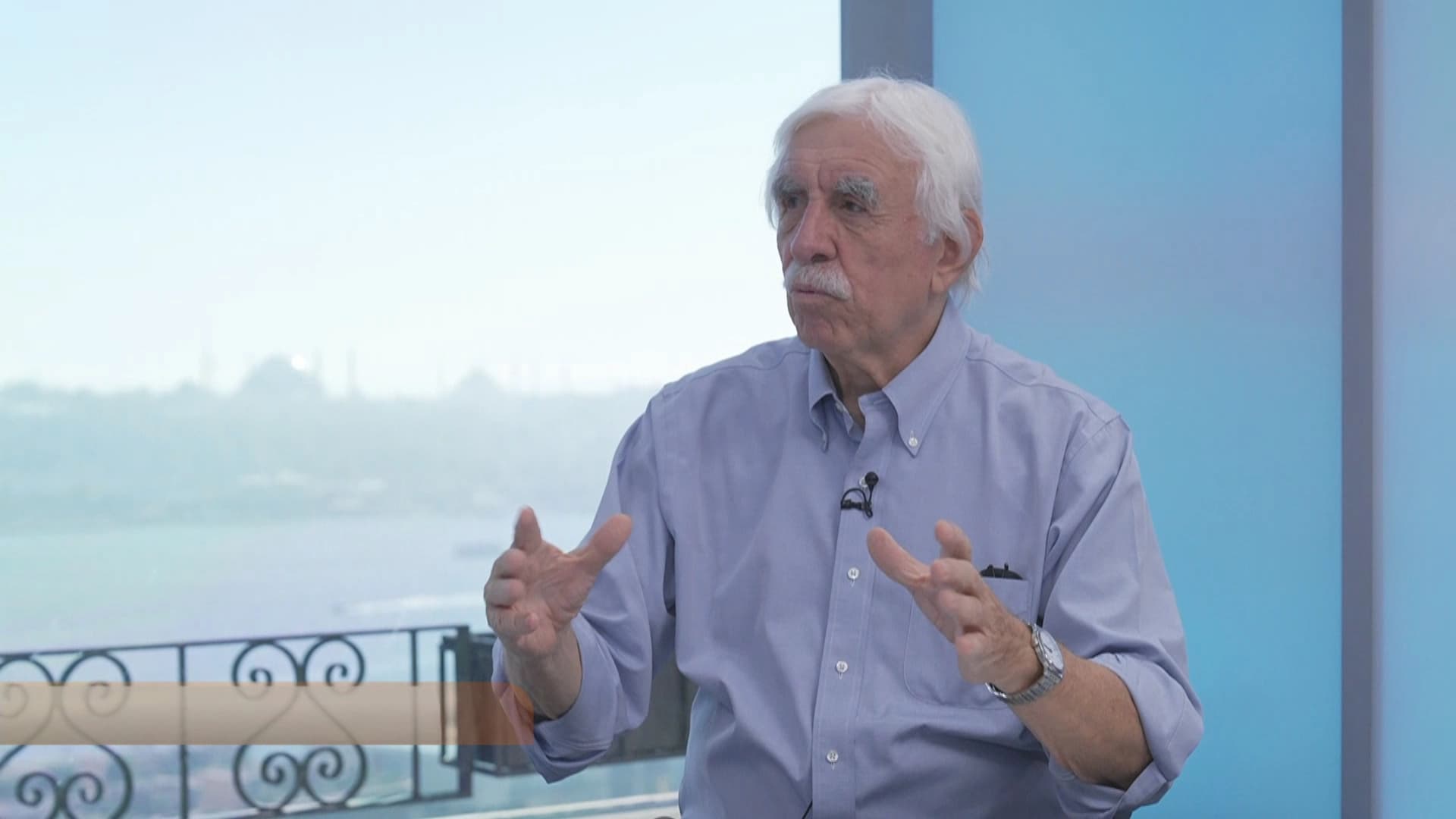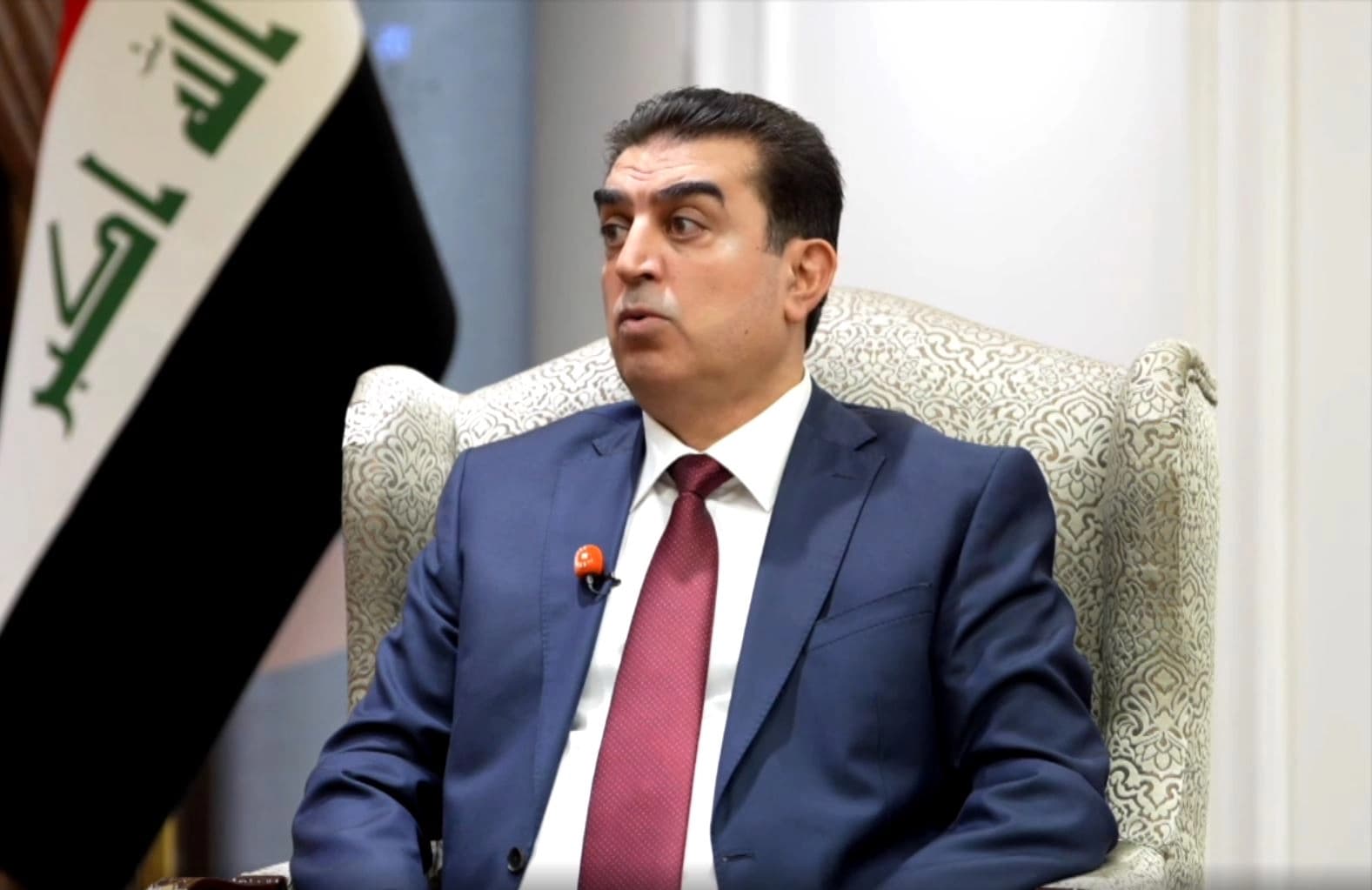
WASHINGTON DC - As preparations continue for an expected visit by Iraqi Prime Minister Ali al-Zaidi to Washington, former US official Victoria Taylor says Iraq's new government has faced major tests at home and abroad, particularly over the future of Iran-backed armed groups, relations with the Kurdistan Region, and Baghdad's partnership with the United States.
In an interview with Rudaw at its Washington studio on Friday, Taylor, the former US Deputy Assistant Secretary for Iraq and Iran affairs and now Director of the Iraq Initiative at the Atlantic Council, discussed the challenges awaiting Iraq's New Prime Minister and the expectations surrounding a potential visit to the US capital.
An Iraqi diplomat familiar with the planning told Rudaw that Baghdad is working to arrange Prime Minister al-Zaidi's visit to Washington by mid-July, though final dates have not yet been confirmed. Rudaw also contacted the White House for comment on the proposed visit, but had not received a response at the time of publication.
Taylor said Washington will be looking for tangible steps toward disarming and integrating militia groups into Iraq's state security institutions, while also seeking assurances that Iraq remains open to deeper economic and energy cooperation with U.S. companies.
The conversation also explored tensions between Erbil and Baghdad, stalled efforts to form a new Kurdistan Regional Government (KRG), the future of Peshmerga reform, and the Trump administration's evolving approach toward Iraq and the Kurdistan Region.
Following is the full transcript of the interview with Victoria Taylor:
Rudaw: Victoria. As you know, Iraq has a new government, which has made a lot of promises internally and internationally, but the big task in front of the new Iraqi Prime Minister is disarming the Iraqi militia groups. He's also expected to visit Washington, maybe by mid next month. Do you think he will be able to address this issue, or is it a big challenge? He cannot resolve it as the previous Prime Minister has tried, but failed.
Victoria Taylor: So, I think the reality is this is a task that cannot be completed with the Prime Minister's support and efforts alone. It is going to require concerted effort by the whole Shia coordination framework as well as it is going to need support from Kurda and Sunni political leaders as well. This problem is not one that started overnight. It is a problem which has continued to grow over the course of a number of years, as the militias grew in number and its strength, political strength, economic strength, and I think it's going to be important for the whole Iraqi political system to really work together to place pressure on these groups to take some real and serious steps.
I think the announcements from Muqtada al-Sadr and [Qais al] Kazalie, among others, are a positive step, but announcements alone are not enough. It's going to require actual steps to hand in weapons to alter the command structure of many of these units, so that they're reporting directly to the Iraqi security forces and not responding only to Tehran, and I think it will take time to see whether these were only empty political statements or whether they were meaningful indications that these groups are ready to relinquish some of this power.
You mentioned the Kurds and Sunnis could help this process. What do you mean by the Kurds? How could they help in this situation?
Well, I think the reality is, of course, that many of these militia groups are also political powers, and they are, they have their own political parties, and they're engaging and have their own relationships with a number of political parties in the system, including Kurdish political leaders, and so I think that as they can, both the KDP and PUK should be also using their own engagement with Shia political leaders with some of these militia leaders also to encourage real steps to disarm
But part of these militia groups attacking Kurdistan, so how will they listen to the KRG or the Kurdistan political leaders to disarm and integrate into the Iraqi defense system?
Well, I think the reality is there's a, there's a wide variety of groups across the spectrum for the militia, some of them have been engaged kinetically and have stated quite clearly they have no intention to disarm. I don't think any degree of political engagement is likely to change that position. What we've seen is positive statements from certain political leaders, some of which do have existing political relationships, and we know that you know both PUK leadership and KDP leadership have at times met with some of these leaders, and so I think this is a time where everyone should be using as much of their political and economic influence as possible to achieve that objective, but I don't rule out that some of these groups will never be willing to disarm voluntarily.
So we know the Iraqi Prime Minister al-Zaidi has no political support in parliament, and he came, he came as a solution when having a US veto on the former candidate for the Iraqi Prime Minister Seat. Do you think having the US support is enough to address these issues in Iraq? Do you think that he has the full support of the coordination of the framework, or did they settle on him as the last option?
Well, I think obviously six months is a long time for the government formation process, but it's not as long as it could have been, and ahead of the selection. Of Prime Minister al-Zaidi, there were a number of candidates that could not secure the majority backing from the coordination framework. I think it will be important for him, of course. United States support is critical, both support and pressure related to the disarmament of the militias, but I think we will have to see if the if he can maintain that majority support from the coordination framework in pursuing not only this goal but a number of other important goals, and as you said, he does not have his own political party, but in securing the nomination he was able to gain the backing of both the Maliki camps, the Sudani camp, and all signs are that he has the strong backing of the Chief Justice of the Supreme Court as well. That is not to say that the framework will stay united. There are signs of division on certain issues, and I think we'll have to see if he is adept and maneuvering and maintaining this kind of political support that he'll need.
Ali al-Zaidi is expected to visit Washington. What do you expect from his visit, and what do you think the US is expecting from him when he comes here to meet the US President, also the US administration officials?
Well, I think the United States has made very clear throughout the government formation process the priority that it has placed on disarmament of the militias. I think the administration was very pleased to see, you know, announcements from Muqtada al-Sadr, Khazali, Shibil al-Zaidi in this regard, and I think the US is going to want to hear a clear message from the Prime Minister that there's going to be real follow up from the government and pursuing this disarmament process. I think the US is also one going to want to hear positive messages about US business, of course. The President himself, as a businessman, I think may be pleased to see a Prime Minister also coming from the business world, you know, the framework has also tried to indicate a readiness to do deals with US companies, particularly in the energy sector. I think those companies in the US government are going to be wanting to hear a positive message that Iraq is open to expanding business partnerships.
I will ask a few questions about Erbil and Baghdad relations. Do you think that with having a new government in Iraq, these disputes have resurfaced between Erbil and Baghdad about revenue sharing, budget, and territorial disputes, and all other disputes that have existed for such a long time between the two governments, the KRG and Baghdad?
Also, these are clearly longstanding issues between Baghdad and Erbil, and some of them are rooted in differing interpretations of the constitution in legislation, which has never been passed and resolved, and I think it's very positive, of course, that there have been meetings between Prime Minister al-Zaidi and Prime Minister Masur Barzani, and certainly I think there have been positive signals from Prime Minister al-Zaidi of his readiness to establish a good partnership with Erbil, but I think these are all issues with bull, which will be difficult to resolve, and I think it is important to have, I think, a willingness and a readiness to engage in dialog, but it will require a concerted effort from both sides to reach any kind of long-term resolution to these long-standing issues.
Do you think the Kurdish political parties, especially KDP, are absent in Baghdad? And how does this contribute to the disputes between these two governments?
Well, I think it's going to be very important to have very active representation from the Kurdistan Regional Government in Baghdad, including by senior KDP leaders, of course. The PUK has been very actively engaged in Baghdad and building relations with a number of the Shia political leaders. I think it's important, however, that this engagement also happened not only in the context of each political party. There's a number of interests that the Kurdistan Regional Government and the Kurdistan people have in Baghdad. I think it will. Be better if both parties were using that engagement to advance the overall interests of the Kurdish people and not only their political party interests.
There's another dispute between Erbil and Baghdad, which is very important for the US and international oil companies that are working in the Kurdish region, and also for the international communities. This dispute is an oil and gas issue. How do you see this oil and gas issue? Do you think that Erbil and Baghdad can address this together, especially with a new Iraqi government that pledged to provide more security support for the Kurdistan Region's oil companies?
So, I think obviously we're coming up on the expiration of the Iraq-Turkey pipeline in July, and so I think it's going to be very critical that there's very active engagement between the IOCs, Erbil, and Baghdad on how to move forward. I think there are ways to reach a resolution on some of these issues in the near term that would allow production to resume and oil exports to continue. I think that, however, some of these issues are really rooted in a disagreement between Baghdad and Erbil over overall resource sharing, and so far I've not seen a concerted effort from either side to address the real underlying issues, so you know, I think it's yet to be seen if this will be a priority from either government, but I think they do need to engage quite actively over this coming period to ensure that this very important source of revenue to both the Kurdish people and the Iraqi government can continue,
Want to move on to the Kurdistan Region's internal issues, how do you see the relations between KDB and PUK? And if I'm adding this to that, how do you see a Kurdistan Region without having a new government, an active parliament? It's been for years that they have been discussing this issue; they meet each other, but we don't see any results on the ground. How do you see this from Washington?
So, I'd say, you know, this is a topic that, of course, I've been following since after the elections in October 2024, and I think it's a real shame that there's not a government in place, and I think really the blame rests on both sides. I don't think there's been as much effort as there could have been to reach a real resolution that would have produced the government, and the underlying issue, of course, is I think the real serious disagreements between PUK and KDP leadership, you know, I think, while a caretaker government can address some of the issues that are facing the Kurdistan Region, the Kurdish people deserve the government that they voted on. You know, an important reason that we have elections is to give voters and give people the opportunity to select their new leaders, and you know, as part of fulfilling the election process, a new government should be formed, but ultimately, I see tremendous division between the P UK and KDP, and while I understand certainly that political parties are often in great competition, I think that it's important for both sides to reach a compromise that would allow the government to be formed as soon as possible.
You worked for the previous administration, which I mean, you worked on Iraq and the Kurdistan Region within the US government, and now you are working with one of the leading think tanks here in Washington. How does Washington view this? Do they view it as an internal matter? Do they blame KDP or the UK, or do they view that there is a region without having a new government and having an active parliament? How does Washington view this?
Well, I think there's a variety of opinions. I think that while everyone would say it's important that the two sides work together to form a government. I don't think that this has been the top priority for the Trump administration, and I understand why the responsibility is really on Kurdish political leaders to form their government. It's not the United States' responsibility to press both sides to form this government. It's up to them to do so.
If they do not move forward with this, will that damage the Kurdish image here in Washington? I mean, among all agencies, not only the government, but maybe from the Congress to the administration, and then to the think tanks, and the people who are working here, of course, we do have people whose interests are not aligned with the Kurdish interests. How does this damage the Kurdish image in Washington?
So, I would say the issue goes beyond even the formation of the government, and I think the broader problem is that there is not a, there is not one voice in Washington advocating for Kurdish interests, you have both political parties engaging separately in Washington, and at times you know they are not engaging on the same issues, and I think that is the bigger problem right now, and I think that we've, we've seen the results of that, and certain cases on, as there have been a number of issues that have touched on Iraqi Kurdish interests and the interests of the Kurdish people, and I can point to a few. When there was violence in northeast Syria, there was not a united voice from Iraqi Kurdish political leaders in Washington, and with the US government on why this was damaging, not only to the Kurdish people throughout the region, but to the Iraqi Kurdistan Region. I think we could see as well when there was a lot of focus on the Iranian Kurds, who, of course, are many of whom are resident in Iraqi Kurdish, then there was not one Kurdish voice engaging with Washington and engaging with US government, and how to approach this issue, and so I hope that both KDP and P UK leaders can find a way back to the negotiating table. I believe that a new election would not produce a dramatically different outcome and would only really prolong what has already been a process that has been far too long.
I think that was fair enough. It was a clear insight into this issue. So, let's move on. On the Peshmerga issue, the Kurdistan Region and the political parties have been trying to unify the Kurdish Peshmerga since 1992. Almost 24 years. 24 years, but still, these Peshmerga forces are not united. How do you view this, and why can the Kurdistan Region government not unify the Peshmerga forces, and how does this impact the region?
Well, I think this goes back even to the previous conversation, and in a world where Sulaymaniyah and Erbil are increasingly at odds, I don't see a future where the Peshmerga could be united in such a case. This is not just a security issue; it's not just a practical issue. This is a political issue, and I think these underlying political issues between Erbil and Sulaymaniyah would really have to be addressed in a more meaningful way to see real and tangible progress towards Peshmerga reform. I think that the lack of process progress in this regard certainly has been damaging to the support from the United States government towards this process, and I think, could lead to the expiration of this MOU in September 2026
I was about to ask a question on this MOU, and also the US funds for the Peshmerga Forces. What was striking to me was in the National Defense Act - budget. I saw that there were funds allocated for the Iraqi forces, but not for the Peshmerga forces. This is one, and the second one I've learned from the US officials, and also the Kurdish officials as well. The US has not shown its interest in renewing this MOU. Why the United States is renewing this MOU and cutting funds for Peshmerga?
Well, of course, I can't speak on behalf of the US government, but you know my perception is, you know, overall this administration, the Trump administration has been across the world, really reducing US assistance.
I agree with you, but they've allocated funds for the Iraqi forces, not for the Peshmerga forces, and we know that the Peshmerga forces were so critical in the fight against ISIS, and the threats of ISIS still exist in that region.
I think it's both a desire to reduce US assistance. I think overall there's been a focus from this administration in reducing the US military footprint throughout the Middle East, and that includes certainly federal Iraq with the end of Operation inherent resolve in September 2025 and the movement of US troops to Erbil, and I think that we can expect that this administration is going to adhere to the agreement that was negotiated that would end this logistical support from Erbil to Operation Inherent Resolve, and so I think if you take this broader picture of a Peshmerga reform process, which has made very little progress, a desire to reduce the US military footprint in Iraq, and I think really a desire to reduce US assistance overall. I think it's incumbent upon the Kurdistan Regional Government and both Kurdish political parties to really work together to send a message that US support to the Peshmerga serves US interests, not just Kurdish interests.
So, I'll make this question my last question: by appointing Ambassador Tom Barrack as a special employee for Iraq. As we know, Ambassador Barrack is very pragmatic, and he wants to bring solutions to the problem, and he doesn't play around with the problems; he tries to bring solutions to the problems, people like it, people don't like it; that's a different issue. So, how do you see this? Do you think that Tom Barrack would play any role in bringing the Kurdish political parties together and having a new government, and at the same time having a bigger role in resolving the disputes between Erbil and Baghdad?
Well, so I think the reality is even though Tom Barrack has just been officially appointed into this role for Iraq, he's been actually leading on Iraq policy for a number of months since the departure of Mark Savaya as a special envoy, and so far, I don't think that Ambassador Bark has viewed the US role as really form being the most active player in forming the Kurdistan Regional Government. That's not to say that he won't decide to engage more actively, but I don't think that this team views its role as being responsible for this, and I think that now KDP and P UK should not count on the US to play this brokering role, and I think it's unfortunate that you know the government has not been formed, and I do think it's in the US interest to perhaps consider playing a more active role, but ultimately the responsibility lies with the Kurdish political leadership.