
ERBIL, Kurdistan Region - Iraq will import gasoline from the United Arab Emirates and other neighboring countries to address a deepening fuel shortage as domestic demand outstrips supply, an official told state media on Sunday.
Ali al-Zarkani, a member of the Baghdad Provincial Council, told the official al-Sabah newspaper that the crisis stems from an imbalance between refining capacity and surging consumption.
Baghdad alone requires between 9 million and 12 million liters of fuel daily, while Iraq's remaining governorates consume a combined 30 million liters per day, according to Zarkani.
To bridge the gap, the ministry of oil is preparing to receive shipments from neighboring countries, including an imminent fuel delivery from the UAE. Zarkani did not specify the volume or arrival date of the shipment.
The councilman noted that provincial authorities requested detailed supply-and-demand data from the ministry of oil, along with an explanation for domestic production shortfalls and the output levels of invested refineries.
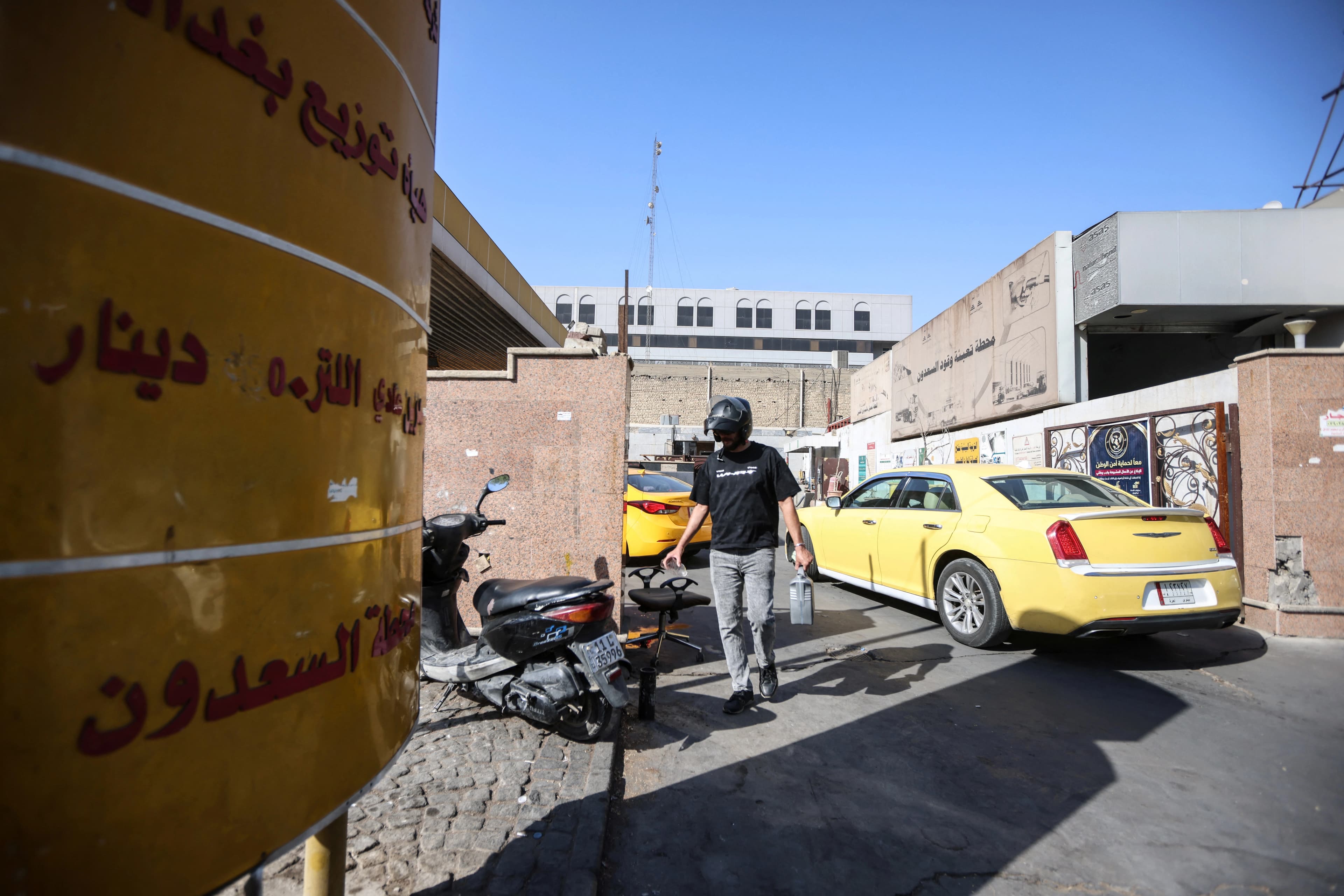
Fuel shortages have led to long queues across Baghdad and other provinces, including Najaf, where stations have capped sales at 40 liters per vehicle. On Saturday, lines at Baghdad's Mansour fuel station blocked traffic lanes as motorists waited hours to refuel.
Nawar al-Khafaji, spokesperson for Najaf’s branch of the Oil Products Distribution Company (OPDC), said a recent fuel delivery had temporarily eased wait times.
The current crunch is the second major fuel crisis in Iraq since regional military conflict escalated in late February. The resulting restrictions in the Strait of Hormuz, through which roughly 95 percent of Iraqi crude exports normally transit, combined with drone strikes on energy infrastructure, have triggered significant economic disruption and prompted foreign technical workers to evacuate.
Ministry spokesperson Salim al-Rikabi told Iraqi channel Iraq al-Awla that the departure of foreign personnel forced the shutdown of the Fluid Catalytic Cracking (FCC) unit at the Basra Refinery. The unit previously supplied 5 million liters of high-octane gasoline and 10 million liters of diesel daily.
Iraqi Oil Minister Mohammed Khudhayr al-Abadi acknowledged the shortage on Friday, attributing the deficit to unscheduled maintenance at central and northern refineries, as well as maritime shipping delays.
"Events in the region and the ongoing conflict cause logistical issues for the movement of tankers, delaying their arrival in Iraqi ports," the ministry said in a Friday statement, advising citizens to avoid panic buying and refuel only when necessary.
Abadi stated that normal national consumption stands at 33 million liters per day but spikes to 38 million liters during panic buying.
Despite official admissions of a deficit, the ministry published several videos on social media over the weekend showing media officials visiting fueling stations in Baghdad — including al-Summud, al-Jabha, Filistin, and al-Bunuk — to assure the public that supplies remain stable and queues manageable.