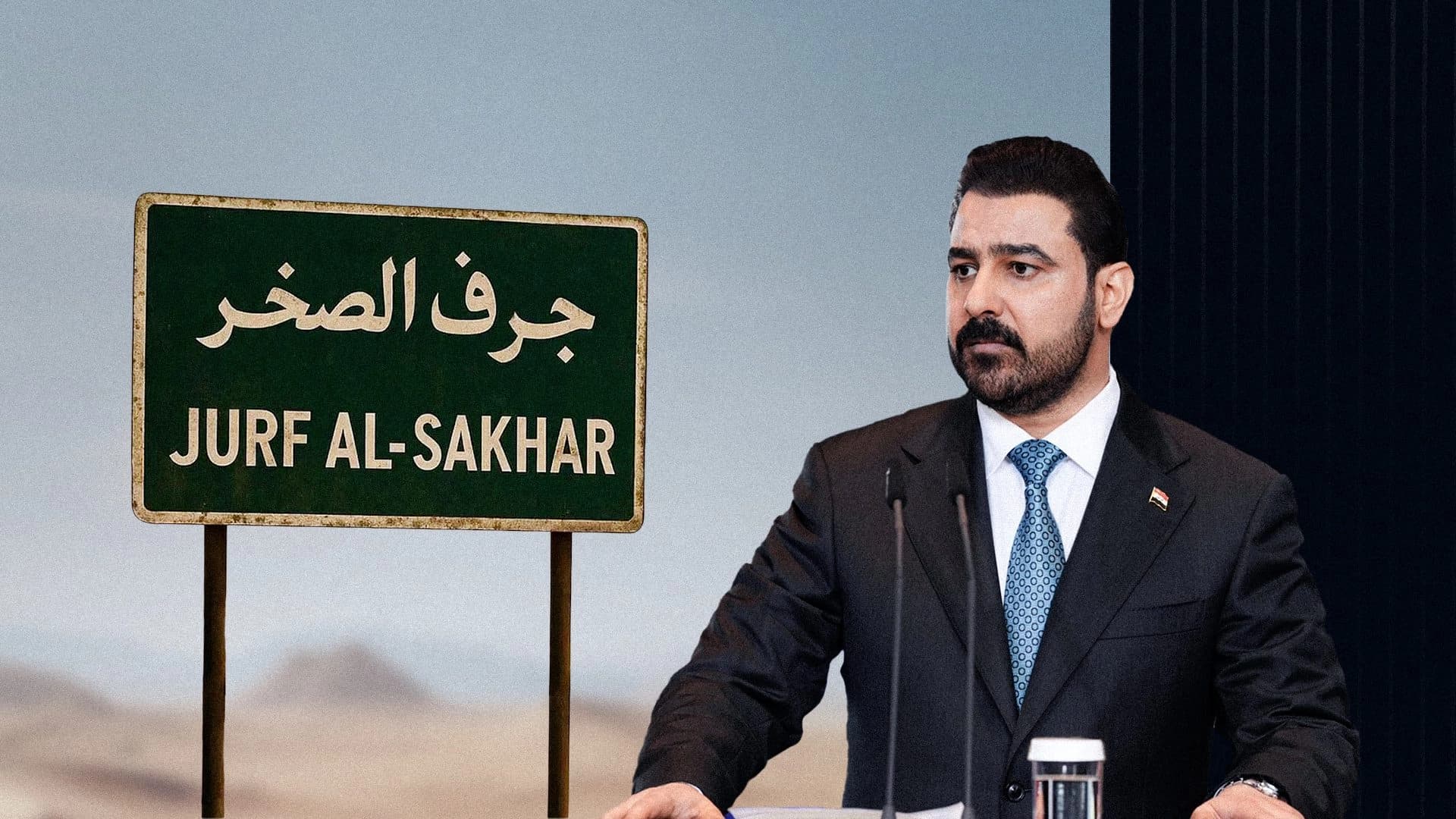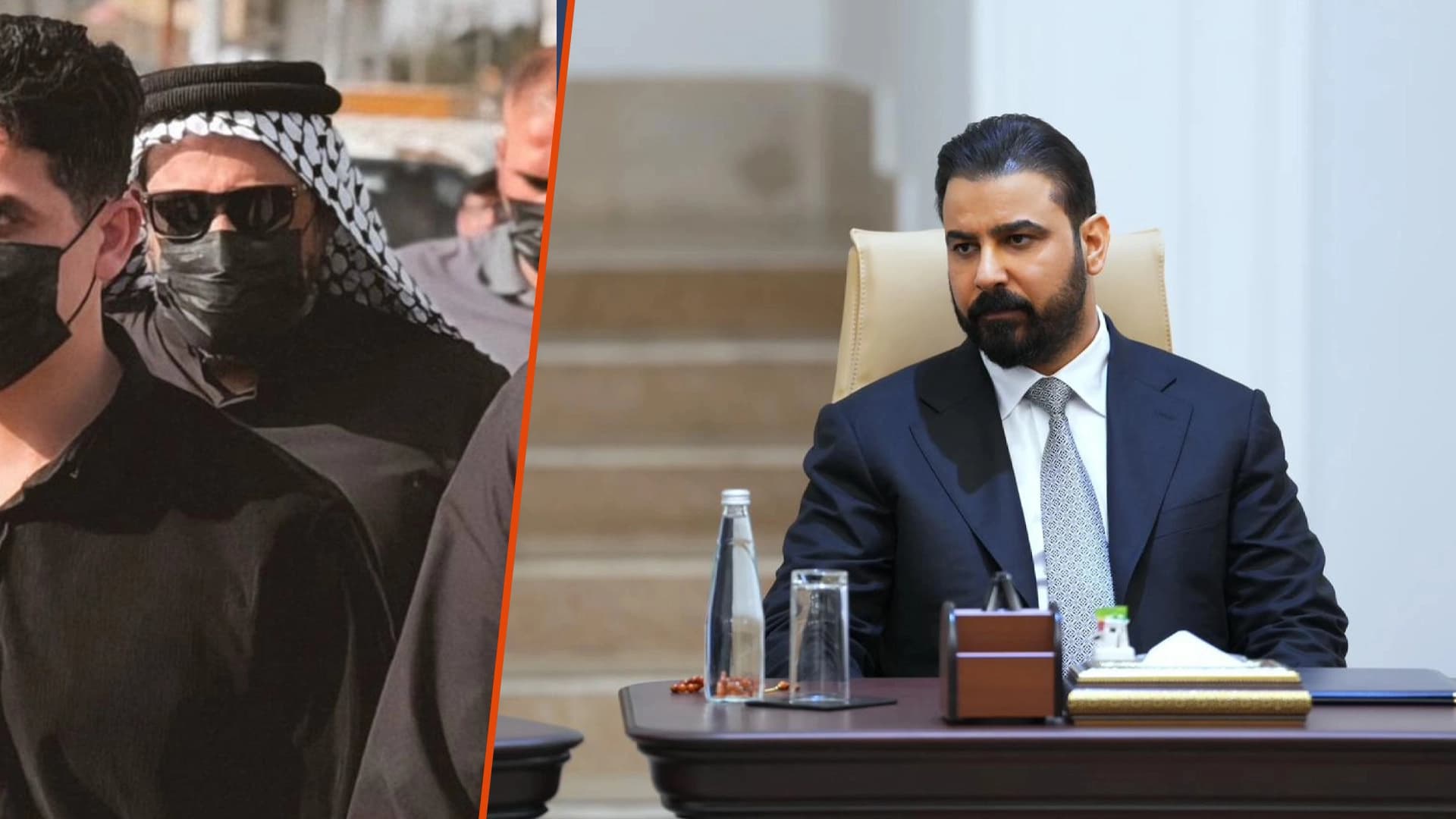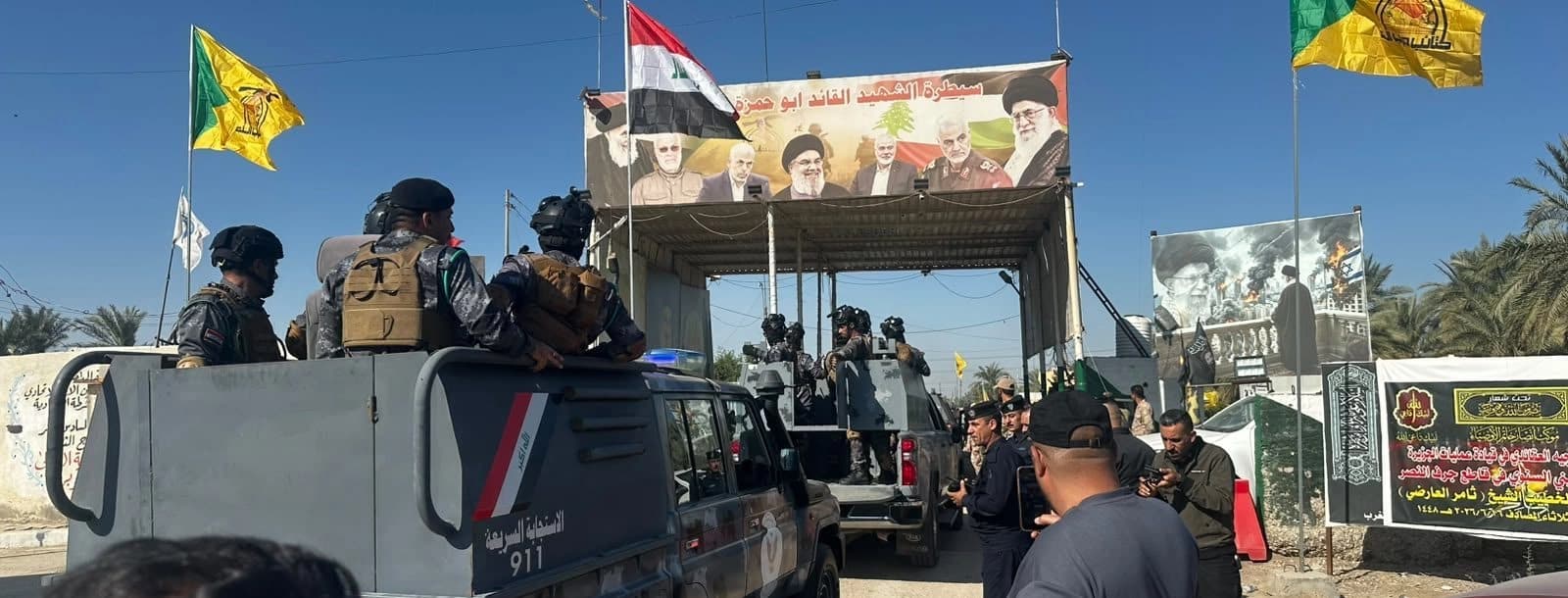

ERBIL, Kurdistan Region - After more than a decade of exercising near-exclusive control over Jurf al-Sakhr, Iran-aligned paramilitary group Kata’ib Hezbollah – one of Iraq’s most powerful factions – appears to be retreating from a confrontation with the Iraqi government as a combination of weakening Iranian regional influence, mounting political isolation, oil-smuggling allegations and pressure from Baghdad threatens its longstanding grip on the strategic town.
In a statement on Thursday, Kata’ib Hezbollah Secretary-General Abu Hussein al-Hamidawi indicated that his group would seek to resolve its dispute with Prime Minister Ali al-Zaidi through private channels, following days of escalating tensions and warnings that a government attempt to enter the area could trigger armed confrontation.
“We affirm that the existing disagreements with the head of the authority will be addressed through private channels, denying our real enemies the opportunity to exploit them,” Hamidawi said, without mentioning Zaidi by name.
He also thanked Iraqi security forces and the Popular Mobilization Forces (PMF) for their positions during the confrontation, while instructing his fighters to resume their normal duties.
The apparent de-escalation follows an agreement reported by Reuters on Thursday under which Kata’ib Hezbollah fighters would move out of Jurf al-Sakhr, with a joint security force expected to deploy on Friday.
However, the faction has not explicitly announced its withdrawal, and whether it will surrender effective control of the area remains uncertain.
The confrontation represents more than a dispute over security arrangements in a town approximately 60 kilometers southwest of Baghdad.
It is a test of whether Iraq's government can dismantle an entrenched armed faction's territorial and economic power without triggering conflict within the country's Shiite political establishment.
Several developments suggest that Kata’ib Hezbollah is confronting a political and regional environment considerably less favorable than the one that allowed it to consolidate control after the Islamic State's (ISIS) defeat in 2014.
Iran's weakened regional position
Perhaps the most significant change is the weakening of Iran, Kata’ib Hezbollah's principal foreign backer, following a series of military and geopolitical setbacks that have diminished Tehran's ability to protect its regional allies.
The collapse of Bashar al-Assad's government in Syria in December 2024 deprived Iran of a crucial regional ally and disrupted the land corridor through which Tehran had supplied Lebanon's Hezbollah. Israel's military campaign against Hezbollah further weakened an important component of Iran's regional network.
The 12-day war with Israel in June 2025 inflicted further damage on Iran's military capabilities and leadership. The US-Israeli war launched on February 28 dealt another severe blow, killing Supreme Leader Ali Khamenei and senior military commanders while damaging critical Iranian military infrastructure.
The consequences have become increasingly apparent in Lebanon.
In September, Iran warned Washington against an Israeli operation targeting Hezbollah's fortified positions on the strategic Ali al-Taher ridge in southern Lebanon.
Israel subsequently announced that it had destroyed Hezbollah's underground infrastructure there, illustrating the limits of Tehran's ability to deter military action against its allies.
These developments do not mean Iran has lost its ability to influence Iraqi politics or support armed factions. However, they suggest that Tehran faces far greater constraints on its ability to intervene militarily on behalf of an ally confronting the Iraqi government.
Iran's response to the Jurf al-Sakhr crisis appears to have been diplomatic rather than military.
Quds Force commander Esmail Qaani met Zaidi on Monday, according to two senior Iraqi officials who spoke to Rudaw, attempting to persuade the premier to accept a negotiated settlement.
Kata’ib Hezbollah subsequently confirmed that Hamidawi had met Qaani, Badr Organization leader Hadi al-Ameri, and PMF Chairman Falih al-Fayyadh, describing the discussions as positive.
The mediation illustrates that Tehran retains considerable political leverage in Iraq, even as its capacity and willingness to protect allies through direct military intervention appear increasingly constrained.
Oil smuggling and the battle for public legitimacy
The second factor is the government's use of alleged corruption to challenge Kata’ib Hezbollah's control over Jurf al-Sakhr.
Beginning November 9, several Iraqi media outlets published details of a leaked intelligence report alleging that oil had been siphoned from pipelines crossing the town since 2021. Subsequent reporting detailed suspected concealed storage facilities, unauthorized oil-processing operations and tanker movements.
The allegations emerged as Iraq struggled with severe financial pressures caused by disruptions to oil exports through the Strait of Hormuz.
At a time when the government has faced difficulties financing expenditure and public-sector salaries, allegations involving the theft of valuable oil resources carry particular political weight.
The revelations also transformed the confrontation from an argument over the legitimacy of armed resistance into one involving the alleged misuse of public resources.
Zaidi subsequently ordered a high-level investigation, dismissed nine security and administrative officials, and referred suspected violations to the judiciary. Kata’ib Hezbollah denied the allegations and accused the government of manufacturing the controversy to force it to surrender its weapons.
However, the sustained media coverage and official investigations have made the allegations difficult to dismiss through denials or displays of military strength alone.
The campaign has provided Zaidi with a potentially powerful source of domestic legitimacy: presenting his confrontation with Kata’ib Hezbollah as an effort to protect public money and enforce the law rather than a political attack on the resistance.
Growing isolation among former allies
Kata’ib Hezbollah has also found itself increasingly isolated from armed factions that previously shared its opposition to restrictions on independent military activity.
As Rudaw English reported earlier that figures affiliated with Asaib Ahl al-Haq, led by Qais al-Khazali, and the former Kata’ib Imam Ali have backed efforts to bring weapons under state control.
These factions have increasingly pursued political influence through government institutions, parliamentary representation and state security structures, making confrontation with the government less attractive than integration into the system.
Kata’ib Hezbollah, by contrast, has maintained an independent military command and a regional ideological commitment to Iran's Axis of Resistance, despite having formations within the officially recognized PMF.
The divide does not mean other armed factions have fully relinquished their weapons or severed their informal command structures. Nor does it mean Kata’ib Hezbollah has lost every ally.
But the political consensus that once enabled armed factions to resist government measures collectively appears to have weakened.
Even within the ruling Shiite Coordination Framework, influential figures have sought a negotiated replacement of forces in Jurf al-Sakhr rather than support an armed confrontation with Zaidi.
The calculations extend beyond the town itself.
A regional war involving Kata’ib Hezbollah could expose Iraq to military retaliation, sanctions and further economic damage, threatening the interests of Shiite parties that now hold significant positions within the state.
A declining security justification
Another factor is the weakening of the security argument traditionally used to justify Jurf al-Sakhr's closure.
Kata’ib Hezbollah and other PMF figures have long maintained that retaining control of the town is necessary to protect Baghdad, Babil and the Shiite holy cities of Karbala and Najaf from extremist attacks.
However, ISIS no longer possesses the territorial capabilities it demonstrated in 2014, while Iraqi security forces have become increasingly capable of confronting its remaining cells.
The US-led coalition's withdrawal from Iraq on September 30 further reinforced the government's argument that Iraqi forces can assume primary responsibility for national security.
Although ISIS remains a threat, its diminished capabilities raise questions about the continued exclusion of Jurf al-Sakhr's predominantly Sunni residents, many of whom have been displaced for more than a decade.
The government has now pledged to facilitate their return, potentially undermining another important justification for the faction's exclusive control.
US backing and Baghdad's changing calculations
Zaidi's political position is also strengthened by Washington's support for efforts to restrict weapons to state authority.
The Trump administration demonstrated its willingness to exert economic pressure on Iraq earlier this year when it opposed former premier Nouri al-Maliki's return to power, warning of consequences for Baghdad's relationship with Washington.
The US retains significant financial leverage through Iraq's access to dollar revenues generated by oil exports, a vulnerability that has influenced the calculations of Iraqi political parties.
On Wednesday, a US State Department spokesperson told Rudaw that Washington expected Zaidi to hold Iran-aligned factions accountable for actions undermining Iraq's sovereignty and economy.
Whereas it does not establish that Washington would militarily intervene if clashes erupted, it does strengthen Zaidi's diplomatic position while raising the potential cost to political actors seeking to obstruct his campaign.
Yet, the emerging agreement also exposes the limits of the government's success.
A withdrawal, but not necessarily a defeat
Under the approved security plan, the federal police will assume responsibility for central Jurf al-Sakhr, while an army brigade and two PMF brigades will secure surrounding areas. Energy police will guard oil pipelines, and a new joint command began operating early Friday.
The arrangement allows Kata’ib Hezbollah to avoid a potentially costly confrontation while permitting Baghdad to demonstrate that its orders are being implemented. Importantly, it does not require the faction to disarm entirely or dissolve its broader military network.
This may be the decisive additional explanation for Kata’ib Hezbollah's apparent retreat: a negotiated redeployment offers the faction a way to preserve much of its military and political power while surrendering a territory that has become increasingly difficult to defend politically.
For Zaidi, the arrangement offers a significant opening. But the true measure of success will not be the arrival of government troops alone; it will be whether Baghdad gains effective command over the area, prevents further illicit economic activity, restores civilian administration and allows displaced residents to return.
Kata’ib Hezbollah's apparent retreat may therefore mark an important change in the balance of power between Iraq's government and its armed factions. Whether it represents a lasting restoration of state authority or another negotiated accommodation remains to be seen.