
By RAED ASAD AHMED
QUITO, Ecuador - In the Mariscal indigenous market of Quito, Ecuador, a man in a formal suit and trimmed white beard stopped with his interpreter by the same shop I was peeking into.
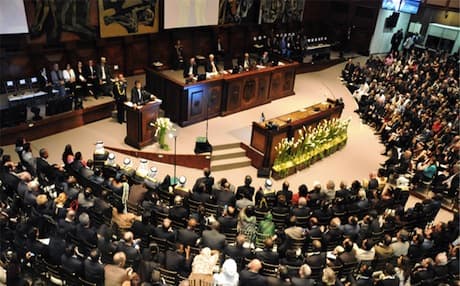
With my visit to Quito coinciding with an Inter-parliamentary meeting of MPs from around the world, I thought that the gentleman standing next to me at the shop might be a politician from Iraq. Curious, I asked in English where he was from. “Iraq,” he proudly replied.
The day before, I had met an interesting person, a retired Brigadier General from the Kuwaiti Air Force. He used to be an F-1 pilot and was accompanying the Kuwaiti delegation to Ecuador. I spent the longest time with him, discussing various issues such as the invasion of Kuwait and the Syrian crisis.
As a Kurd from Erbil city, I told him about what I witnessed as a young child on the evening of the day when Saddam Hussein invaded Kuwait in 1990, and how people were forced to demonstrate on the streets and shout slogans in support of the dictator’s reckless decision.
I was around 12 years old then. That day, I was waiting for the bus with my dad to go to the bazaar. The bus came and we took our seats in the half empty vehicle. But the driver suddenly left, while the engine was still running. More and more passengers were getting on the bus.
He returned when the bus was full, but still we did not move. Then, out of nowhere, a man in a green military uniform stepped in, and the bus door instantly closed behind him, like a trap. He was a Baathist partisan, who barked loudly in Arabic, “No one is getting off! Everyone, stay in your seats!”
Most passengers turned pale with fright, including myself. I did not know what was really going to happen. My dad comforted me without making eye contact. “Don’t worry, they will let us go soon,” he whispered.
The bus started moving and kept picking up passengers, without letting anyone off. As we got closer to our destination, and the bus stopped once more to pick up passengers, a sitting man suddenly darted out the door and desperately ran away, disappearing behind buildings. I knew that man. He was the father of one of my friends. I discovered later that he had deserted from the compulsory military service, and was afraid of being identified and captured.
When the bus reached the city centre we were ordered to get down, line up and march toward the governorate building, while chanting “YES, YES, TO THE LEADER SADDAM HUSSEIN!” More buses arrived with their captive passengers from different parts of Erbil to join our crowd, repeating the same slogan in support of Saddam’s decision to invade Kuwait. We walked for few minutes with my dad in the crowd until we reached a narrow street, where we got the chance to slip away from that forced demonstration and head home.
I had shared this bitter childhood memory with my new Kuwaiti friend and we had both agreed that most Iraqis were against that invasion, and that both Kuwaiti and Iraqi people -- especially the Kurds -- should maintain good relations. We parted with positive and friendly sentiments.
After that chance encounter, I had been hoping to run into someone from Iraq. And when that gentleman happened to stop at that shop, I was excited at the interesting conversation that might soon unfold between us.
Speaking in Arabic, I told him that I was from Erbil, and he confirmed he was one of the delegates at the conference. We talked more, and he asked about my next destination. When I told him it was Hawaii, he asked, “Where is that?” I replied, “It is in the United States, in the Pacific Ocean.”
I answered all his other questions and interjected by asking, “May I know your kind name, sir?” He looked at me with raised eyebrows and asked, “You really don’t know me?”
I was a bit surprised by his unexpected answer. I apologized and told him that I was not very keen on Iraqi politics. He surprised me further by saying, “You should find out.” I did not want to prolong the awkward moment further, and said, “Ok, I will.” I cordially wrapped up the conversation and said goodbye, all the time trying to suppress my laughter.
This encounter reinforced the image of the humble and intelligent Iraqi politicians in my mind. It gave me optimism about where Iraq is heading, and realize how lucky Iraqis are with their humble, intelligent and well-informed politicians.
But I still don’t know who that politician was.


