کوردیKURDÎENGLISHTÜRKÇEعربي
Rudaw Logo
Live
Kurdistan
Middle East
OpinionsAnalysisWorldECONOMYInterviewCultureMultimedia
Live
Rudaw

Download the Rudaw app

App StoreGoogle Play
Privacy Policy•Terms of Use

© 2026 All rights reserved.

Rudaw

Download the Rudaw app

App StoreGoogle Play
Privacy PolicyTerms of Use

© 2026 All rights reserved.

Namo Abdulla/  David Rennie /  Ahmad Majidyar

Namo Abdulla/ David Rennie / Ahmad Majidyar

world

The Unwinding of the Arab Spring and The Resurgence of Extremism

Namo Abdulla

Namo Abdulla

05-01-2014
Listen
0:00
0:00
Text Size

Namo Abdulla is a multimedia journalist and United Nations correspondent for Rudaw, reporting in English and Kurdish. Based in New York, he covers international affairs at the UN, from Security Council diplomacy and humanitarian crises to major agency reports. He produces broadcast packages, web stories, and social-media-friendly content.


Before moving to New York, he served as Rudaw’s Washington bureau chief, leading the network’s coverage of U.S. policy toward the Middle East. His work has also appeared in Reuters, The New York Times, Al Jazeera, and Voice of America.


He holds an M.A. from the Columbia University Graduate School of Journalism.

Namo Abdulla
Namo Abdulla05-01-2014

Namo Abdulla is a multimedia journalist and United Nations correspondent for Rudaw, reporting in English and Kurdish. Based in New York, he covers international affairs at the UN, from Security Council diplomacy and humanitarian crises to major agency reports. He produces broadcast packages, web stories, and social-media-friendly content.


Before moving to New York, he served as Rudaw’s Washington bureau chief, leading the network’s coverage of U.S. policy toward the Middle East. His work has also appeared in Reuters, The New York Times, Al Jazeera, and Voice of America.


He holds an M.A. from the Columbia University Graduate School of Journalism.

Related Articles

Kurdistan delegation to present unified position in upcoming Baghdad talks: Lawmaker
Iraq29-11-2026

Kurdistan delegation to present unified position in upcoming Baghdad talks: Lawmaker

Iran's two-day plan to reopen Hormuz remains on table: Araghchi
Iran29-11-2026

Iran's two-day plan to reopen Hormuz remains on table: Araghchi

Iraq dismisses meningitis outbreak concerns despite reported deaths as KRG reports ‘isolated’ cases
Iraq29-11-2026

Iraq dismisses meningitis outbreak concerns despite reported deaths as KRG reports ‘isolated’ cases


Tuesday, December 17th marked the third anniversary of the Middle East and North Africa popular uprisings or the so-called Arab Spring, which all started with the self-immolation of a Tunisian street against the harsh and humiliating treatment of his authoritarian government.

It was remarkably unprecedented for average Arabs to be able to topple their long-time dictators from the streets.

The ousting of Middle East dictators, who had long enjoyed Western support, made many argue for the emergence of strong moderate and electoral Muslim forces one the one hand, and the weakness, if not entirely irrelevance, of radical groups such as al-Qaeda, on the other.

It was at this time when Osama Bin Laden was killed.

And earlier in May, after nearly a dozen years since the September 11 terrorist attacks, President Obama sought to narrow the scope of the so-called War on Terror.

“Al-Qaeda was on the path to defeat,” he declared at the National Defense University in his nation’s capital.

But over the past few months, things seem to have been turning upside down. In Egypt and Tunisia, the first democratically elected Islamist leaders have been forced to resign.

Elsewhere, radical Islamists seem to have been on the rise rather than “ on the path to defeat,” as their militants have found new safe havens in Libya and Syria and continue to kill, kidnap and sow terror across much of Africa and the Middle East.

The attacks launched by al-Qaeda and its proxies have been powerful and indiscriminate. They have targeted shopping malls in Africa, government and rebel forces in Syria, and also broken into major prisons, setting their fellow fighters free in Afghanistan and Iraq.

- So as the Arab Spring hopes are fading, is radical Islamism resurgent?

- How does Obama treat these developments? Apart from the massive drone campaign, does the Obama Administration have a coherent counter-terrorism policy?

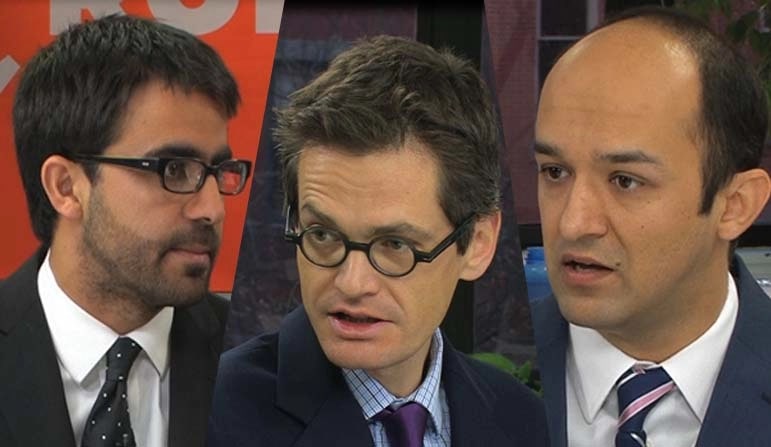
To discuss this subject, Rudaw's Namo Abdulla talk to:

- David Rennie, Washington Bureau Chief of The Economist magazine.

- Also here in Washington, Ahmad Majidyar, a scholar at the American Enterprise Institute, a conservative foreign policy think thank, is joining us.

Related Articles

Kurdistan delegation to present unified position in upcoming Baghdad talks: Lawmaker
Iraq29-11-2026

Kurdistan delegation to present unified position in upcoming Baghdad talks: Lawmaker

Iran's two-day plan to reopen Hormuz remains on table: Araghchi
Iran29-11-2026

Iran's two-day plan to reopen Hormuz remains on table: Araghchi

Iraq dismisses meningitis outbreak concerns despite reported deaths as KRG reports ‘isolated’ cases
Iraq29-11-2026

Iraq dismisses meningitis outbreak concerns despite reported deaths as KRG reports ‘isolated’ cases

Questions