



Error occured during this request! Please try again later.
Since Sunni disaffection with the government in Baghdad transformed into a new civil war, many things have changed in Iraq. Almost overnight, majority Sunni areas fell out of the control of Baghdad. The Kurdistan Regional Government (KRG) moved its forces to take control of areas abandoned by the Iraqi Army, expanding its de facto territory by some 40% and claiming almost all the disputed territories. A constellation of Sunni rebel forces moved further south to threaten even Baghdad, and the Islamic State of Iraq and al-Shams (ISIS) declared the establishment of a new Caliphate that ignores state borders in the area. As if all this were not enough, fighting also broke out in the south of Iraq between Prime Minister Maliki’s forces and the militia of a disaffected Shiite cleric there.
This is the new reality of Iraq, and it seems unlikely to change in the short term. The incredible weakness of the Iraqi military has thrown all of the Maliki government’s attempts at monopolizing power into disarray. Even before the fall of Mosul, the Global Firepower website ranked Iraq's military 58th out of 68 countries, well behind that of Syria (39th). During the fall of Mosul and other majority-Sunni areas last month, approximately 25% of this already weak Iraqi military evaporated. A few fighter aircraft Mr. Maliki has on order will not change this any time soon, no matter how much he would like to think so. Given that power is always relative, Maliki’s losses equate to Kurdish gains.
So what might we expect in Iraq for the short to medium term future? For one thing, Sunni forces appear unlikely to engage Kurdish forces on any significant scale any time soon. Sunni Arabs’ problems and grievances reside mainly with Shiite political groups and the government in Baghdad. Without major concessions from Baghdad on the outstanding issues with Kurdistan, the Kurds likewise seem very unlikely to take the fight to ISIS. Baghdad meanwhile is in no position to dislodge the Kurds from Kirkuk and other disputed territories, especially as they fortify the capital against ISIS and its Sunni allies.
The Kurds will likely thus take it upon themselves to hold the long-promised referendum on the status of the disputed territories, claiming the legitimate right to do so after the Maliki government’s broken promises in this regard. In the process, they might assure Turkmen and Arabs in the disputed territories that if their districts vote against incorporation into Kurdistan, peshmerga forces will be withdrawn and Iraqi government or ISIS forces can replace them. Given most Sunni’s feelings towards Maliki and the number of Arab refugees who fled Mosul to Kurdistan last month, I think we know how many might view such a possibility and what the outcome of a fair referendum will be – especially given the Kurdish demographic weight in the territories.
At the same time, Kurdistan Region President Masud Barzani this week called for another kind of referendum – on outright Kurdish independence. Everyone knows how such a vote would go in South Kurdistan – I have never, in fact, met a Kurdish resident of the area who said they would not, ideally, prefer independence. Even following such a referendum, however, KRG leaders would not automatically declare the establishment of a new Kurdish state. They have already proven cautious on such issues, and they would likely wait until after the 2015 elections in Turkey in order to secure more solid backing from the government in Ankara for such a prospect.
In the meantime, KRG efforts to “find their sea legs” for independent oil and gas exports will continue and likely thrive. They already sold a tanker full of crude oil to Israel, and more will soon follow. As Iraq remains a fragmented and dysfunctional state for the foreseeable future, Turkey and the world’s appetite for oil and gas will continue. Now that they also control an additional 4% of the world’s proven reserves in Kirkuk, the Kurds have even more to offer up to world markets. Baghdad under Maliki or a successor can either cut a deal with the Kurds in order to share in this, or find themselves without the entire north and West of Iraq.
In short, the near to medium prospects for South Kurdistan are not without risks, but at the same look better than they ever have.
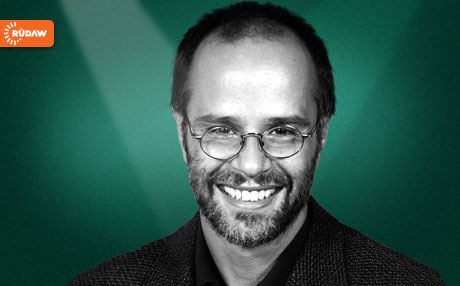
David Romano has been a Rudaw columnist since August 2010. He is the Thomas G. Strong Professor of Middle East Politics at Missouri State University and author of The Kurdish Nationalist Movement (2006, Cambridge University Press) and co-editor (with Mehmet Gurses) of the forthcoming Conflict, Democratization and the Kurds in the Middle East (2014, Palgrave Macmillan).
Comments
Rudaw moderates all comments submitted on our website. We welcome comments which are relevant to the article and encourage further discussion about the issues that matter to you. We also welcome constructive criticism about Rudaw.
To be approved for publication, however, your comments must meet our community guidelines.
We will not tolerate the following: profanity, threats, personal attacks, vulgarity, abuse (such as sexism, racism, homophobia or xenophobia), or commercial or personal promotion.
Comments that do not meet our guidelines will be rejected. Comments are not edited – they are either approved or rejected.
Post a comment