


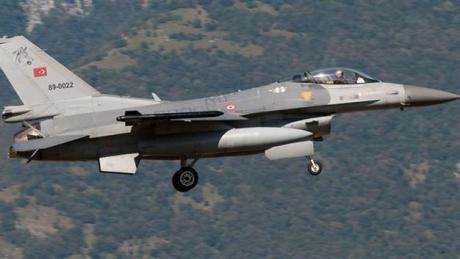
IZMIR, Turkey – Turkish warplanes have bombed Kurdistan Workers' Party (PKK) targets in southeastern Turkey after the militants launched a series of attacks on a military base, Turkey's Hurriyet daily reported on Tuesday.
If confirmed, the strikes would appear to be the first major air offensive against the outlawed PKK in Turkey since the start of a peace process two years ago.
The Turkish military, which rarely talks to the media, could not be reached for comment.
F-16 and F-4 fighter jets struck the PKK targets in the Daglica area of Hakkari province, a mountainous region in Turkey's predominantly Kurdish southeast near the border with Iraq, Hurriyet reported. It said the strikes had caused “heavy PKK casualties”.
The operation followed three days of attacks by PKK insurgents on a military outpost in Daglica with heavy machine guns and rocket-propelled grenades, Hurriyet reported. The Turkish military said on its website a base in Daglica had come under attack from militants on Saturday and that troops had returned fire. It did not mention any air strikes.
The air raids follow a wave of unrest in southeastern Turkey over the past week, sparked by anger among most Turkish Kurds at their government's refusal to intervene in the predominantly Syrian Kurdish town of Kobane near the Turkish border, which has come under siege by Islamic State (ISIS) militants for the past month.
Violent street protests have erupted across the region and more than 30 people have been killed, including two policemen. Gunfights have been reported between Kurds and religious nationalists, as well as Islamist Kurds who vehemently oppose the PKK and its sympathisers.
Turkey's leaders have dismissed the protesters as vandals and provocateurs who were using the events in Kobane as an excuse to foment unrest and derail the peace process. Ankara has said it will come down hard on the protests although it has given little detail of what it intends to do.
The fate of Kobane and the resulting turmoil has laid bare a deep sense of mistrust among many Kurds in Turkey toward their government, whom they accuse of directly supporting the ISIS militants, a charge Ankara strongly denies.
The violence has also given fuel to a threat by jailed PKK leader Abdullah Ocalan that the peace process would come to an end if Kobane was allowed to fall.
Ocalan has been in talks with the Turkish state since 2012 to end a 30-year insurgency that has killed some 40,000 people, mostly Kurds, and has decimated the southeast of the country. Apart from isolated incidents, Turkey has enjoyed a relative calm after Ocalan called a ceasefire in March 2013 to mark the start of the Kurdish New Year.
While some Kurds and critics say it is not enough, the government over the past decade has done more than any other Turkish administration to enhance the rights of Kurds, who number around 15 million in Turkey.
The Kurds on both sides of the Turkey-Syria border do not want Ankara to send its troops into Kobane but want it to allow fighters and supplies to the town's embattled fighters to cross over from Turkey.
Turkey has taken in some 200,000 mostly Kurdish refugees from in and around Kobane and is allowing Kurdish fighters to receive medical help on its soil but it is wary of directly aiding Kurdish militas because of their close links to the PKK. Ankara fears an autonomous Kurdish region on the other side of its border will only embolden its own Kurds to do the same.
Comments
Rudaw moderates all comments submitted on our website. We welcome comments which are relevant to the article and encourage further discussion about the issues that matter to you. We also welcome constructive criticism about Rudaw.
To be approved for publication, however, your comments must meet our community guidelines.
We will not tolerate the following: profanity, threats, personal attacks, vulgarity, abuse (such as sexism, racism, homophobia or xenophobia), or commercial or personal promotion.
Comments that do not meet our guidelines will be rejected. Comments are not edited – they are either approved or rejected.
Post a comment