


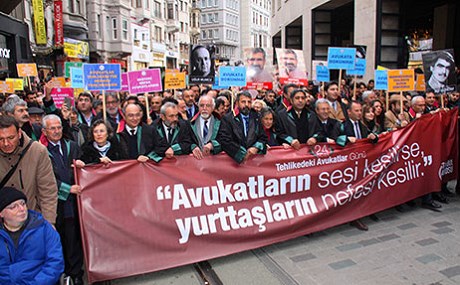
ERBIL, Kurdistan Region – Legal professionals in Turkey are being “criminalized” under the government’s “considerably widened the already overly broad and vague definition of terrorism,” a human rights monitor warned Sunday.
Turkey has expanded its definition of terrorism since the failed 2016 coup, allowing it to prosecute journalists, human rights activists, and rival politicians, Human Rights Watch (HRW) said in a new report.
Lawyers have been caught in the same net, the monitor warns, leaving them vulnerable to “politicized and unfair” trials for simply performing their professional duties.
“Prosecuting authorities have criminalized lawyers for activities undertaken to discharge their professional duties and have associated them without evidence with the alleged crimes of their clients,” the report states.
The Turkish government appears to have prosecuted some of these lawyers in reprisal for “their efforts to document police abuse and other human rights violations.”
In some cases, police have “threatened and intimidated lawyers, obstructing and interfering in their professional duties,” the report adds.
Terror trials often center on alleged membership of the Fethullah Gulen Movement (FETO), which Ankara says was behind the 2016 coup. Gulen is a Turkish cleric and government critic based in the US.
Other terror trials center on membership of the Kurdistan Workers’ Party (PKK), an armed group fighting for greater political and cultural rights for Kurds in Turkey.
According to Turkish Ministry of Justice figures, published in November 2018, 44,930 people out of the country’s 260,144-strong prison population have been convicted or are on trial for alleged terror offences.
The rights group says most lawyers standing trial for alleged terror offences are charged with alleged FETO membership, while a smaller number are charged with alleged PKK membership.
The prosecution of those held for alleged PKK membership is “often based on statements they gave to the media or their participation in press conferences or demonstrations,” HRW said.
The Arrested Lawyers Initiative, an organization that defends the rights of legal professionals, released a report in April 2019 claiming 1,546 lawyers have been prosecuted in Turkey since the July 2016 attempted coup.
Following the attempted coup, the Turkish government introduced new measures that fundamentally restricted the right to legal counsel before and during court hearings. They were adopted under the country’s state of emergency powers and later made into law by the parliament.
New measures included “prosecutors routinely authorizing police… to restrict lawyers from meeting with clients for the first 24 hours of their police custody, and a limitation on the number of lawyers permitted to represent a client in court in a terrorism case to just three,” HRW said.
This is in addition to “granting courts the power to carry out hearings and issue verdicts without lawyers present… reject lawyers requests to hear witnesses… [and] hear some protected witnesses remotely.”
Moreover, under new measures, “privileged communication with their clients in pretrial prison detention has been effectively abolished as authorities are permitted to record and monitor all communications between lawyer and client.”
Lawyers have told HRW that “courts have become increasingly unresponsive to their petitions to have evidence critically examined or tested and to hear witnesses for the defense” in terrorism trials.
One lawyer told the monitor: “If a lawyer defends a Kurd these days that makes him a Kurdish nationalist. If he defends a FETO suspect he is a FETO member.”
“As a lawyer you meet your client in prison and you have no possibility of confidential communication since there’s a prison guard present, a microphone, and a camera. In court, the judges accept none of your requests, such as hearing independent expert witnesses,” the lawyer added.
Another reported: “There is no privileged communication when a meeting between lawyer and client takes place in the presence of a prison guard and the whole meeting is recorded on camera. You can’t discuss the case with your client.”
The Turkish government imposed a state of emergency following the attempted coup, dismissed thousands of public officials, and cracked down on journalists and civil society activists.
Turkey has expanded its definition of terrorism since the failed 2016 coup, allowing it to prosecute journalists, human rights activists, and rival politicians, Human Rights Watch (HRW) said in a new report.
Lawyers have been caught in the same net, the monitor warns, leaving them vulnerable to “politicized and unfair” trials for simply performing their professional duties.
“Prosecuting authorities have criminalized lawyers for activities undertaken to discharge their professional duties and have associated them without evidence with the alleged crimes of their clients,” the report states.
The Turkish government appears to have prosecuted some of these lawyers in reprisal for “their efforts to document police abuse and other human rights violations.”
In some cases, police have “threatened and intimidated lawyers, obstructing and interfering in their professional duties,” the report adds.
Terror trials often center on alleged membership of the Fethullah Gulen Movement (FETO), which Ankara says was behind the 2016 coup. Gulen is a Turkish cleric and government critic based in the US.
Other terror trials center on membership of the Kurdistan Workers’ Party (PKK), an armed group fighting for greater political and cultural rights for Kurds in Turkey.
According to Turkish Ministry of Justice figures, published in November 2018, 44,930 people out of the country’s 260,144-strong prison population have been convicted or are on trial for alleged terror offences.
The rights group says most lawyers standing trial for alleged terror offences are charged with alleged FETO membership, while a smaller number are charged with alleged PKK membership.
The prosecution of those held for alleged PKK membership is “often based on statements they gave to the media or their participation in press conferences or demonstrations,” HRW said.
The Arrested Lawyers Initiative, an organization that defends the rights of legal professionals, released a report in April 2019 claiming 1,546 lawyers have been prosecuted in Turkey since the July 2016 attempted coup.
Following the attempted coup, the Turkish government introduced new measures that fundamentally restricted the right to legal counsel before and during court hearings. They were adopted under the country’s state of emergency powers and later made into law by the parliament.
New measures included “prosecutors routinely authorizing police… to restrict lawyers from meeting with clients for the first 24 hours of their police custody, and a limitation on the number of lawyers permitted to represent a client in court in a terrorism case to just three,” HRW said.
This is in addition to “granting courts the power to carry out hearings and issue verdicts without lawyers present… reject lawyers requests to hear witnesses… [and] hear some protected witnesses remotely.”
Moreover, under new measures, “privileged communication with their clients in pretrial prison detention has been effectively abolished as authorities are permitted to record and monitor all communications between lawyer and client.”
Lawyers have told HRW that “courts have become increasingly unresponsive to their petitions to have evidence critically examined or tested and to hear witnesses for the defense” in terrorism trials.
One lawyer told the monitor: “If a lawyer defends a Kurd these days that makes him a Kurdish nationalist. If he defends a FETO suspect he is a FETO member.”
“As a lawyer you meet your client in prison and you have no possibility of confidential communication since there’s a prison guard present, a microphone, and a camera. In court, the judges accept none of your requests, such as hearing independent expert witnesses,” the lawyer added.
Another reported: “There is no privileged communication when a meeting between lawyer and client takes place in the presence of a prison guard and the whole meeting is recorded on camera. You can’t discuss the case with your client.”
The Turkish government imposed a state of emergency following the attempted coup, dismissed thousands of public officials, and cracked down on journalists and civil society activists.
Comments
Rudaw moderates all comments submitted on our website. We welcome comments which are relevant to the article and encourage further discussion about the issues that matter to you. We also welcome constructive criticism about Rudaw.
To be approved for publication, however, your comments must meet our community guidelines.
We will not tolerate the following: profanity, threats, personal attacks, vulgarity, abuse (such as sexism, racism, homophobia or xenophobia), or commercial or personal promotion.
Comments that do not meet our guidelines will be rejected. Comments are not edited – they are either approved or rejected.
Post a comment