


BARCELONA, Spain - Kurdish authorities running three enclaves in northern Syria have committed arbitrary arrests, due process violations and failed to address unsolved killings and disappearances, the international Human Rights Watch said in a report released Thursday.
The Democratic Union Party (PYD), an offshoot of the Kurdistan Workers’ Party (PKK) in Turkey, has effectively ruled the three predominantly-Kurdish enclaves since Syrian government forces withdrew from the areas in 2012, running a local administration with courts, prisons, and police.
The 107-page report, titled “Under Kurdish Rule: Abuses in PYD-Run Enclaves of Syria,” documents arbitrary arrests of the PYD’s political opponents, abuse in detention and unsolved abductions and murders. It also documents the use of children in the PYD’s police force and armed wing, the People’s Protection Units (YPG).
“The Kurdish-run areas of Syria are quieter than war-torn parts of the country, but serious abuses are still taking place,” said Nadim Houry, deputy Middle East and North Africa director at Human Rights Watch, which is based in New York.
“The PYD is firmly in charge, and can halt the abuse,” he said in the report.
Houry added that Human Rights Watch visited two prisons in February 2014 and had unrestricted access to officials, prisoners and others. The report documented several cases in which the PYD-run police, known as the Asayish, appear to have arrested members of Kurdish opposition parties due to their political activity, and in some cases they had been convicted in apparently unfair trials.
People detained for common crimes said they had been arrested without a warrant, were denied access to a lawyer and held for long periods in detention before seeing a judge, it added.
At least nine political opponents of the PYD have been killed or disappeared over the past two-and-half years in areas the party partially or fully controlled. The PYD has denied responsibility for these incidents but has apparently failed to conduct genuine investigations, according to the report.
It added that some detainees told Human Rights Watch the security forces had beaten them in custody and were never held to account. In two recent cases involving the Asayish, the victims the beatings dies.
The report also said that two prisons that Human Rights Watch visited – in Qamishli and Malikiyah (Derik) – appeared to meet basic international standards. Prisoners said they got food three times a day and exercise at least once a day, and were able to see a doctor if needed.
Human Rights Watch also investigated the violent incidents in the town of Amuda on June 27, 2013, when YPG forces are said to have used excessive force against anti-PYD demonstrators, shooting and killing three men. The security forces killed two more men that night in unclear circumstances, and a third the next day. On the night of June 27, YPG arbitrarily detained around 50 members or supporters of the opposition Yekiti Party in Amuda, beating them at a military base.
Regarding the use of children, Human Rights Watch found that, despite promises from the Asayish and YPG in 2013 to stop using under 18s for military service, the problem persists in both forces. On June 5, the YPG publicly pledged to demobilize all fighters under age 18 within one month.
The Syrian Kurdish enclaves have also been the target of Islamists, the report noted.
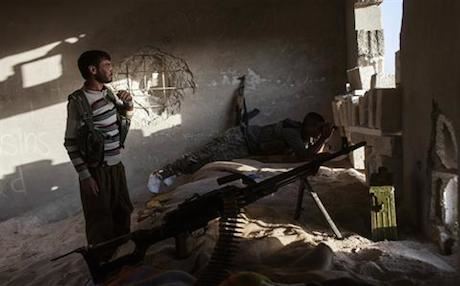
The YPG maintains external security in the three PYD-run areas, and is fighting armed Islamist groups, primarily Jabhat al-Nusrah and the Islamic State of Iraq and Syria (ISIS).
On May 29, said the report, ISIS forces entered the village of al-Taliliya near Ras al-Ayn (Serekaniye) in Jazira and executed at least 15 civilians, including six children, village residents and first responders told Human Rights Watch. In recent months, ISIS has also reportedly abducted hundreds of Kurdish civilians in the northern Aleppo province and executed several Kurdish civilians they suspected of belonging to the YPG.
In a positive development, the report said that the new constitution introduced in January in the enclaves, called the Social Contract, upholds some important human rights standards and bans the death penalty.
But Houry said: “The Kurdish leadership in northern Syria can do much more to protect the human rights of everyone in the areas it controls – Kurds, Arabs, Syriacs, and others.”
“Even in an interim administration it should govern inclusively with respect for critical views,” he added.
Comments
Rudaw moderates all comments submitted on our website. We welcome comments which are relevant to the article and encourage further discussion about the issues that matter to you. We also welcome constructive criticism about Rudaw.
To be approved for publication, however, your comments must meet our community guidelines.
We will not tolerate the following: profanity, threats, personal attacks, vulgarity, abuse (such as sexism, racism, homophobia or xenophobia), or commercial or personal promotion.
Comments that do not meet our guidelines will be rejected. Comments are not edited – they are either approved or rejected.
Post a comment