


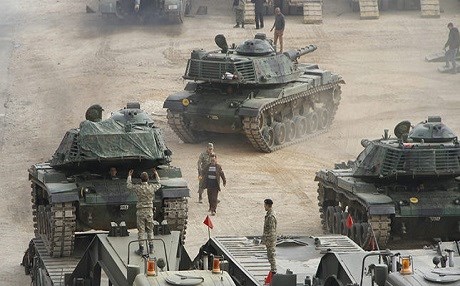
ERBIL, Kurdistan Region—Turkey’s presence at Bashiqa military camp in northern Iraq is at the request of Kurdish authorities who recognize their forces in the country, Turkey’s deputy prime minister declared on Wednesday, adding that no one has right to object to their presence.
"No one has the right to object to Turkey's presence in Iraq when the country is fragmented that much," said Numan Kurtulmuş, deputy Turkish prime minister, on Wednesday according to Daily Sabah.
“About the Bashiqa issue, it is obvious that the regional administration in northern Iraq and the Barzani administration had asked for [Turkey’s] support and sought help from Turkish troops, especially for training their local forces to rescue Mosul,” Kurtulmuş said, according to Hürriyet Daily News, referring to the Kurdistan Regional Government. “This is not disputable. Turkey will not let the Bashiqa issue become a matter of debate.”
Turkey’s presence in Bashiqa was “not an occupation,” he added.
His comments were in reaction to a majority vote in the Iraqi parliament on Tuesday rejecting an extension of the mandate of Turkish troops in Iraq. Iraqi lawmakers want the government to formally describe Turkish troops as an “occupying” force.
The Iraqi foreign ministry summoned Faruk Kaymakci, Turkish ambassador in Baghdad, over Turkey’s determination to maintain a force in Iraq.
The Turkish foreign ministry issued a statement responding to the issue on Tuesday and, in turn, summoned Iraq’s ambassador to Ankara, Husham al-Alawi.
“We strongly condemn the Iraqi parliament’s unacceptable decision, including dirty accusations against the Turkish President,” reads the statement of the Turkish foreign ministry according to Hürriyet Daily News.
The ministry said that Turkey stood with the Iraqi people in the fight against terror, and respected the sovereignty of Iraq.
“Turkey has lost thousands of citizens due to the terror threat from Iraq and has defended Iraq’s territorial integrity, sovereignty, stability and security, taking huge political and economic risks, despite being affected directly by the instability caused by the sectarian approach of Iraq,” the statement added.
US Vice President Joe Biden spoke with President Barzani on Wednesday and the two discussed respect of Iraq’s borders, according to a statement issued by the White House.
“Both leaders...stressed the importance of ensuring that all military operations in Iraq respect Iraq's territorial integrity and sovereignty,” reads the statement.
Turkish troops in Iraq’s north have mainly trained Sunni militias, some under the command of former Nineveh governor Atheel al-Nujaifi who is believed to have formed a 4,500-strong force that is expected to take part in the operation to liberate Mosul from Islamic State.
Nujaifi told Reuters on Wednesday that his forces maintain good relations with Peshmerga forces, under whose command the Sunni forces will come during the Mosul offensive, but that the Iranian-backed Shiite militia may complicate matters in the mainly Sunni-populated Mosul.
"The biggest fear is that Iraq will separate if they don’t control this fight in a wise manner and they don’t give the Arab Sunnis real authority," Nujaifi said.
"No one has the right to object to Turkey's presence in Iraq when the country is fragmented that much," said Numan Kurtulmuş, deputy Turkish prime minister, on Wednesday according to Daily Sabah.
“About the Bashiqa issue, it is obvious that the regional administration in northern Iraq and the Barzani administration had asked for [Turkey’s] support and sought help from Turkish troops, especially for training their local forces to rescue Mosul,” Kurtulmuş said, according to Hürriyet Daily News, referring to the Kurdistan Regional Government. “This is not disputable. Turkey will not let the Bashiqa issue become a matter of debate.”
Turkey’s presence in Bashiqa was “not an occupation,” he added.
His comments were in reaction to a majority vote in the Iraqi parliament on Tuesday rejecting an extension of the mandate of Turkish troops in Iraq. Iraqi lawmakers want the government to formally describe Turkish troops as an “occupying” force.
The Iraqi foreign ministry summoned Faruk Kaymakci, Turkish ambassador in Baghdad, over Turkey’s determination to maintain a force in Iraq.
The Turkish foreign ministry issued a statement responding to the issue on Tuesday and, in turn, summoned Iraq’s ambassador to Ankara, Husham al-Alawi.
“We strongly condemn the Iraqi parliament’s unacceptable decision, including dirty accusations against the Turkish President,” reads the statement of the Turkish foreign ministry according to Hürriyet Daily News.
The ministry said that Turkey stood with the Iraqi people in the fight against terror, and respected the sovereignty of Iraq.
“Turkey has lost thousands of citizens due to the terror threat from Iraq and has defended Iraq’s territorial integrity, sovereignty, stability and security, taking huge political and economic risks, despite being affected directly by the instability caused by the sectarian approach of Iraq,” the statement added.
US Vice President Joe Biden spoke with President Barzani on Wednesday and the two discussed respect of Iraq’s borders, according to a statement issued by the White House.
“Both leaders...stressed the importance of ensuring that all military operations in Iraq respect Iraq's territorial integrity and sovereignty,” reads the statement.
Turkish troops in Iraq’s north have mainly trained Sunni militias, some under the command of former Nineveh governor Atheel al-Nujaifi who is believed to have formed a 4,500-strong force that is expected to take part in the operation to liberate Mosul from Islamic State.
Nujaifi told Reuters on Wednesday that his forces maintain good relations with Peshmerga forces, under whose command the Sunni forces will come during the Mosul offensive, but that the Iranian-backed Shiite militia may complicate matters in the mainly Sunni-populated Mosul.
"The biggest fear is that Iraq will separate if they don’t control this fight in a wise manner and they don’t give the Arab Sunnis real authority," Nujaifi said.
Comments
Rudaw moderates all comments submitted on our website. We welcome comments which are relevant to the article and encourage further discussion about the issues that matter to you. We also welcome constructive criticism about Rudaw.
To be approved for publication, however, your comments must meet our community guidelines.
We will not tolerate the following: profanity, threats, personal attacks, vulgarity, abuse (such as sexism, racism, homophobia or xenophobia), or commercial or personal promotion.
Comments that do not meet our guidelines will be rejected. Comments are not edited – they are either approved or rejected.
Post a comment