


ERBIL, Kurdistan Region – A son returned to Qaraqosh to find his elderly father who had stayed behind when ISIS took control. He found his father’s grave.
“My father did not want to leave the house to the bearded extremists,” said Edmon Keryakoz, 47. That is why 71-year old Faraj Saqat stayed behind when his wife and other family members left the Christian town of Qaraqosh for fear of ISIS entering in 2014.
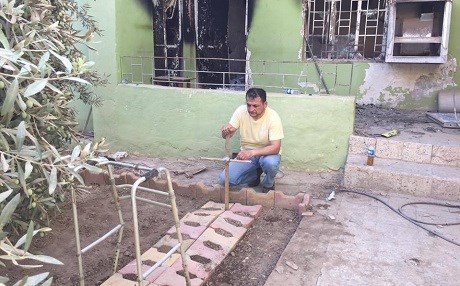
Only days ago, Keryakoz found his father’s grave, in the front garden of their house in Qaraqosh.
Iraqi Prime Minister Haider al-Abadi announced the start of the military offensive to retake Mosul in the early hours of October 17. Keyakoz, who lives in London with his family, closely followed the developments around his hometown, and traveled back to Iraq the day before the Iraqi army liberated Qaraqosh.
“After two years of worrying about him, I booked a flight hoping that I could help my dad,” he sighed in a café in the Christian suburb Ankawa of the Kurdistan capital Erbil, tears filling his eyes.
In the summer of 2014, the town of Qaraqosh emptied out of fear that ISIS militants were coming. When nothing happened, most people returned to their homes. A couple of weeks later in August, fears of ISIS again swelled. While some fled again, Keyakoz’ father chose stay to behind.
But this time the group did take over the town, and together with his cousin next door and over two hundred others, mostly elderly, Faraj Saqat got trapped inside.
Three weeks later, ISIS decided to clear the town of its population, emptying house after house, gathering the inhabitants, first in two safe houses and then taking them in buses to the River Zab that divided their territory from that of the Kurds, for the people to find their way across.
Saqat did not join them.
“My father had trouble walking, he was a diabetic with heart problems and the heat of the Iraqi summer could kill him,” Keryakoz said.
He was not the only one who stayed behind. Since the town’s liberation, two elderly women have been found who managed to survive the two years of occupation. But the body of a middle-aged woman was discovered on the roof of her house.
According to Christian sources, 33 Christians from Qaraqosh, who were not with the last group of evicted elderly in 2014, are still unaccounted for.
Two weeks after the majority of those left in Qaraqosh were evicted across the river, his father returned home from the safe house, said Keryakoz, to find his home looted. “They even took his last contact with the world away – the little radio that I got him.”
Initially, Keryakoz was in contact with his father, first by the phone of his cousin. But when the cousin was forced to leave, the contact stopped as his father did not have a mobile phone himself.
Keryakoz knows some of how ISIS treated his father. “He used to sit outside the house, in the front, because of the heat and lack of air-conditioning. ISIS told him to go in, instead of watching them. They threatened him, and took his wedding ring from him, and the watch I had given him. He cried on the phone about that. It was the only time he cried.”
When the cousin left, a Muslim friend from one of the surrounding villages agreed to look after his father, Keryakoz said. “I was in contact with him for a while, but that stopped.”
The last Keryakoz had with his father was in October last year. Then he was still in Qaraqosh, not well, but looked after by the friend, Keryakoz said.
After that, rumors surfaced that the elderly from Qaraqosh were taken to Mosul. “There was no evidence, but we wanted to believe it, because that would be the best.”
Shortly after, a contact of a cousin told the family he could sneak the old man out of Mosul to Baghdad for $5,000. “We asked for proof,” Keryakoz said. But the picture they were given of his father looked like it had been photo shopped. “So that went nowhere.”
Keryakoz remained hopeful when he traveled with some priests to Qaraqosh to look for his father after the town’s liberation. “I had just heard about the two women who were found alive.”
But he found the house empty, and badly burned. He was calling for his father when he noticed some bricks had been put in the ground in the front garden, “the way of an Islamic grave. His stick was next to it on the ground.”
In the earth, he found one of the curtains from the house, and he also recognized the shirt he had brought his father from London. “He was in his winter clothes, so he must have died in winter.”
Keryakoz thinks his father’s Muslim friend found him dead and buried him. “It must have been someone who cared. ISIS does not do this.”
He went out in the street and found four priests who consoled him and said prayers at the grave. The next day he went back with his mother and a brother, and put more stones on the grave and a cross.
“We will need a coroner, and probably a DNA test for an official death certificate. That will take time,” Keryakoz said solemnly. “He wanted to die in Qaraqosh, so that’s where we will bury him.”
“My father did not want to leave the house to the bearded extremists,” said Edmon Keryakoz, 47. That is why 71-year old Faraj Saqat stayed behind when his wife and other family members left the Christian town of Qaraqosh for fear of ISIS entering in 2014.
Only days ago, Keryakoz found his father’s grave, in the front garden of their house in Qaraqosh.
Iraqi Prime Minister Haider al-Abadi announced the start of the military offensive to retake Mosul in the early hours of October 17. Keyakoz, who lives in London with his family, closely followed the developments around his hometown, and traveled back to Iraq the day before the Iraqi army liberated Qaraqosh.
“After two years of worrying about him, I booked a flight hoping that I could help my dad,” he sighed in a café in the Christian suburb Ankawa of the Kurdistan capital Erbil, tears filling his eyes.
In the summer of 2014, the town of Qaraqosh emptied out of fear that ISIS militants were coming. When nothing happened, most people returned to their homes. A couple of weeks later in August, fears of ISIS again swelled. While some fled again, Keyakoz’ father chose stay to behind.
But this time the group did take over the town, and together with his cousin next door and over two hundred others, mostly elderly, Faraj Saqat got trapped inside.
Three weeks later, ISIS decided to clear the town of its population, emptying house after house, gathering the inhabitants, first in two safe houses and then taking them in buses to the River Zab that divided their territory from that of the Kurds, for the people to find their way across.
Saqat did not join them.
“My father had trouble walking, he was a diabetic with heart problems and the heat of the Iraqi summer could kill him,” Keryakoz said.
He was not the only one who stayed behind. Since the town’s liberation, two elderly women have been found who managed to survive the two years of occupation. But the body of a middle-aged woman was discovered on the roof of her house.
According to Christian sources, 33 Christians from Qaraqosh, who were not with the last group of evicted elderly in 2014, are still unaccounted for.
Two weeks after the majority of those left in Qaraqosh were evicted across the river, his father returned home from the safe house, said Keryakoz, to find his home looted. “They even took his last contact with the world away – the little radio that I got him.”
Initially, Keryakoz was in contact with his father, first by the phone of his cousin. But when the cousin was forced to leave, the contact stopped as his father did not have a mobile phone himself.
Keryakoz knows some of how ISIS treated his father. “He used to sit outside the house, in the front, because of the heat and lack of air-conditioning. ISIS told him to go in, instead of watching them. They threatened him, and took his wedding ring from him, and the watch I had given him. He cried on the phone about that. It was the only time he cried.”
When the cousin left, a Muslim friend from one of the surrounding villages agreed to look after his father, Keryakoz said. “I was in contact with him for a while, but that stopped.”
The last Keryakoz had with his father was in October last year. Then he was still in Qaraqosh, not well, but looked after by the friend, Keryakoz said.
After that, rumors surfaced that the elderly from Qaraqosh were taken to Mosul. “There was no evidence, but we wanted to believe it, because that would be the best.”
Shortly after, a contact of a cousin told the family he could sneak the old man out of Mosul to Baghdad for $5,000. “We asked for proof,” Keryakoz said. But the picture they were given of his father looked like it had been photo shopped. “So that went nowhere.”
Keryakoz remained hopeful when he traveled with some priests to Qaraqosh to look for his father after the town’s liberation. “I had just heard about the two women who were found alive.”
But he found the house empty, and badly burned. He was calling for his father when he noticed some bricks had been put in the ground in the front garden, “the way of an Islamic grave. His stick was next to it on the ground.”
In the earth, he found one of the curtains from the house, and he also recognized the shirt he had brought his father from London. “He was in his winter clothes, so he must have died in winter.”
Keryakoz thinks his father’s Muslim friend found him dead and buried him. “It must have been someone who cared. ISIS does not do this.”
He went out in the street and found four priests who consoled him and said prayers at the grave. The next day he went back with his mother and a brother, and put more stones on the grave and a cross.
“We will need a coroner, and probably a DNA test for an official death certificate. That will take time,” Keryakoz said solemnly. “He wanted to die in Qaraqosh, so that’s where we will bury him.”
Comments
Rudaw moderates all comments submitted on our website. We welcome comments which are relevant to the article and encourage further discussion about the issues that matter to you. We also welcome constructive criticism about Rudaw.
To be approved for publication, however, your comments must meet our community guidelines.
We will not tolerate the following: profanity, threats, personal attacks, vulgarity, abuse (such as sexism, racism, homophobia or xenophobia), or commercial or personal promotion.
Comments that do not meet our guidelines will be rejected. Comments are not edited – they are either approved or rejected.
Post a comment