


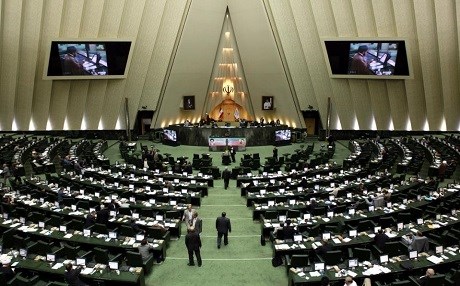
ERBIL, Kurdistan Region - Iran's parliament voted overwhelmingly Tuesday in favor of a bill that demands the United States pay reparations for six decades of alleged damages to Iran.
The bill passed with 174 voting in favor and seven against, with a mere four MPs abstaining.
Examples of "material or moral damage" cited in the bills include the US-sponsored coup against Iran's former prime minister Mohammad Mossadeq in 1953 and support for Iraq in its 1980-88 war with Iran.
"Iranian courts have already ruled that the US pay $50 billion in damages for its hostile actions," Iranian Vice President Majid Ansari claimed during the parliamentary session, according to Iran’s official Press TV.
The Iranian bill comes amid renewed anger in Tehran with Washington over a US Supreme Court ruling in late April that demands Tehran pay over $2 billion from overseas frozen assets to the families of those killed in Iranian-sponsored attacks against US military personnel.
According to the US, these include the 1983 US Marine barracks bombing in Lebanon and the 1996 Khobar Towers bombing in Saudi Arabia. Iran denies involvement in either attack.
Ebrahim Karkhanei, an Iranian MP, said the parliament ruling was in response to the US Supreme Court ruling, according to the Mehr news agency.
"The US must pay compensations for the damages caused by its crimes against the Iranian nation," Karkhanei said. "We must have a bill to counter the rules issued by American courts on misappropriation of Iranian assets."
Another legislator, Hamid Rasa'ei, argued that an amendment should be added to the bill obliging the Iranian government to "seize US assets" traveling through the Strait of Hormuz – the waterway through which much of the world’s oil supplies pass.
"If the US should seek to misappropriate the Iranian nations' assets, the strait must be turned into an insecure place for them and US vessels banned from passing through it," Rasa'ei said.
Iranian President Hasan Rouhani vowed last week to take the Americans to the International Court at The Hague if his country’s frozen assets are not returned.
"The government will never allow for the money that belongs to the Iranian nation be easily gobbled up by the Americans," he declared before a crowd in the Iranian city of Kerman.
Iran's Foreign Minister Javad Zarif told The New Yorker late last month that the Supreme Court ruling constituted a "highway robbery."
"It is theft. It is highway robbery. And believe you me, we will get it back," he declared.
The bill passed with 174 voting in favor and seven against, with a mere four MPs abstaining.
Examples of "material or moral damage" cited in the bills include the US-sponsored coup against Iran's former prime minister Mohammad Mossadeq in 1953 and support for Iraq in its 1980-88 war with Iran.
"Iranian courts have already ruled that the US pay $50 billion in damages for its hostile actions," Iranian Vice President Majid Ansari claimed during the parliamentary session, according to Iran’s official Press TV.
The Iranian bill comes amid renewed anger in Tehran with Washington over a US Supreme Court ruling in late April that demands Tehran pay over $2 billion from overseas frozen assets to the families of those killed in Iranian-sponsored attacks against US military personnel.
According to the US, these include the 1983 US Marine barracks bombing in Lebanon and the 1996 Khobar Towers bombing in Saudi Arabia. Iran denies involvement in either attack.
Ebrahim Karkhanei, an Iranian MP, said the parliament ruling was in response to the US Supreme Court ruling, according to the Mehr news agency.
"The US must pay compensations for the damages caused by its crimes against the Iranian nation," Karkhanei said. "We must have a bill to counter the rules issued by American courts on misappropriation of Iranian assets."
Another legislator, Hamid Rasa'ei, argued that an amendment should be added to the bill obliging the Iranian government to "seize US assets" traveling through the Strait of Hormuz – the waterway through which much of the world’s oil supplies pass.
"If the US should seek to misappropriate the Iranian nations' assets, the strait must be turned into an insecure place for them and US vessels banned from passing through it," Rasa'ei said.
Iranian President Hasan Rouhani vowed last week to take the Americans to the International Court at The Hague if his country’s frozen assets are not returned.
"The government will never allow for the money that belongs to the Iranian nation be easily gobbled up by the Americans," he declared before a crowd in the Iranian city of Kerman.
Iran's Foreign Minister Javad Zarif told The New Yorker late last month that the Supreme Court ruling constituted a "highway robbery."
"It is theft. It is highway robbery. And believe you me, we will get it back," he declared.
Comments
Rudaw moderates all comments submitted on our website. We welcome comments which are relevant to the article and encourage further discussion about the issues that matter to you. We also welcome constructive criticism about Rudaw.
To be approved for publication, however, your comments must meet our community guidelines.
We will not tolerate the following: profanity, threats, personal attacks, vulgarity, abuse (such as sexism, racism, homophobia or xenophobia), or commercial or personal promotion.
Comments that do not meet our guidelines will be rejected. Comments are not edited – they are either approved or rejected.
Post a comment