


ERBIL, Kurdistan Region – Turkey would like to work more closely with Iraq to combat “terrorists.”
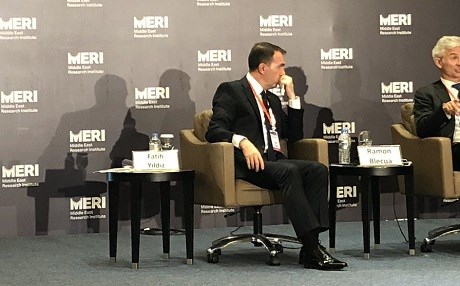
Turkey’s Ambassador to Iraq Fatih Yildiz said Ankara wishes Baghdad would work better to take “joint action” against “those terrorists,” while discussing the Turkish army’s offensive against the PKK.
"Frankly speaking, we have come a long way in terms of their cooperation. And KRG is one of our major partners in terms of addressing that threat to Turkey,” he said of the Kurdistan Regional Government.
Yildiz was speaking at the annual Middle East Research Institute (MERI) forum in the Kurdistan Region capital.
He reiterated an oft-repeated Turkish stance that their war against the PKK is an anti-terror one, not anti-Kurdish.
"When it comes to our Kurdish friends, Kak Masoud [Barzani] once said: 'I'm not an enemy of the Turkish state, I'm a friend of Turks.' So I can repeat the same thing for here as well. We are friends of Kurds and we are not an enemy of any potential Kurdish entity that we are talking about. I am here now with my own two feet in a Kurdish entity that we are referring to and we totally agree with the fact that Kurds are an essential ingredient in all these geographies which Kurds have in their hands – ranging from Syria to Iran to Turkey,” he said.
The Turkish army is combatting Kurds in three countries. In Turkey, at least 4,166 people have been killed on all sides, including civilians, since the conflict reignited in July 2015, according to figures compiled by the International Crisis Group.
Turkish forces, backing Syrian proxies, have conducted two military offensives in northern Syria, targeting what they allege is a branch of the PKK. Ankara has threatened to extend its front eastward, starting with Manbij.
In the Kurdistan Region of northern Iraq, Turkish jets regularly bomb alleged PKK positions. Turkey also launched a ground offensive earlier this year, with the aim of striking PKK headquarters in the Qandil mountains.
Politically, Turkey’s pro-Kurdish party HDP has accused authorities and the judiciary of targeting the party and its supporters because of their opposition to the government of President Recep Tayyip Erdogan.
The party is gearing up for planned March 2019 local elections, hoping to win back the positions of some 100 pro-Kurdish mayors that were ousted and replaced with trustees deemed loyal to Erdogan’s party, AKP.
Yildiz sought to distance the war against PKK from the Kurdish question in Turkey.
"Turkey has come a long way when it comes to addressing the Turkish citizens who have the Kurdish ancestry,” he claimed.
He denied that the policy against “PKK terrorism” in anyway “dispossess” reforms related to the Kurdish population.
“Frankly speaking, it's got nothing to do with PKK,” he said, adding that the biggest victims of the PKK are Kurds themselves.
He acknowledged that Turkey “is a work in progress,” pointing to ongoing reforms, but stressed “Turkey is a friend of the Kurds and has its own citizens who are Kurds.”
Turkey’s Ambassador to Iraq Fatih Yildiz said Ankara wishes Baghdad would work better to take “joint action” against “those terrorists,” while discussing the Turkish army’s offensive against the PKK.
"Frankly speaking, we have come a long way in terms of their cooperation. And KRG is one of our major partners in terms of addressing that threat to Turkey,” he said of the Kurdistan Regional Government.
Yildiz was speaking at the annual Middle East Research Institute (MERI) forum in the Kurdistan Region capital.
He reiterated an oft-repeated Turkish stance that their war against the PKK is an anti-terror one, not anti-Kurdish.
"When it comes to our Kurdish friends, Kak Masoud [Barzani] once said: 'I'm not an enemy of the Turkish state, I'm a friend of Turks.' So I can repeat the same thing for here as well. We are friends of Kurds and we are not an enemy of any potential Kurdish entity that we are talking about. I am here now with my own two feet in a Kurdish entity that we are referring to and we totally agree with the fact that Kurds are an essential ingredient in all these geographies which Kurds have in their hands – ranging from Syria to Iran to Turkey,” he said.
The Turkish army is combatting Kurds in three countries. In Turkey, at least 4,166 people have been killed on all sides, including civilians, since the conflict reignited in July 2015, according to figures compiled by the International Crisis Group.
Turkish forces, backing Syrian proxies, have conducted two military offensives in northern Syria, targeting what they allege is a branch of the PKK. Ankara has threatened to extend its front eastward, starting with Manbij.
In the Kurdistan Region of northern Iraq, Turkish jets regularly bomb alleged PKK positions. Turkey also launched a ground offensive earlier this year, with the aim of striking PKK headquarters in the Qandil mountains.
Politically, Turkey’s pro-Kurdish party HDP has accused authorities and the judiciary of targeting the party and its supporters because of their opposition to the government of President Recep Tayyip Erdogan.
The party is gearing up for planned March 2019 local elections, hoping to win back the positions of some 100 pro-Kurdish mayors that were ousted and replaced with trustees deemed loyal to Erdogan’s party, AKP.
Yildiz sought to distance the war against PKK from the Kurdish question in Turkey.
"Turkey has come a long way when it comes to addressing the Turkish citizens who have the Kurdish ancestry,” he claimed.
He denied that the policy against “PKK terrorism” in anyway “dispossess” reforms related to the Kurdish population.
“Frankly speaking, it's got nothing to do with PKK,” he said, adding that the biggest victims of the PKK are Kurds themselves.
He acknowledged that Turkey “is a work in progress,” pointing to ongoing reforms, but stressed “Turkey is a friend of the Kurds and has its own citizens who are Kurds.”
Comments
Rudaw moderates all comments submitted on our website. We welcome comments which are relevant to the article and encourage further discussion about the issues that matter to you. We also welcome constructive criticism about Rudaw.
To be approved for publication, however, your comments must meet our community guidelines.
We will not tolerate the following: profanity, threats, personal attacks, vulgarity, abuse (such as sexism, racism, homophobia or xenophobia), or commercial or personal promotion.
Comments that do not meet our guidelines will be rejected. Comments are not edited – they are either approved or rejected.
Post a comment