

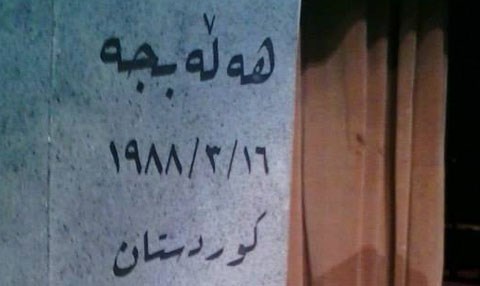
HALABJA, Halabja province -Students commemorated the anniversary of the 1988 chemical attack on Halabja in ethnically Kurdish cities in what is unofficially known as Iranian Kurdistan.
Last week, Kurdish students at Tehran University’s Social Sciences Department organized an event for the 27th anniversary of the Halabja attack and another, less well-known, chemical attack on the Kurdish town of Sardasht, located in northwest of Iran.
The commemoration was part of the annual tradition of remembering those died in the Halabja chemical attack in Iraqi Kurdistan.
Warplanes of the government of former dictator Saddam Hussein dropped internationally banned chemical weapons on March 16, 1988, killing an estimated 5,000 civilians and injuring tens of thousands more.
Since that time, Halabja has become a powerful symbol of Kurdish identity and resistance.
Earlier, on June 28, 1987, a lesser publicized chemical attack on Kurdish civilians occurred in the Sardasht, Iran, where 110 people were killed and another 8,000 injured. It was the first documented chemical attack during the Iraq-Iran war on civilian population.
Last week, students in the Kurdish-populated regions organized similar activities in cities of Mariwan, Bokan, Jawanroud and elsewhere.
According to news reports, about 1,000 students, academics, Iranian members of parliament and Halabja residents attended the anniversary in Tehran University. Sardasht and Piranshahr’s representative to the Iranian parliament also attended the commemoration.
The famous Kurdish actor and director Shwan Attuf from the Kurdistan Region also attended the event, reading a poem by the celebrated late poet Sherko Bekas.
Iranian authorities struggled to convince the Western world about the use of chemical weapons by the Saddam regime during the eight-year Iraq-Iran War, despite evidence from the Sardasht attack.
When the Halabja attack occurred, the Iranians invited a group of Western journalists to document what happened in the city. This was how the city’s plight became known to the outside world.

Comments
Rudaw moderates all comments submitted on our website. We welcome comments which are relevant to the article and encourage further discussion about the issues that matter to you. We also welcome constructive criticism about Rudaw.
To be approved for publication, however, your comments must meet our community guidelines.
We will not tolerate the following: profanity, threats, personal attacks, vulgarity, abuse (such as sexism, racism, homophobia or xenophobia), or commercial or personal promotion.
Comments that do not meet our guidelines will be rejected. Comments are not edited – they are either approved or rejected.
Post a comment