
SULAIMANI, Kurdistan Region – The Kurdistan Regional Government (KRG) spends billions on Kurdish education in disputed territories like Kirkuk and Khanaqin, but then refuses to accept those students at its universities, local officials and residents complain.
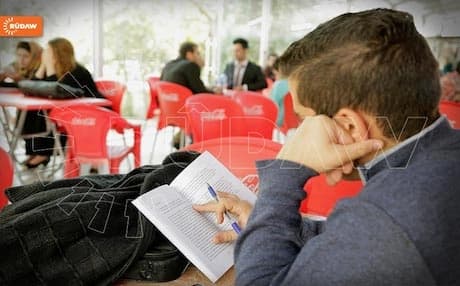
Because of this policy, students graduating from Kurdish schools in disputed regions are forced to revert to studying in Arabic at universities in other parts of Iraq, they say.
“We have no choice but to go to universities in Baghdad and the rest of Iraq,” said Sherzad Kaka, administrator of Kurdish education in Kirkuk. “Universities in the Kurdistan Region do not accept our students, so they must attend the ones run by the central government,” he said.
Officials note that the situation greatly benefits Baghdad. Since the central government refuses to pay for Kurdish education, the KRG finances 508 schools in Kirkuk, offering education to 92,800 Kurdish students at a cost of 78 billion Iraqi Dinars (ID). The 20 Kurdish schools in Khanaqin cost the KRG some 4 billion ID.
Since after the 2003 overthrow of Saddam Hussein, the KRG has been providing the schools, teachers, employees and school supplies for Kurdish schools in Kirkuk and Khanaqin.
“It’s like our efforts go for nothing,” since students educated in Kurdish with money from the KRG then end up in Arabic universities run by Baghdad, said Hussein Saya, the former education administrator of Khanaqin.
He complained that Kurdish families were unhappy about having to send their children to Arabic-language universities.
“The majority of the families are very displeased with the situation, but they know they have no other option,” said Saya. “The students might forget the Kurdish that they have learnt in the past,” he warned.
There are 12 Arabic schools in Khanaqin but “92 percent of the students of the Arabic schools are Kurds of Khanaqin,” said Saya.
He said Kurdish students faced another disadvantage, because after studying in Kurdish in high school, the entry exams for the universities which will take them are in Arabic.
“This leads to some students failing, because of the discrepancy in their curriculums,” said Saya.
Iraq’s so-called “disputed territories” are claimed both by the Shiite Arab central government in Baghdad and the autonomous Kurds in the north.