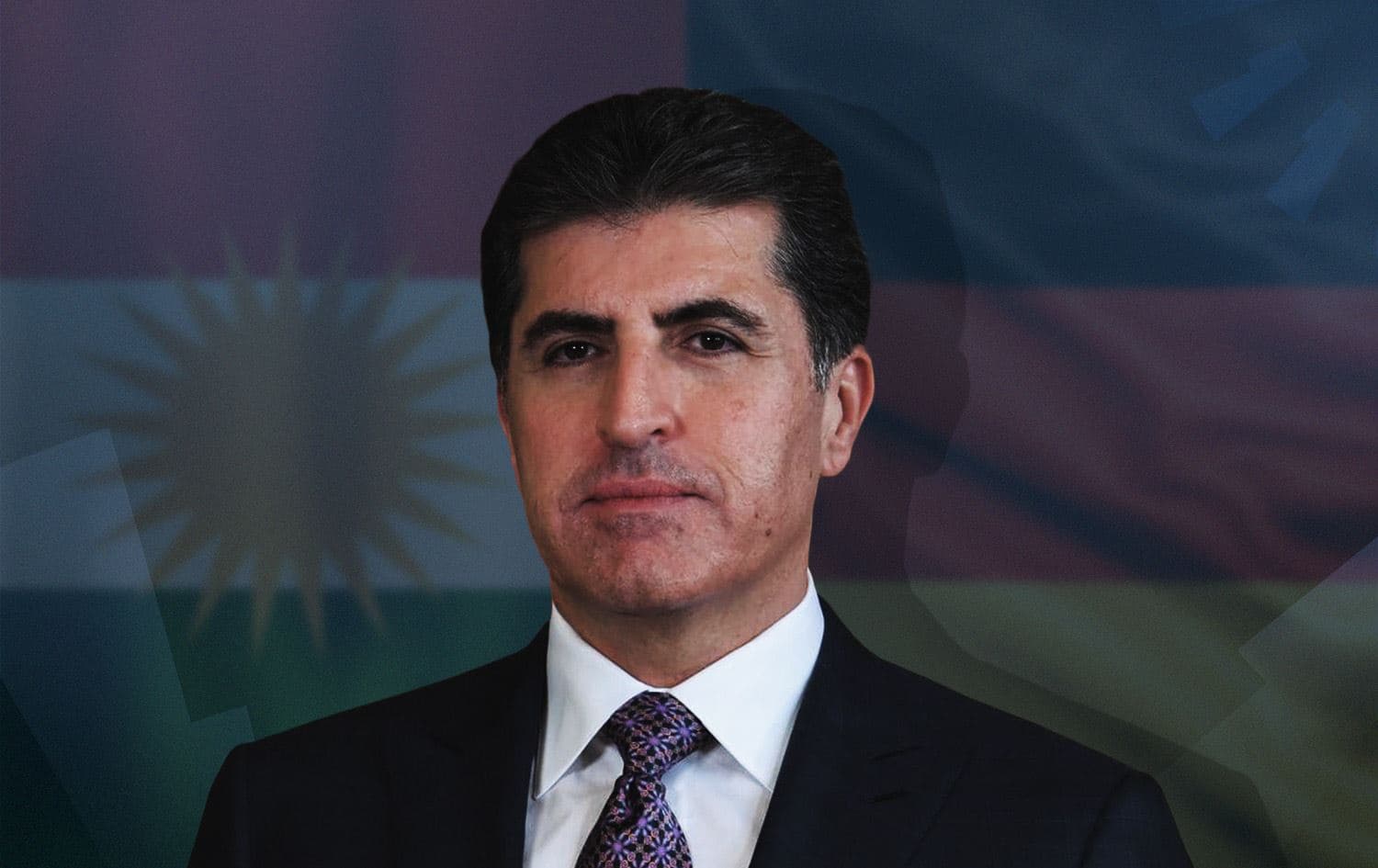

ERBIL, Kurdistan Region - Kurdistan Region President Nechirvan Barzani is set to meet with German Chancellor Olaf Scholz on Monday in a visit to Germany, which numerous parliamentarians in the country have labeled as being important for ties between Erbil and Berlin.
“This meeting is extremely important; it shows how Iraqi Kurdistan Region is one of Germany’s closest allies in the region in terms of economic relations and shared values,” Max Lucks, an MP of the Greens bloc, told Rudaw’s Alla Shally on Sunday.
“Kurdistan Region is not merely a region, it’s the economic, political and cultural backbone of all of Iraq,” Lucks said.
“This visit is an important and good indication because the talks with Kurdistan Region and Iraq are crucial for the region,” Derya Turk, an MP from the Social Democratic Party said.
The meeting comes at a crucial time for Kurdistan Region politics ahead of planned parliamentary elections in November, internal political tension, and strained ties with Baghdad over oil exports and budget issues.
Member of the Greens bloc in the German parliament, Agnieszka Brugger, said that the meeting between the two leaders was “very important” and the fact that it was taking place highlighted the importance of ties between Germany and the Kurdistan Region.
Peter Heidt, an MP of the Free Democratic Party, said that the meeting between Scholz and President Barzani “proves that the Kurdistan Region is a very important ally for us, and progress in this region is the main priority” of the German government.
“I see that this visit of President Barzani shows the good relations" between Germany and the Kurdistan Region, MP Jurgen Trittin said.
Germany is a key international actor as well as an essential member of the US-led global coalition against the Islamic State (ISIS). Berlin has also been involved in the Peshmerga reforms over the past few years, with the German army mostly based in the Region.
President Barzani in October thanked Germany for extending its military mandate in Iraq and the Kurdistan Region, expressing the Region’s appreciation for the country’s military and humanitarian aid during the ISIS war.
The German parliament in October decided to extend its military mandate in the Kurdistan Region and Iraq, continuing its operation to train and advise armed forces in the country against the threat of ISIS.
German government spokeswoman Christiane Hoffman told reporters on Friday that the meeting would be aimed at discussing bilateral ties, as well as the latest regional developments.
The European country has also been heavily involved in issues related to the Yazidi community of Iraq and the Kurdistan Region.
Germany is among countries that have recognized the ISIS atrocities against Yazidis as “genocide.”
Germany has carried out several projects in the Yazidi heartland, Shingal, and Internally Displaced Persons (IDP) camps housing Yazidi people since 2014, in attempts to help the religious minority group, according to a German diplomat in Erbil.
President Barzani has been a staunch supporter of the plight endured by the Yazidis under ISIS, having set up an office in the presidency dedicated to the minority group. More than 6,000 Yazidis were kidnapped when ISIS attacked their heartland of Shingal in Nineveh province. Some 2,000 remain missing. Barzani’s office has played the key role in finding the missing ones.
In March, German Foreign Minister Annelena Baerbock visited the Kurdistan Region and during her meeting with President Barzani emphasized the “great importance” of relations between Erbil and Berlin.
The visit comes as oil exports from the Kurdistan Region continue to be suspended following a Paris arbitration court ruling in March. While Erbil and Baghdad reached an agreement in early April to resume the export process, there is still no oil flowing through the pipeline to Turkey.
The KRG is heavily reliant on oil revenues and an inability to sell its crude has severely impacted its economy.
“As the Greens, we ask the federal Iraqi government to abandon the blockade and return to the negotiations table with Kurdistan region,” Lucks said, adding that this also negatively impacts Baghdad too.
“What Iraq is doing is laying the foundation for a single Iraq politics, which is a threat if implemented,” he added.
The Kurdistan Region’s parliamentary elections are set to be held on November 18, over a year removed from its originally scheduled date. The Region’s inability to hold elections last year due to continued disagreements between the political blocs over the electoral law and electoral commission pushed the parliament in October to extend its four-year term for an additional year.
However, in late May, Iraq’s Federal Supreme Court ruled against the self-extension of the Kurdistan Region’s parliament, rendering it unconstitutional.