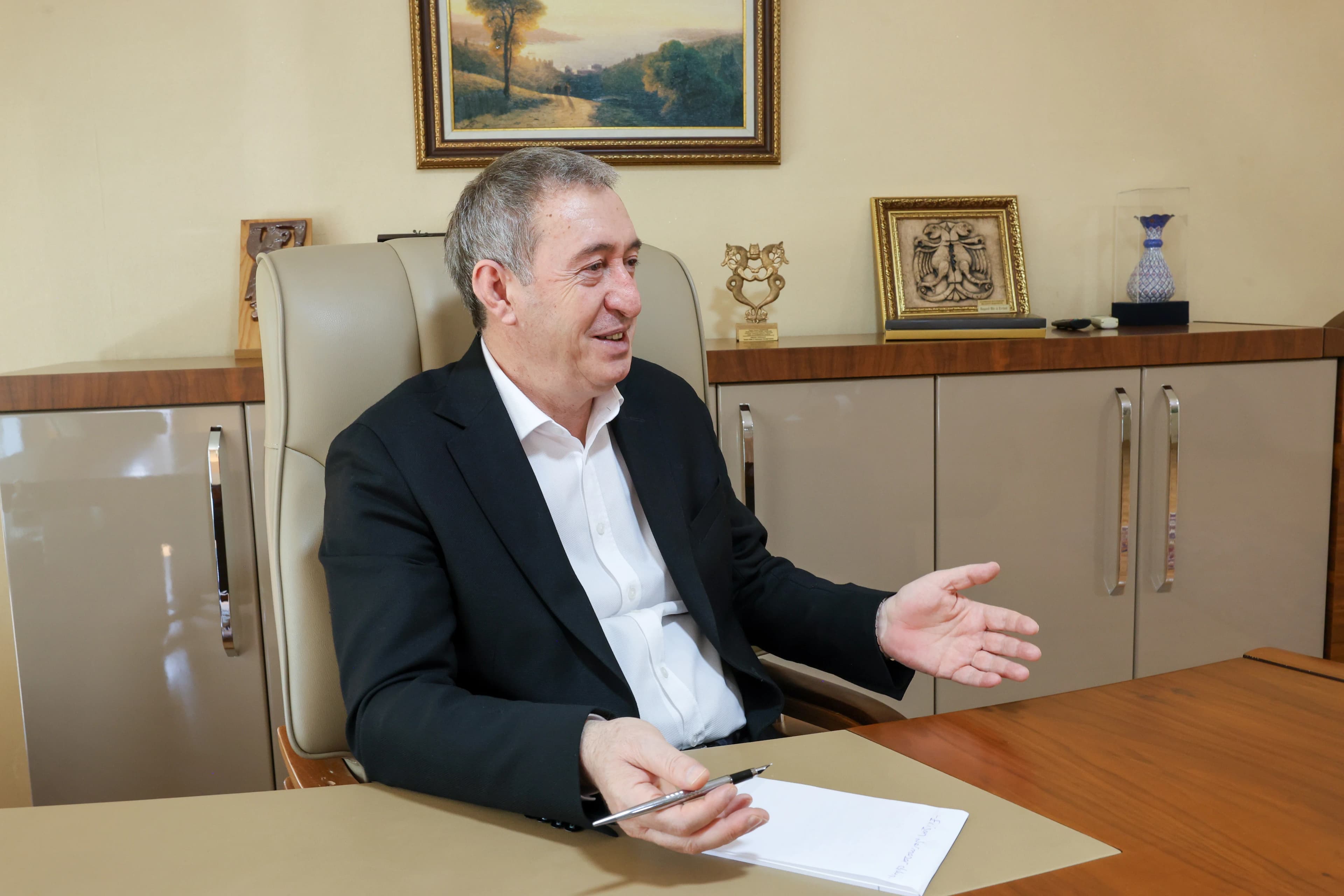
The “perception of Iraq as being insecure, unstable, dangerous to work in, to go to,” is among the obstacles faced by Dutch companies looking to invest in the country, said Netherlands’ Ambassador Hans Sandee in an interview with Rudaw’s Nma Nabaz, emphasizing that once entrepreneurs decide to invest in the country, it is important for them to encounter a “welcoming” and “transparent” climate for them to do business in.
Sandee stressed the importance of maintaining Iraq’s multiple security actors under control, saying that it is crucial that “those actors are under the political control, in the Iraqi case of the prime minister, and that there is a unified command and control.”
He highlighted that past instances of corruption-related challenges, such as Dutch companies’ contracts going unpaid, at times result in “fear” to do business in Iraq on the side of investors from the Netherlands.
“The most important thing is indeed that the government makes sure, both in Baghdad and the Kurdish region that there is a transparent business climate,” said Sandee, who repeatedly highlighted the need to address corruption in Iraq and the Kurdistan Region.
The ambassador noted that the issue of corruption “can only be solved, of course, by the government, at central level, provincial level, and local level,” highlighting that Iraqi Prime Minister Mohammed Shia' al-Sudani’s government recognizes the importance of the matter in the context of ensuring the success of its economic reform plans.
Sandee pointed to digitalization of applications, bank transfers, and other services that lend themselves to it, as a key element in the fight against corruption, for it allows to “bypass to a high extent the potential risk for corruption.”
Regarding the unification of the Kurdish Peshmerga forces, a process that the Netherlands has been actively engaged in, Ambassador Sandee said “We are satisfied but satisfied is not enough,” adding that additional concrete steps must be taken.
In late August, the Dutch Consul General in Erbil Jaco Beerends told Rudaw that the Peshmerga and the Kurdistan Regional Government (KRG) could lose international support if reform does not occur within the forces.
A month prior, the US State Department said Washington is concerned about intra-Kurdish tensions in the Kurdistan Region and the major impact they have on the pace of Peshmerga reforms.