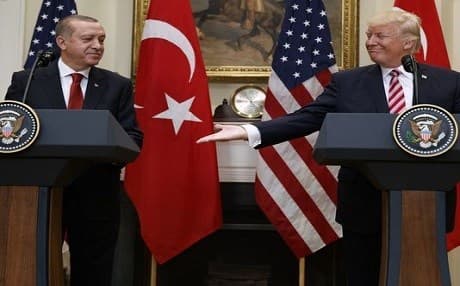
ERBIL, Kurdistan Region — A day after the United States revised its non-immigrant visa policy for Turkish passport holders, Ankara responded with a similar message of putting "certain limits" on visa applications in its diplomatic missions. “There is a need to address this issue as a whole. Mutuals [sic] steps had been taken. There is a necessity to ease citizens’ work at this point. Work of U.S. citizens was also made difficult after this recent approach by the U.S,” Turkish Deputy Prime Minister Recep Akdag told Hurriyet Daily News on Wednesday. The US Embassy in Ankara had announced on Tuesday that it was altering its visa policy by category, namely not allowing appointments for business and tourist visas until January 2019 (more than a year from now). There are exceptions for medical reasons, students, and some businesspeople and journalists requiring urgent visas. “We, as the Republic of Turkey, also have certain limits in terms of visas. I think this meaningless approach should immediately be put aside,” Akdag added. Turkey did not elaborate on what its new limits would be. The United States suspended non-immigrant visa services in Turkey citing security concerns after the arrest of a Turkish national employed by a US consulate in Turkey on October 8. Turkey quickly retaliated with a similar move. Prior to the diplomatic fallout, US citizens were able to apply for online electronic or visas upon arrival. US nationals have been able to obtain non-immigrant visas at some Turkish missions outside of the United States since November 7 on a "limited" basis. On November 20, Turkey required that US citizens have valid residency permits from another country in order to apply for non-immigrant visas in countries outside of the United States. Several US passport holders, as recently as Wednesday, have told Rudaw English they are able to exit the Kurdistan Region at the Ibrahim Khalil crossing near Silopi and obtain a "sticker visa" at Turkey's Habur gate. Turkish and Kurdistan Region forces maintain security at the crossing. Iraq has stated its intention to impose control at all borders and points of entry. The route through Turkey for US nationals became more significant this week when Iraqi Airways announced a decision to ban the entry of foreigners and Arabs to Baghdad, as Iraq's Interior Ministry only recognizes Iraqi visas and does not recognize residency cards issued by the Kurdistan Regional Government. That decision was reversed on Monday; however, Iraqi Airways announced "fines shall be imposed on those who do not have a visa or Iraqi residency." The KRG lost its ability to grant visas upon entry at airports when the last international commercial flights landed in Erbil and Sulaimani on September 29, five days after the Kurdistan Region held its independence referendum. The flight ban is seen as one of many punitive measures taken against Kurdistan by Baghdad. US-Turkish diplomatic relations have been undermined by a rash of incidents including the failed 2016 Turkish military coup that Ankara blames on a preacher living in the United States, Turkish presidential guards being charged with assaulting demonstrators during President Recep Tayyip Erdogan's visit to Washington in May, US support for Kurdish anti-ISIS fighters in Syria, and most recently the trial of Turkish banker in a New York court.