ERBIL, Kurdistan Region - Israel’s top general on Tuesday warned of the developments in Iran’s nuclear program, saying that this could “prompt action,” while also stating that the country does not remain indifferent to Tehran’s influence in Syria.
“Iran has made more progress in the field of uranium enrichment than ever before,” Israel Defense Forces Chief of Staff Herzi Halevu said in a speech at the Herzliya Conference.
He warned that any “negative developments” could spark “action” from Israel, without giving details on what these developments or action could entail.
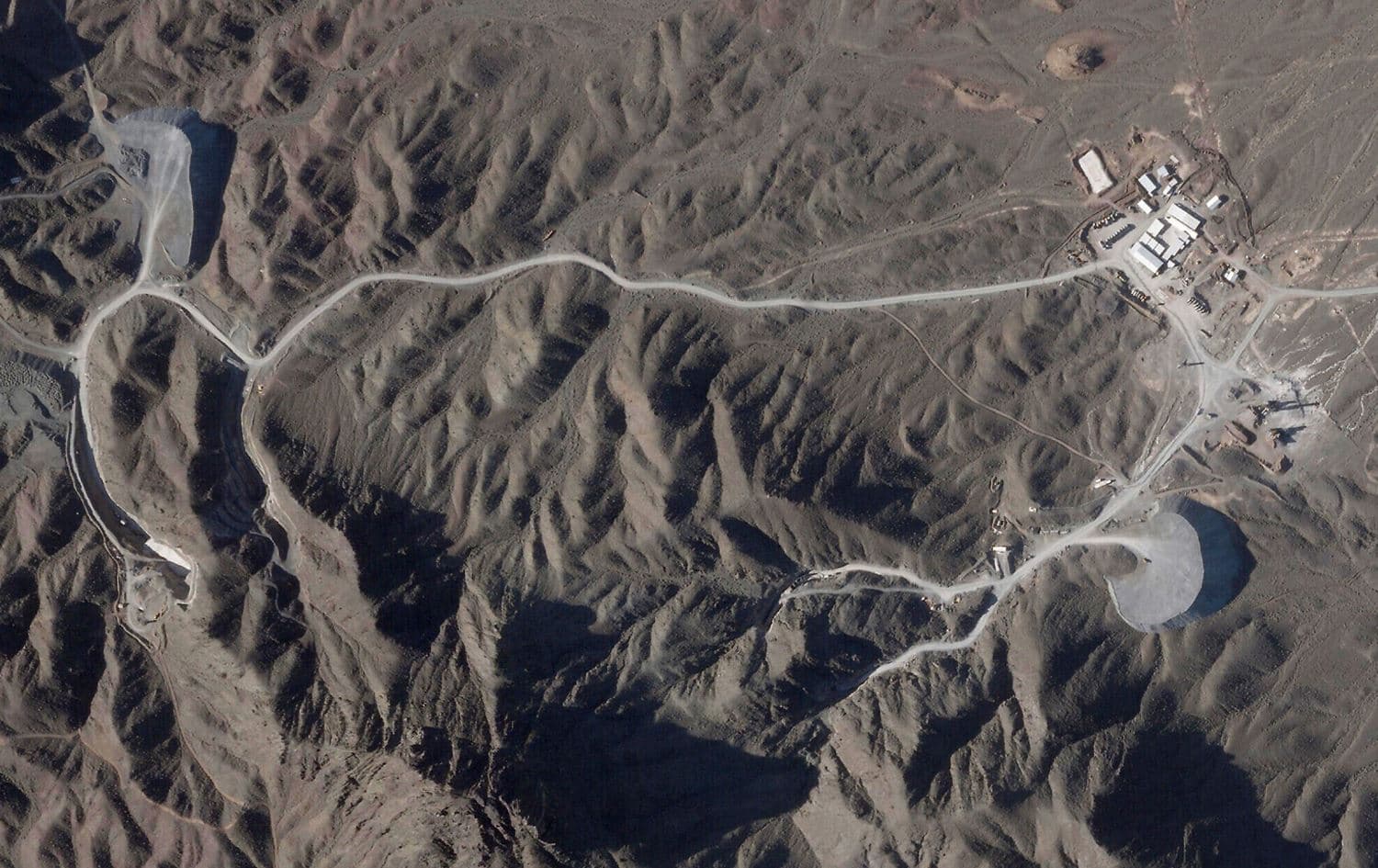
Associated Press (AP) on Monday reported that construction of a new underground site was underway in the Zagros Mountains in Iran to replace a facility near Natanz. The location of the uranium centrifuge manufacturing center is no longer a secret and has been a target of attack in 2020.
The report by AP added that the new facility is likely beyond the range of US military weapons. Speaking at the same conference, Israel’s National Security Adviser Tzachi Hanegbi said acknowledged that a deeply excavated underground facility would be difficult to target but that “there is no place that can’t be reached,” as cited by the Times of Israel.
Israel has accused Iran of seeking to develop nuclear weapons - an accusation Tehran strongly denies, claiming it is for civilian purposes. Israel has also been vocal in its strong opposition of the revival of the 2015 nuclear deal between Iran and world powers.
Chief of the General Staff, LTG Herzi Halevi, at the Herzliya Conference:
— Israel Defense Forces (@IDF) May 23, 2023
“Iran has made more progress in the field of uranium enrichment than ever before. We are closely examining additional domains that lead to nuclear capability. pic.twitter.com/IphvXyQkqk
Halevi also spoke of Iranian influence in Syria.
“Iran uses Syria as a potential zone for combat with Israel. We are not indifferent to this,” he stated.
The remarks come a day after Israeli Defense Minister Yoav Gallant said that Israel’s strikes on Iranian targets in Syria have “doubled” since the beginning of the year, AP reported.
Israel rarely comments on airstrikes attributed to it in Syria but occasionally officials admit to being behind the strikes.
“I would like to remind Bashar al-Assad of one very interesting fact in a period where data is being talked about: Iranian-backed countries have failed,” Halevi added. “If he wants to build up after the civil war, let him be aware of that.”
Iran and Israel have been engaged in a shadow war consisting of long-running covert attacks on Iranian military and nuclear facilities, as well as sabotage and cyber-attacks.
.webp&w=3840&q=75)