ERBIL, Kurdistan Region - Diplomatic and security delegations from Israel and Turkey met in Azerbaijan on Thursday for talks, amid escalating tensions between Turkey and Israel over their roles in the region, especially Syria. The meeting notably came a day after US President Donald Trump offered to mediate the growing friction between the two countries.
“A diplomatic-security delegation” led by Israel's National Security Adviser Tzachi Hanegbi met with “a parallel Turkish delegation” where “each side presented its interests in the region,” according to a statement from Israeli Prime Minister Benjamin Netanyahu’s office.
The meeting, held following directives from the Israeli premier, saw the delegations agree “to continue on the path of dialogue to maintain regional stability,” the statement added.
On Thursday as well, the Turkish Defense Minister criticized Israeli officials over their “escalating” rhetoric and “provocative actions.”
Yasar Guler further censured Israel’s “provocative assaults on Syria,” accusing Tel Aviv of violating its “sovereignty and territorial integrity, and undermining its security and stability.”
He urged Israel to uphold “the principles of good neighborliness and contribute to Syria’s stability and security,” and “abandon its expansionist and occupation policies.”
Guler’s remarks are part of a broader war of words that has been ongoing for months between Turkish and Israeli officials.
Tensions between Ankara and Tel Aviv intensified following the swift offensive spearheaded by a coalition of opposition groups, led by Hay’at Tahrir al-Sham, on December 8 to topple the regime of Syrian dictator Bashar al-Assad.
Turkey, a longtime supporter of the anti-Assad Syrian opposition, emerged as a key ally of the new Syrian leadership, but has been on a collision course with Israel, which regards the new rulers in Damascus as a threat.
Since Assad’s ouster, Israel has stepped up efforts to destroy Syria’s military stockpiles. Israeli forces have also entered a buffer zone east of the annexed Golan Heights, justifying the move as a security precaution amid Syria’s political instability.
According to the UK-based Syrian Observatory for Human Rights, Israel has carried out 44 attacks on Syrian territory since the beginning of 2025.
Last week, Israeli Defense Minister Israel Katz warned Syria’s interim President Ahmed al-Sharaa against allowing “hostile” forces to operate in his country, cautioning that doing so would result in a “heavy price.”
Notably referring to Sharaa by his former nom de guerre, Abu Mohammed al-Jolani, Katz said, “I warn Syrian leader Jolani: If you allow hostile forces to enter Syria and threaten Israeli security interests, you will pay a heavy price,” according to a statement relayed by AFP.
Hours before Katz’s statement, the Israeli Air Force struck targets near the Scientific Studies and Research Center (SSRC) in Barzeh, north of Damascus, as well as the Hama military airport and the Tiyas Air Base (T4) in Homs.
The renewed engagement between Israel and Turkey was first announced by the Turkish Foreign Minister, who revealed on Wednesday that Ankara and Tel Aviv had begun engaging in technical talks on Syria. Hakan Fidan added that Ankara has no intention of entering into armed conflict with Israel.
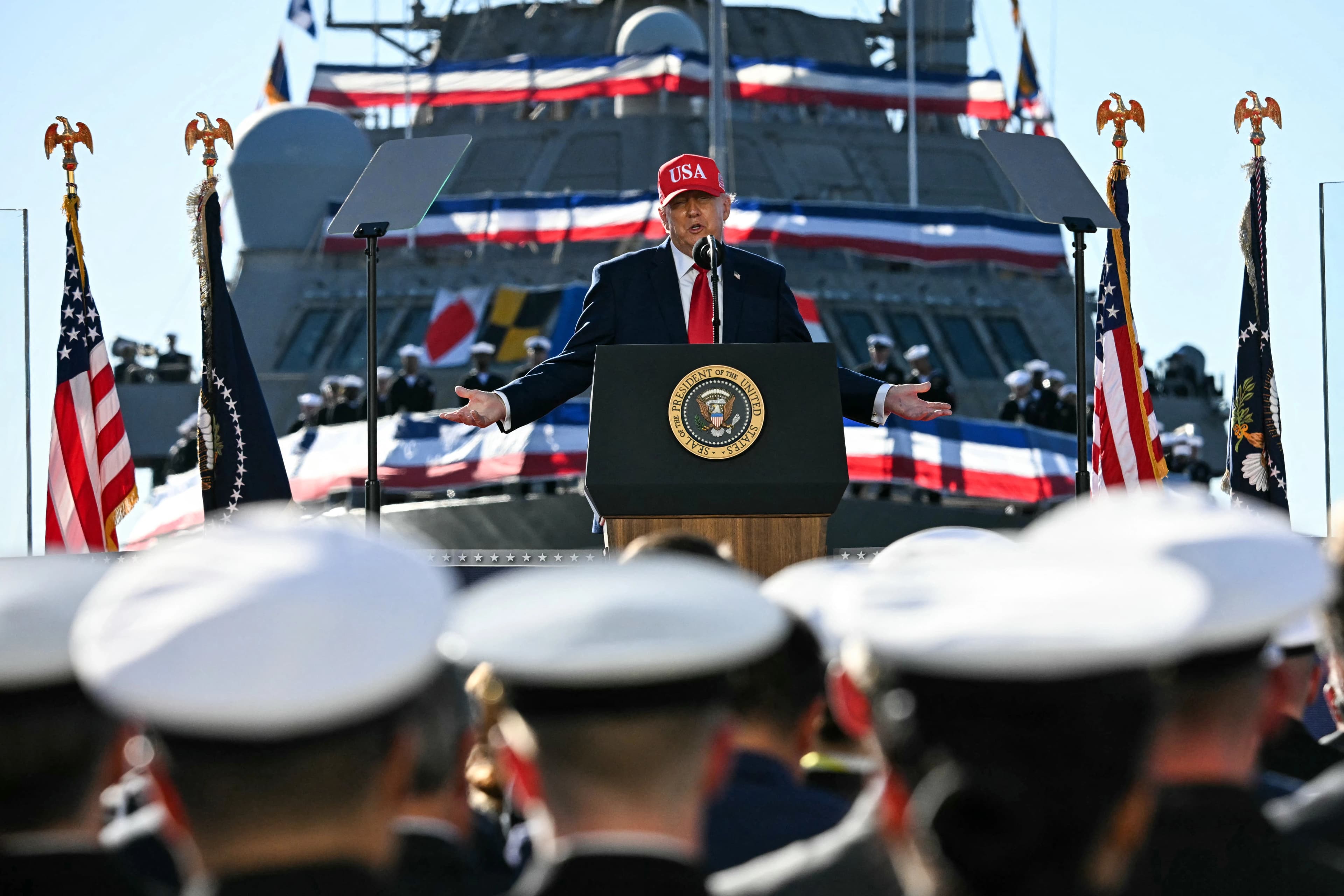
However, these efforts appear to have accelerated following US President Donald Trump’s offer on Monday to mediate the tensions between the two countries.
After meeting with Israeli Prime Minister Benjamin Netanyahu, Trump told reporters, “I told the Prime Minister [of Israel]... if you have a problem with Turkey, I really think they are going to be able to work it out.” He added, “I have a very very good relationship with Turkey and with their leader [Recep Tayyip Erdogan] and I think we will be able to work it out.”
Addressing Netanyahu directly, Trump said, “Any problem you have with Turkey, I think I can solve, I mean as long as you’re reasonable.”
For his part, Netanyahu responded to Trump, stating, “We have had neighborly relations with Turkey that have deteriorated, and we don’t want to see Syria being used by anyone, including Turkey, as a base for attack on Israel.”
He emphasized that “we can’t have a better interlocutor than the President of the United States” to help address the Ankara-Tel Aviv tensions.