



Error occured during this request! Please try again later.
Culture

Erbil Citadel Film Festival, which took place on July 9 and 10, brought together filmmakers, NGOs, and cinema-goers to exchange culture and discuss the future of Kurdish cinema. Photo: Shahla Omar / Rudaw
ERBIL, Kurdistan Region – From a glimpse into the business and pleasure of cruise ship holidays in ‘All Inclusive’, to tea embargos in ‘Laughter and Forgetting’; from the art of self-portraiture in ‘Carlotta’s Face’, to an accidental encounter with a drug mule on the Morocco-Algeria border in ‘Nefta Football Club’, the films shown at the Erbil Citadel Film Festival on Wednesday night seemed, at first at least, an arbitrary combination.
Two days of Kurdish, German, and French-language shorts were on show at the Erbil Citadel’s open air theatre on July 9 and 10, in a collaborative effort led by the Goethe Institut, in partnership with the Institut Français and French Film initiative Les Ecrans de la Paix.
All the foreign films in Wednesday’s program were being shown in Kurdistan for the first time, while Nawraz Mohammed’s Laughter and Forgetting, which premiered at last year’s Slemani Film Festival, was given its first screening outside the city.
The broad spectrum of films shown was a deliberate choice, according to Thomas Koessler, director of the Goethe Institut in Erbil – an effort to broaden inter-cultural understanding and an ode to the breadth of films made worldwide receiving European funding.
.jpg)
Travelling between multiple camps every week, the organisation screens films outdoors from April-October – sometimes on a ten-meter wide inflatable screen – and indoors during the colder winter months.
“This wasn’t too difficult for us, compared to what we do every week,” Mohammed al-Qadiri from Screens for Peace said after the event. “The screen we normally use would actually have been too big for the citadel.”
While the charity has a long-established relationship with the French Institute, this was the first time it has worked with Goethe. “The Institut approached us asking for help setting up the equipment, and we said, ‘why not make it a partnership?’” Qadiri said.
The short films worked as accessible art with broad audience appeal. One viewer at the festival remarked that Laughter and Forgetting, though a political, colonial-era analogy, was also short and dynamic enough to hold her young daughter’s attention.
The short film format also tested linguistic boundaries, with films in French, German, Kurdish, and Arabic shown in near ceaseless succession. Nefta Football Club, though not dubbed or subtitled in Kurdish, garnered some of the loudest laughs from an audience familiar with a universally taboo topic.
Short films can also be a reflection of wider socio-economic trials, and a triumph over them. When questioned by a member of the audience about why Laughter and Forgetting was made as a short film and not as a feature-length piece, Mohammed said funding for the film from the KRG’s Directorate of Culture was cut because of the conflict with Islamic State (ISIS), making a feature-length film impossible. He ended up making the film with money from his own pocket and a volunteer crew.
.jpg)
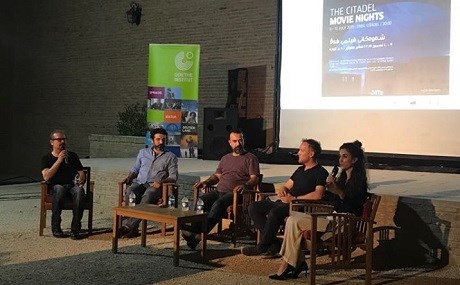
Concerns around cuts to government-offered funding to film and other arts and culture projects rang around the panel discussion that concluded the festival.
The directors at the panel discussion (Shwan Atouf, Hawraz Mohammed, and Jano Rosebiani) all highlighted the need for increased and more transparent funding from the Directorate of Culture and an integration of the teaching of film in schools, while Kurdish-American filmmaker Rosebiani told the audience about his long-planned establishment of an independent filmmaking institute in Kurdistan.
But they also called on film aficionados to exercise people power by supporting Kurdish films that have already been made, including Shwan Atouf’s film Peykari Dil, currently on show at the Region’s cinemas.
The positive reception the Kurdish films received at the festival was a testament to the appetite for homegrown projects. “If there’s something we would have done differently, we would have shown more Kurdish films,” Koessler said post-screening.
Work is needed to establish film institutions so that cinema can be viewed as an intrinsic part of Kurdish culture, according to both Rosebiani and Atouf.
“Would we accept a city without gardens? Without hospitals? Without electricity? It [a Kurdish film foundation] is, put simply, something we need, no question about it,” Atouf said.
Two days of Kurdish, German, and French-language shorts were on show at the Erbil Citadel’s open air theatre on July 9 and 10, in a collaborative effort led by the Goethe Institut, in partnership with the Institut Français and French Film initiative Les Ecrans de la Paix.
All the foreign films in Wednesday’s program were being shown in Kurdistan for the first time, while Nawraz Mohammed’s Laughter and Forgetting, which premiered at last year’s Slemani Film Festival, was given its first screening outside the city.
The broad spectrum of films shown was a deliberate choice, according to Thomas Koessler, director of the Goethe Institut in Erbil – an effort to broaden inter-cultural understanding and an ode to the breadth of films made worldwide receiving European funding.
Hosting a one-off cinematic event with all the necessary equipment at the citadel, 100-odd feet up a steep hill, is not without its challenges. The Goethe Institut enlisted the expertise of Les Ecrans de la Paix (Screens of Peace), a French charity which travels to refugee and IDP camps in the Kurdistan Region, for audio-visual set up.
The festival was hosted by Erbil Citadel, a UNESCO World Heritage Site. Photo: Mohammed Shwani / Rudaw
Travelling between multiple camps every week, the organisation screens films outdoors from April-October – sometimes on a ten-meter wide inflatable screen – and indoors during the colder winter months.
“This wasn’t too difficult for us, compared to what we do every week,” Mohammed al-Qadiri from Screens for Peace said after the event. “The screen we normally use would actually have been too big for the citadel.”
While the charity has a long-established relationship with the French Institute, this was the first time it has worked with Goethe. “The Institut approached us asking for help setting up the equipment, and we said, ‘why not make it a partnership?’” Qadiri said.
The short films worked as accessible art with broad audience appeal. One viewer at the festival remarked that Laughter and Forgetting, though a political, colonial-era analogy, was also short and dynamic enough to hold her young daughter’s attention.
The short film format also tested linguistic boundaries, with films in French, German, Kurdish, and Arabic shown in near ceaseless succession. Nefta Football Club, though not dubbed or subtitled in Kurdish, garnered some of the loudest laughs from an audience familiar with a universally taboo topic.
Short films can also be a reflection of wider socio-economic trials, and a triumph over them. When questioned by a member of the audience about why Laughter and Forgetting was made as a short film and not as a feature-length piece, Mohammed said funding for the film from the KRG’s Directorate of Culture was cut because of the conflict with Islamic State (ISIS), making a feature-length film impossible. He ended up making the film with money from his own pocket and a volunteer crew.
The festival was a collaborative effort led by the Goethe Institut, the Institut Français, and French Film initiative Les Ecrans de la Paix. Photo: Mohammed Shwani / Rudaw
Concerns around cuts to government-offered funding to film and other arts and culture projects rang around the panel discussion that concluded the festival.
The directors at the panel discussion (Shwan Atouf, Hawraz Mohammed, and Jano Rosebiani) all highlighted the need for increased and more transparent funding from the Directorate of Culture and an integration of the teaching of film in schools, while Kurdish-American filmmaker Rosebiani told the audience about his long-planned establishment of an independent filmmaking institute in Kurdistan.
But they also called on film aficionados to exercise people power by supporting Kurdish films that have already been made, including Shwan Atouf’s film Peykari Dil, currently on show at the Region’s cinemas.
The positive reception the Kurdish films received at the festival was a testament to the appetite for homegrown projects. “If there’s something we would have done differently, we would have shown more Kurdish films,” Koessler said post-screening.
Work is needed to establish film institutions so that cinema can be viewed as an intrinsic part of Kurdish culture, according to both Rosebiani and Atouf.
“Would we accept a city without gardens? Without hospitals? Without electricity? It [a Kurdish film foundation] is, put simply, something we need, no question about it,” Atouf said.


Comments
Rudaw moderates all comments submitted on our website. We welcome comments which are relevant to the article and encourage further discussion about the issues that matter to you. We also welcome constructive criticism about Rudaw.
To be approved for publication, however, your comments must meet our community guidelines.
We will not tolerate the following: profanity, threats, personal attacks, vulgarity, abuse (such as sexism, racism, homophobia or xenophobia), or commercial or personal promotion.
Comments that do not meet our guidelines will be rejected. Comments are not edited – they are either approved or rejected.
Post a comment